Supply Chain Automation: How to Choose the Right Process, Technology and Controls
August 2, 2026 · Supply Chain Management · 5 min read
Supply chain automation means using technology to execute, coordinate or support supply-chain tasks with less manual intervention. The useful question is not whether a company should “automate the supply chain”. It is which process, decision or handoff is creating a measurable problem and whether automation is an appropriate way to improve it.
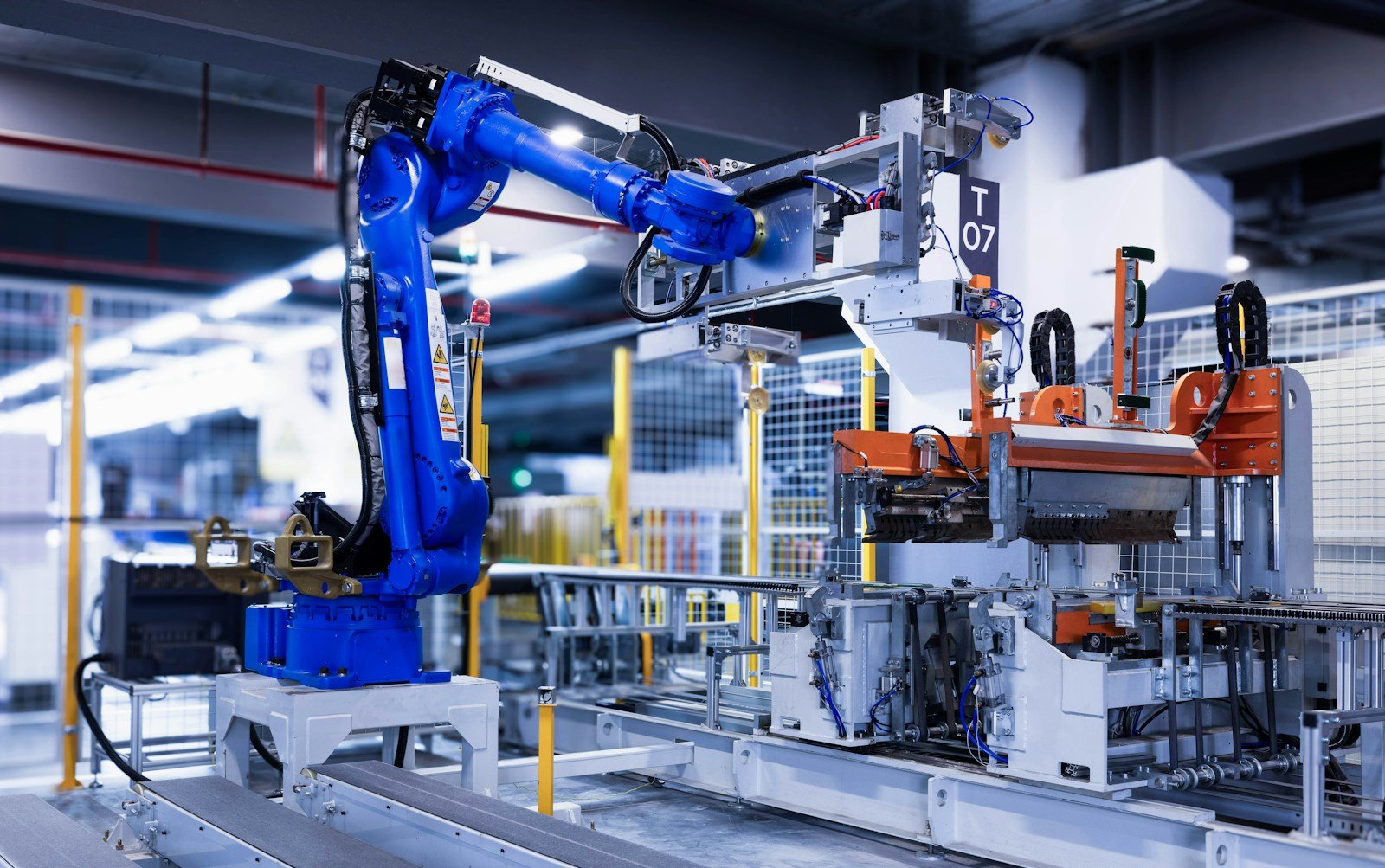
Automation can include physical equipment such as conveyors and robots, software that moves data between systems, workflow automation, planning tools, AI, machine learning, sensors and other digital technologies. These tools solve different problems and should not be treated as one category.
What supply chain technology includes
ASCM describes supply-chain technology as the tools and capabilities that support supply-chain operations through better management of flows, visibility, efficiency and network performance. Its examples include software, automation, AI, IoT, robotics, digital twins and other technologies.
Source: ASCM, Supply Chain Technology
This page focuses specifically on automation. The broader Supply Chain Management guide should remain the owner for end-to-end SCM fundamentals.
Start with the process before choosing the technology
Automation is easier to justify when the organisation can describe the current process and the problem it is trying to solve.
Useful starting questions include:
- Which task is repetitive, slow or error-prone?
- Where does information wait for manual entry or approval?
- Which exceptions consume disproportionate staff time?
- Where does poor visibility delay a decision?
- What quality, service, cost, safety or control outcome should improve?
- What happens when the automation fails?
A poorly designed process can become a faster poorly designed process after automation. Simplification and standardisation often need to happen first.
Common areas for supply chain automation
Warehouse operations
Automation can support storage, movement, picking, packing, sorting and inventory counting. Technologies can range from conveyors and automated storage systems to autonomous mobile robots and machine-vision systems.
Order and document workflows
Software automation can reduce repeated manual entry, route approvals, match documents, create alerts and move structured data between systems. These use cases are different from physical warehouse automation but can remove equally important bottlenecks.
Planning and forecasting support
Analytics and AI can help teams process larger data sets, identify patterns, generate forecasts and test scenarios. Human judgement still matters where demand is unusual, data quality is weak or business constraints are not represented in the model.
Transport and logistics
Transportation systems can automate carrier selection, route planning, shipment status, documentation and exception alerts. Tracking technology can improve visibility, but visibility only creates value if teams know how to respond to exceptions.
Inventory and replenishment
Systems can calculate replenishment signals, update inventory records and flag anomalies. The underlying inventory policy still needs to reflect service requirements, lead-time variability and risk.
AI is one automation tool, not the automation strategy
ASCM identifies supply-chain applications of AI such as inventory and route optimisation, demand prediction, warehouse automation, supplier evaluation and risk assessment. These uses can support decisions, but they depend on the quality of the data, model, process and governance around them.
Source: ASCM, 6 Things Supply Chain Professionals Need to Know About AI
Before using an AI model in a consequential supply-chain decision, teams should understand:
- which data it uses;
- which decision it supports;
- how errors are detected;
- when a human must intervene;
- how the model behaves when conditions change;
- how access, security and sensitive data are controlled.
Automation changes jobs as well as processes
Removing manual work can change what employees spend time on. A warehouse automation project can shift work toward exception handling, equipment monitoring and process control. A planning system can reduce spreadsheet consolidation while increasing the need for data judgement and scenario analysis.
Implementation therefore needs a capability plan as well as a technology plan. Employees need to know what the new system does, what it does not do and how their role changes when it is introduced.
Do not automate every exception
High-volume, stable and well-defined tasks are usually easier to automate than rare, ambiguous or high-consequence exceptions. Some processes should use automation for routine cases while escalating unusual cases to people.
A useful design distinguishes:
- straight-through cases;
- cases that need approval;
- exceptions that need investigation;
- decisions that require human judgement.
Measure the automation against the original problem
Metrics should be selected before implementation. Depending on the use case, they might include:
| Automation goal | Possible measure |
|---|---|
| Reduce manual processing | Touch time, transactions per employee, manual interventions |
| Improve accuracy | Error rate, correction volume, inventory-record accuracy |
| Improve service | Order-cycle time, on-time fulfilment, exception recovery |
| Improve safety | Exposure to hazardous/repetitive tasks, incident patterns |
| Improve visibility | Time to detect exceptions, data latency, unresolved alerts |
Do not claim a universal percentage saving or productivity improvement without a comparable study population and implementation context.
Automation introduces new risks
Potential risks include:
- poor data quality;
- system integration failures;
- cybersecurity exposure;
- vendor dependence;
- model or algorithm errors;
- insufficient exception handling;
- loss of process knowledge;
- workforce resistance when role changes are poorly managed;
- business continuity issues if a critical automated system fails.
The right balance is not “manual versus automated”. It is a process architecture in which technology and human judgement are assigned to the work each handles best.
A practical automation sequence
- Map the current process.
- Define the measurable problem.
- Simplify and standardise where possible.
- Select the automation approach that fits the task.
- Design exception and human-override paths.
- Test with real operating data.
- Train the people whose roles will change.
- Measure the agreed outcome.
- Review control, resilience and security after implementation.
Supply chain automation creates value when it improves an actual process or decision. Technology adoption by itself is not evidence of better supply-chain performance.
Sources
Need In-House Training?
We run all our courses as private programmes for organisations across the GCC and Africa.
Request In-House →