
Women in Ghana’s Civil Service: 2024 Data, Leadership Gaps and Gender Equity
June 8, 2026 · Professional Development · 5 min read
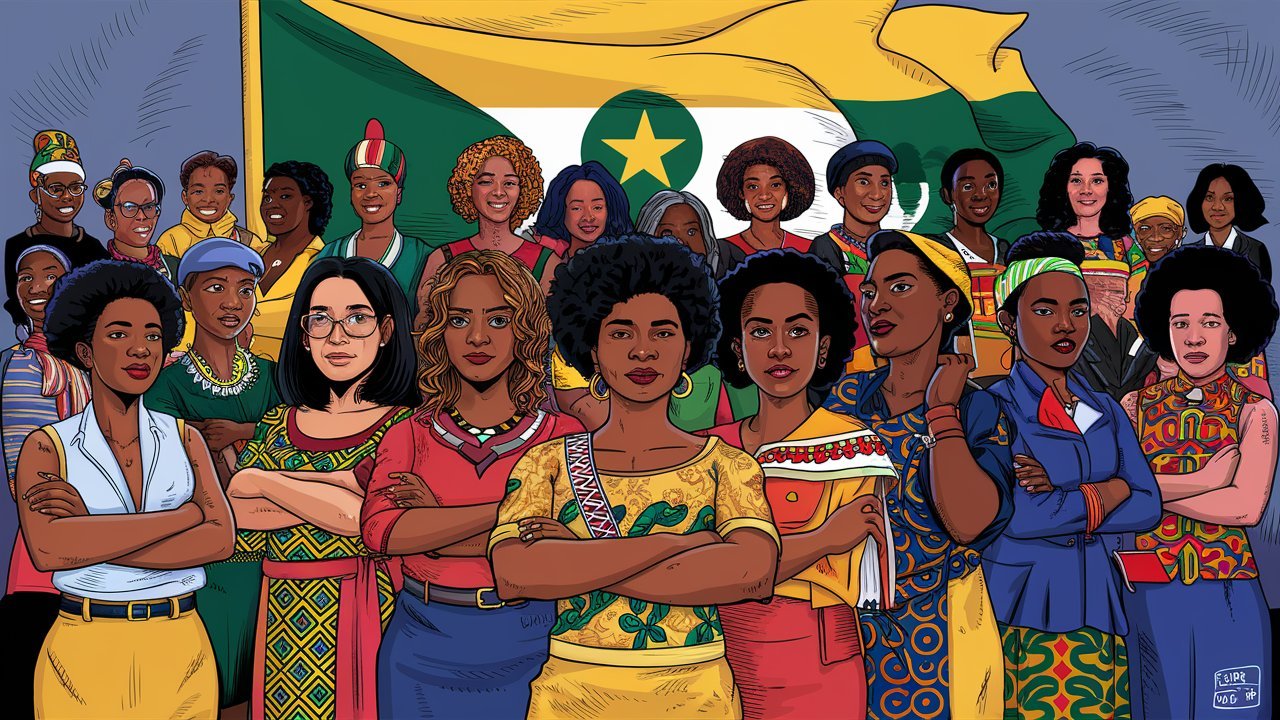
Women made up 39.5% of Ghana’s Civil Service workforce in 2024, according to the Office of the Head of the Civil Service (OHCS). That overall figure shows meaningful representation, but it does not mean women are equally represented in senior decision-making structures.
The same OHCS report identifies persistent gender imbalances in several statutory and administrative committees, while Ghana’s Affirmative Action (Gender Equity) Act, 2024 now creates a legal framework for progressively increasing women’s representation in decision-making.
Ghana Civil Service gender statistics: the current official picture
The OHCS 2024 Annual Performance Report records 18,810 Civil Service staff: 11,387 men and 7,423 women. That means women represented approximately 39.5% of the Civil Service workforce in 2024.
| Year | Men | Women | Total |
|---|---|---|---|
| 2022 | 10,655 | 6,813 | 17,468 |
| 2023 | 10,653 | 6,784 | 17,437 |
| 2024 | 11,387 | 7,423 | 18,810 |
Source: Office of the Head of the Civil Service, 2024 Annual Performance Report
The female staff count rose by 9.4% from 2023 to 2024, faster than the increase in male staff over the same period. That is evidence of movement in workforce composition, but workforce share and leadership representation should be analysed separately.
Decision-making bodies still show significant gender gaps
The OHCS report examined administrative, statutory and ad hoc committees across the Civil Service. It found substantial variation:
- some statutory committees were heavily male-dominated;
- administrative committees in several ministries had men making up around 70% or more of membership;
- some ad hoc committees were more balanced;
- the Ministry of Gender, Children and Social Protection showed a female majority in the decision-making body analysed;
- several ministries had female representation below 30% in the committees reviewed.
The report therefore distinguishes between overall staff composition and participation in particular decision-making structures. A 39.5% female workforce share should not be interpreted as 39.5% female representation at every leadership level.
Women in Ghana’s Parliament: 14.5%, not 37.9%
Current Inter-Parliamentary Union data records 40 women among 276 members of Ghana’s Parliament, equal to 14.5%.
Source: Inter-Parliamentary Union, Ghana — Data on women in parliament
Parliamentary representation is a political-governance measure and should not be mixed with Civil Service workforce representation. They refer to different institutions and populations.
The Affirmative Action (Gender Equity) Act changes the policy context
Ghana passed the Affirmative Action (Gender Equity) Act, 2024 (Act 1121) to increase women’s participation in decision-making across public and private institutions. The Ministry of Gender, Children and Social Protection states that the law establishes progressive representation targets, including at least 30% women in decision-making by 2026 and movement toward parity over the following years.
Source: Ghana Ministry of Gender, Children and Social Protection
The Act should not be treated as proof that the targets have already been achieved. It creates obligations and a framework for implementation; actual representation still needs to be measured from current institutional data.
What the OHCS data says about recruitment
In 2024, the Civil Service recruited 967 people: 522 men and 445 women. Women therefore represented approximately 46% of new recruits in the reported cohort.
This is useful evidence about entry into the Civil Service, but recruitment balance alone does not tell us whether promotion, development and leadership opportunities are equally distributed later in a career.
Professional development should be measured, not assumed
The OHCS report also records substantial Civil Service training activity and provides sex-disaggregated training information. That is a better basis for assessing development access than assuming women receive fewer opportunities or that a particular course produces a fixed career return.
When an organisation evaluates gender and professional development, useful measures include:
- participation in training by grade and gender;
- access to leadership and management development;
- study leave and sponsored education;
- acting assignments and high-visibility projects;
- promotion rates after comparable periods;
- representation in succession pipelines;
- participation in decision-making committees.
A difference in one measure is a signal for further investigation, not automatic evidence of discrimination or of the effectiveness of one intervention.
Leadership representation should be reported by institution and level
Claims such as “15% of Principal Secretary level and above” should not be published unless the source defines the grade, denominator and observation year. Ghana’s public sector includes the Civil Service, other public services, state-owned institutions, the judiciary, security services and political bodies, each with different structures.
For credible reporting, specify:
| Question | What to state |
|---|---|
| Which institution? | Civil Service, Parliament, judiciary, a ministry, SOE or another public body |
| Which level? | All staff, management grade, committee membership, board or political office |
| Which year? | The observation year, not only the publication year |
| Which source? | OHCS, Parliament/IPU, national statistics or another primary source |
| Which denominator? | Total staff or members represented by the percentage |
What organisations can do with the evidence
The current data supports practical questions for public institutions:
- Compare workforce composition with decision-making representation.
- Track recruitment, development and promotion separately.
- Review committee and leadership pipelines for persistent gaps.
- Use transparent, job-related criteria for development and advancement.
- Provide mentoring and leadership development where evidence shows an access or capability need.
- Measure progress against the requirements of the Affirmative Action Act.
What the evidence does not support
The available official evidence does not justify claims that one leadership course guarantees stronger career returns, that women in Ghana’s public sector are universally excluded from informal networks, or that a particular “African” management framework is inherently more effective than a “Western” one.
Those questions require specific evaluation evidence. Training should be chosen because it addresses a clearly defined capability need and then evaluated for whether participants use the learning in their work.
Related MATSH research
For the wider regional picture, see Women in Africa: 2026 Data on Work, Leadership, Skills and Economic Opportunity. For another country-level workforce analysis, see Women and Employment in Nigeria: 2026 Data Guide.
Sources
Need In-House Training?
We run all our courses as private programmes for organisations across the GCC and Africa.
Request In-House →