Cross-Cultural Training in the Gulf: How to Design It Effectively
January 3, 2025 · Professional Development · 4 min read
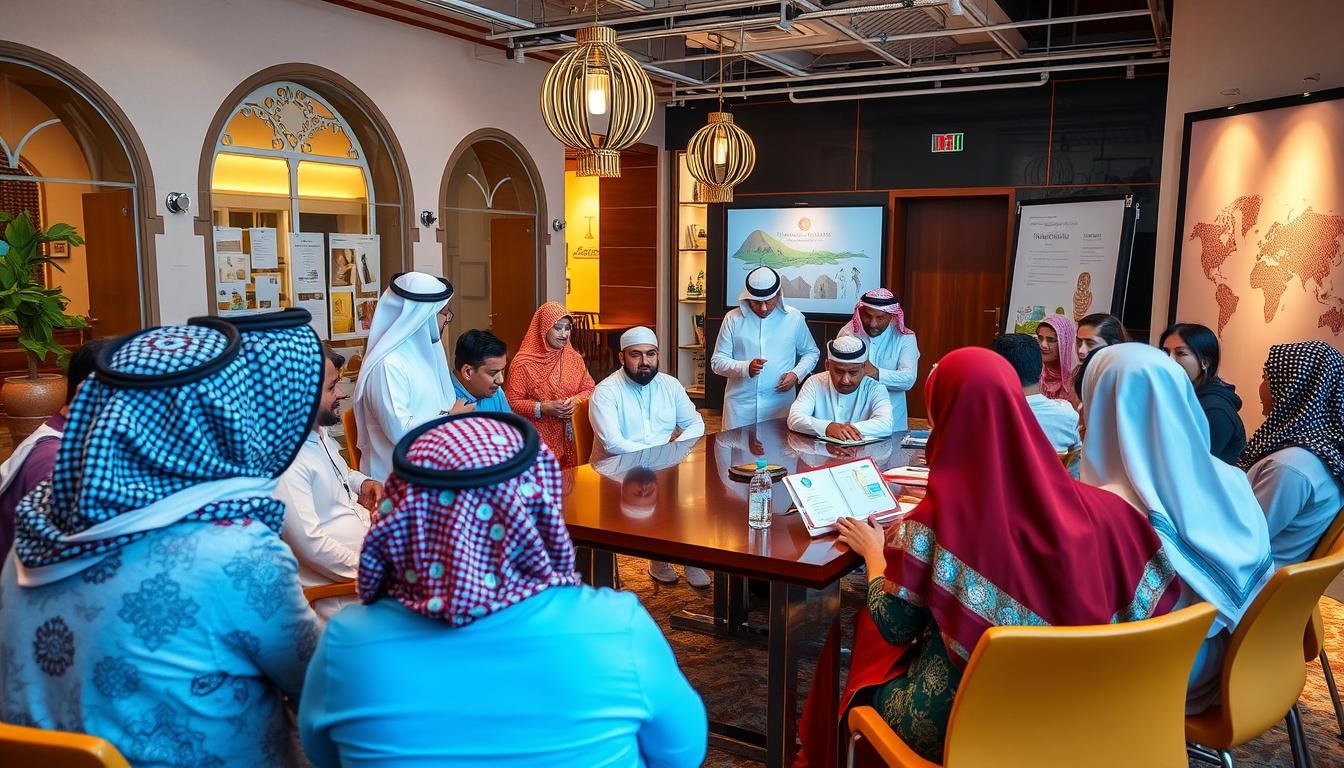
Cross-cultural training is useful in Gulf workplaces because employees often work across different expectations about hierarchy, feedback, deadlines, disagreement and relationship-building. But effective training is not a list of national stereotypes. It should help people recognise differences, test assumptions and adapt their behaviour without reducing colleagues to cultural labels.
The evidence supports that more careful approach. A meta-analysis of 37 independent samples involving 7,040 trainees found that cross-cultural training had a meaningful positive relationship with adjustment and smaller positive relationships with cultural intelligence and job performance. The results also varied by training method and how outcomes were measured.
Source: Meta-analysis of cross-cultural training effectiveness.
Start with work situations, not cultural trivia
The best starting point is to identify where cultural differences are creating friction in real work. Common examples include:
- feedback that feels appropriately direct to one person and unnecessarily harsh to another;
- employees who hesitate to challenge a senior colleague even when they see a problem;
- different assumptions about whether a deadline is fixed or negotiable;
- silence being interpreted as agreement when it may reflect caution or respect for hierarchy;
- relationship-building being seen as essential by some colleagues and inefficient by others.
Training becomes more useful when participants can work through these situations and practise alternative responses.
Build cultural intelligence rather than memorising rules
Cultural intelligence is the ability to function effectively in situations involving cultural difference. A 2021 meta-analysis synthesising 70 studies found that cultural-intelligence dimensions add predictive value across multiple work-related outcomes.
Source: Cultural intelligence and work-related outcomes: meta-analysis.
For training design, that means participants should learn to:
- notice when culture may be shaping an interaction;
- avoid jumping from one behaviour to a fixed stereotype;
- ask clarifying questions instead of assuming intent;
- adapt communication while still maintaining clear standards;
- reflect on their own default communication style.
Use scenarios that resemble the actual workplace
Generic lectures about “how culture works” are easy to forget. More useful programmes use realistic scenarios drawn from the participant group.
Examples might include:
- a manager giving corrective feedback to a multicultural team;
- a project meeting where junior employees disagree with a senior decision;
- a client conversation where indirect language creates uncertainty;
- a deadline dispute between teams with different expectations about escalation;
- a mixed-nationality team deciding how meetings should be run.
The goal is not to teach one “correct” cultural behaviour. It is to help people diagnose the interaction and choose a response that is respectful, clear and effective.
Include communication, hierarchy and trust
Cross-cultural programmes are strongest when they connect culture to everyday management. Three areas are especially practical.
Communication
Participants should practise differences in directness, context, tone, disagreement and feedback. This is more useful than simply labelling cultures as direct or indirect.
Hierarchy
Managers need to understand that participation can be affected by status expectations. If junior staff are unlikely to challenge a senior person openly, leaders may need to create safer structures for input.
Trust
Some working relationships build trust primarily through task reliability; others place more emphasis on personal familiarity and relationship-building. Teams should discuss how trust is earned rather than assuming everyone reads the same signals.
A practical programme structure
- Diagnose the real friction. Use interviews, examples and manager input before designing the programme.
- Teach a simple framework. Give participants language for discussing cultural difference without stereotyping.
- Practise with realistic scenarios. Use role play, case discussion and decision exercises.
- Debrief the reasoning. Ask why an approach worked, not only whether it worked.
- Transfer the learning. Agree on team practices for meetings, feedback and escalation.
- Review after use. Revisit difficult situations after participants have applied the ideas at work.
Measure behaviour, not just satisfaction
A positive course evaluation does not prove that cross-cultural capability improved. Better evaluation questions include:
- Are managers adapting feedback more effectively?
- Are misunderstandings identified earlier?
- Do quieter team members contribute more consistently?
- Are teams clearer about escalation and decision-making?
- Can participants explain how they changed their approach in a real interaction?
Keep the training specific to the organisation
Gulf workplaces vary enormously by sector, ownership, workforce mix and management culture. A programme for a government entity, an engineering contractor and a hospitality company should not look identical simply because all three operate in the same region.
MATSH’s Cross-Cultural Awareness and Sensitivity Course focuses on practical communication, hierarchy, cultural intelligence and workplace scenarios for professionals working across diverse GCC and African environments.
Need In-House Training?
We run all our courses as private programmes for organisations across the GCC and Africa.
Request In-House →