
Cultivating 21st Century Skills in High School: A Must-Have
August 2, 2026 · Education · 6 min read
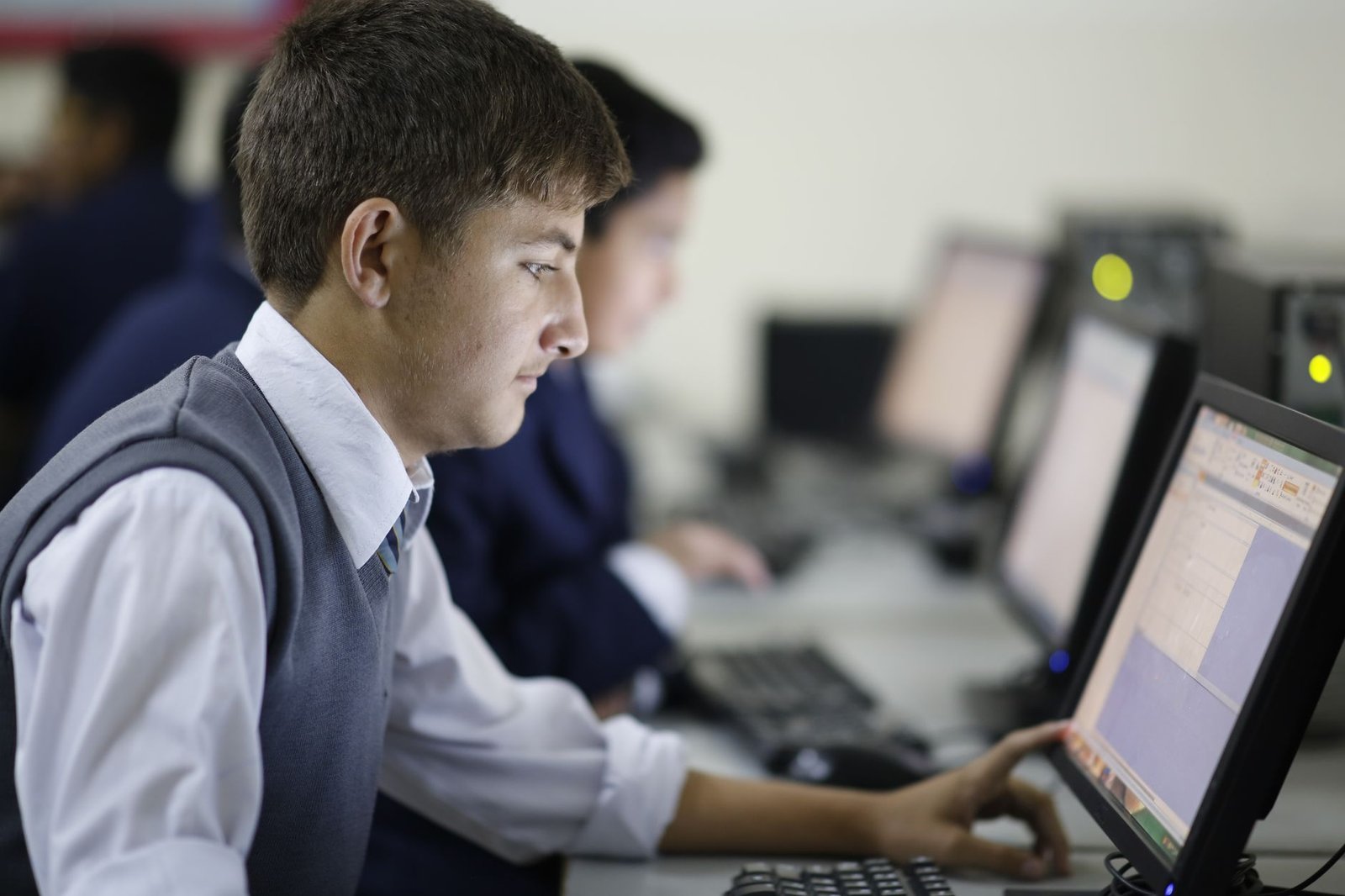
High school students need more than subject knowledge, but “21st century skills” should not become a vague list of fashionable traits. Schools can teach critical thinking, creativity, collaboration, communication, digital literacy and responsible AI use through normal subject learning when the skills are made explicit and practised deliberately.
The goal is not to predict every future job. It is to help students use knowledge well in unfamiliar situations, evaluate information, work with others and continue learning as technology and society change.
What counts as a 21st century skill?
There is no single universal framework, but several themes recur across major education and labour-market sources:
- critical and analytical thinking;
- creative thinking;
- communication;
- collaboration;
- digital and media literacy;
- technology literacy;
- adaptability and resilience;
- curiosity and lifelong learning;
- responsible decision-making.
The World Economic Forum’s Future of Jobs Report 2025, based on a survey of more than 1,000 employers representing over 14 million workers across 55 economies, found that analytical thinking remained the most widely cited core skill. Creative thinking, resilience, leadership and social influence, technology literacy, curiosity and lifelong learning also featured prominently.
Source: World Economic Forum, Future of Jobs Report 2025
This is employer evidence about workforce skills, not a prescription for a school curriculum. Education still has broader aims, including knowledge, citizenship, wellbeing and personal development.
Critical thinking should be taught inside subjects
Critical thinking is stronger when students have enough subject knowledge to evaluate evidence and arguments rather than treating it as a generic trick.
Practical classroom approaches include:
- comparing competing explanations;
- checking the quality of sources;
- asking what evidence would change a conclusion;
- distinguishing correlation from causation;
- identifying assumptions;
- explaining why one solution is better than another.
These activities can be embedded in science, history, language, social studies, business and other subjects.
Creative thinking can be taught and assessed
OECD’s PISA 2022 assessment defined creative thinking as the capacity to produce diverse and original ideas and to evaluate and improve ideas. OECD has also worked with schools and teachers across countries to develop classroom resources for teaching and assessing creativity and critical thinking.
Source: OECD, Creative Thinking
Source: OECD, Fostering Students’ Creativity and Critical Thinking
Creativity in school does not have to mean an unstructured activity. Students can be given a clear problem, constraints, evidence and criteria, then asked to generate alternatives, test them and improve the result.
Digital literacy is more than knowing how to use software
Students also need to judge the information they encounter online.
UNESCO’s Media and Information Literacy framework emphasises the capacity to access, analyse, evaluate and use information critically, ethically and responsibly. Its current guidance addresses misinformation, digital citizenship and artificial intelligence as well as traditional media literacy.
Source: UNESCO, Media and Information Literacy
Useful high-school activities include:
- checking the original source behind a viral claim;
- comparing primary and secondary sources;
- identifying sponsored or persuasive content;
- checking image and video provenance;
- distinguishing evidence from opinion;
- discussing privacy, consent and digital footprints.
AI literacy should include judgement, not just prompting
Generative AI can help students explore ideas and receive feedback, but it can also produce inaccurate information and allow learners to offload thinking.
OECD’s Digital Education Outlook 2026 notes that general-purpose chatbot use can create risks of cognitive offloading and disengagement when it replaces learning. It also reports that educational uses designed around clear pedagogical goals can support learning and skills such as argumentation, critical thinking, creativity and collaboration.
Source: OECD Digital Education Outlook 2026
Students should therefore learn to:
- verify AI-generated claims;
- identify missing evidence;
- compare AI output with authoritative sources;
- protect personal and sensitive data;
- understand when AI use must be disclosed;
- use AI to support thinking rather than replace it.
Collaboration needs structure
Group work does not automatically teach collaboration. A strong collaborative task gives students an interdependent problem and makes individual responsibility visible.
Teachers can improve group work by:
- defining the shared output;
- assigning or rotating roles;
- requiring evidence for decisions;
- using peer feedback;
- asking students to reflect on how the group worked;
- assessing both the result and the process where appropriate.
Communication should include several formats
Students should practise explaining ideas to different audiences, not only writing essays for a teacher.
Useful formats include:
- brief presentations;
- structured debates;
- technical explanations;
- visual summaries;
- persuasive proposals;
- team briefings;
- evidence-based written recommendations.
The emphasis should remain on clarity, evidence and audience rather than presentation polish alone.
Project-based learning works best when the learning goal is explicit
Projects can combine subject knowledge, collaboration and problem-solving, but they should not become activity for activity’s sake.
A well-designed project identifies:
- the subject knowledge students must use;
- the skill being practised;
- the evidence or constraints that shape the problem;
- the quality criteria;
- how students will receive feedback;
- how learning will be assessed.
For example, a sustainability project might require students to interpret real data, compare solutions, justify a recommendation and communicate it to a defined audience.
Assessment should match the skill
Multiple-choice recall tests cannot capture every competency.
Depending on the skill, evidence can include:
| Skill | Possible evidence |
|---|---|
| Critical thinking | Evaluation of sources, argument quality, justification of conclusions |
| Creative thinking | Range of ideas, originality, evaluation and improvement |
| Collaboration | Contribution, coordination, feedback and shared decision-making |
| Communication | Clarity, structure, evidence and adaptation to audience |
| Digital literacy | Source verification, privacy decisions and responsible tool use |
Rubrics are more useful when they describe observable behaviour rather than broad labels such as “excellent teamwork”.
Do not replace foundational knowledge
Future-ready skills are not an argument for removing subject knowledge. Critical and creative thinking depend on knowing enough about a domain to recognise weak evidence, generate useful alternatives and make sound judgements.
Strong curricula combine knowledge and skill rather than forcing schools to choose between them.
Teachers need support too
OECD’s work on creativity and critical thinking emphasises teacher practice and professional learning. Schools should give teachers time, examples, assessment tools and opportunities to plan across subjects.
A “21st century skills” initiative will struggle if it consists only of a new framework poster without changes to lesson design and assessment.
A practical implementation sequence for high schools
- Define a small number of priority competencies.
- Describe observable student behaviours for each.
- Map where they naturally fit existing subjects.
- Design tasks that require knowledge and the target skill together.
- Use rubrics or performance tasks to assess progress.
- Train teachers and share examples.
- Review student work and refine the approach.
Related MATSH resources
For a deeper treatment of evaluating online information, privacy, cybersecurity and responsible AI use, see Digital Literacy for Teenagers.
Bottom line
High schools can develop future-ready skills without chasing unsupported statistics or predicting jobs that do not yet exist. The strongest approach is to combine solid subject knowledge with deliberate practice in critical thinking, creativity, collaboration, communication and digital judgement.
The skills become meaningful when students use them to solve authentic problems, evaluate evidence and improve real work.
Sources
Need In-House Training?
We run all our courses as private programmes for organisations across the GCC and Africa.
Request In-House →