
Sponsorship vs Mentoring for Women Leaders: When Each Mechanism Matters
November 7, 2026 · Women Empowerment · 3 min read
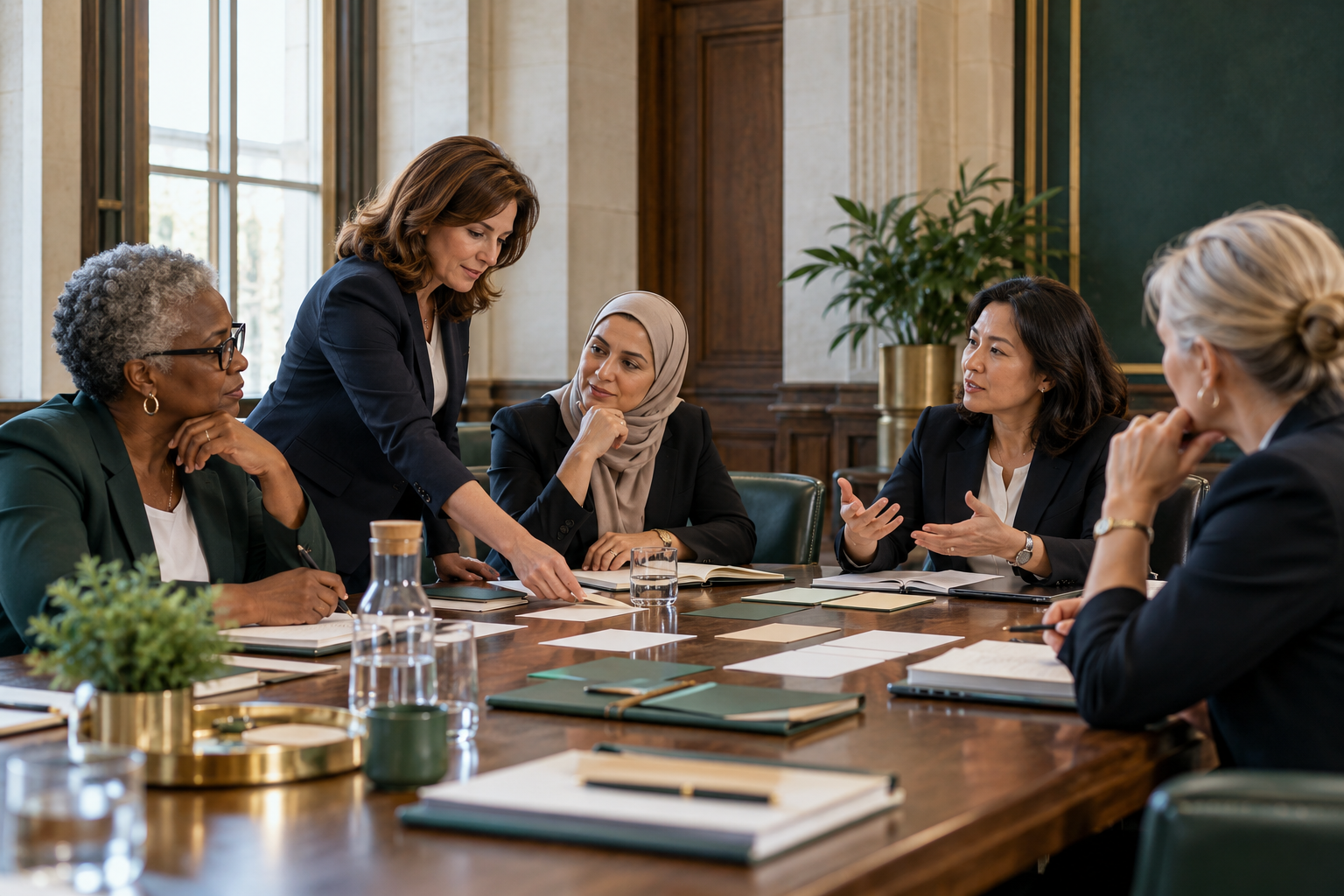
Mentors help people navigate. Sponsors help create access. A leadership pipeline often needs both.
Organisations sometimes use the terms interchangeably, then discover that capable women receive useful advice but little change in access to visible assignments, senior networks or promotion consideration. The distinction matters because mentoring primarily supports development and sense-making, while sponsorship uses organisational influence to create opportunities and advocacy.
ILO guidance on women in business and management has long recommended mentoring, sponsorship, networking and challenging assignments alongside gender-sensitive HR systems. Current ILO resources continue to emphasise transparent promotion, leadership development and enterprise-wide accountability rather than stand-alone training.
Source: ILO, More Women in Management Is Good for Business · Source: ILO, Women in Leadership Roles
1. What mentoring does
Helps a participant interpret experiences and choices.
Provides feedback, perspective and development support.
Explains organisational norms, networks and career paths.
Can create a trusted space for testing ideas and decisions.
2. What sponsorship does
| Sponsor action | Organisational effect |
|---|---|
| Recommend candidate for a stretch assignment | Creates career-building experience |
| Put a name forward for a role | Creates access to consideration |
| Introduce talent to senior stakeholders | Builds visibility and network access |
| Advocate during talent review | Ensures evidence is considered |
| Provide honest risk/reputation feedback | Helps participant prepare for higher-stakes roles |
3. When mentoring is the right primary mechanism
Mentoring is especially useful when the participant needs context, perspective, confidence, career navigation, feedback or access to a trusted sounding board. It should not be expected to solve opaque promotion criteria or lack of stretch assignments.
4. When sponsorship is the missing mechanism
Sponsorship becomes important when capable, ready talent remains outside the networks and opportunity flows where leadership careers are built. It is not favouritism when it operates inside transparent standards and widens access to fair consideration rather than guaranteeing outcomes.
5. Do not turn sponsorship into guaranteed promotion
A sponsor should advocate based on evidence, not override selection processes. Define boundaries: sponsors create access, provide context and advocate for consideration; panels and leaders still make appointment decisions using consistent criteria.
6. Use matching based on purpose
| Need | Better fit |
|---|---|
| Career reflection | Mentor |
| Functional capability | Expert mentor / coach |
| Cross-functional visibility | Sponsor |
| Access to stretch roles | Sponsor + manager |
| Organisation navigation | Mentor and sponsor can both help |
7. Train sponsors for the role
Senior leaders may agree to sponsor but default to mentoring conversations. Give sponsors explicit expectations: create visibility, identify assignments, challenge talent processes, give direct feedback and document actions.
8. Avoid informal exclusivity
If sponsorship relies only on pre-existing affinity and executive networks, it can reproduce the same access patterns the programme is trying to improve. Use transparent eligibility and a structured matching process where appropriate.
9. Measure actions, not meeting frequency
| Weak metric | Stronger evidence |
|---|---|
| Mentoring meetings held | Development goals progressed / decisions improved |
| Sponsor meetings held | Assignments, introductions or consideration opportunities created |
| Participant satisfaction | Readiness, opportunity and progression evidence |
10. Link both mechanisms to the leadership pipeline
Mentoring and sponsorship should not operate as isolated “women’s programmes.” Connect them to talent reviews, succession, leadership-development curricula, stretch assignments and promotion systems.
Common mistakes
Build mentoring and sponsorship into a real pipeline
MATSH’s Women’s Leadership Pipeline and Succession Programme Design Course helps talent teams connect capability development, sponsors, stretch assignments, readiness evidence and succession governance.
Sources
Need In-House Training?
We run all our courses as private programmes for organisations across the GCC and Africa.
Request In-House →