Digital Literacy for Youth in Low-Resource African Communities: How to Design Programmes That Work
August 2, 2026 · Education · 8 min read
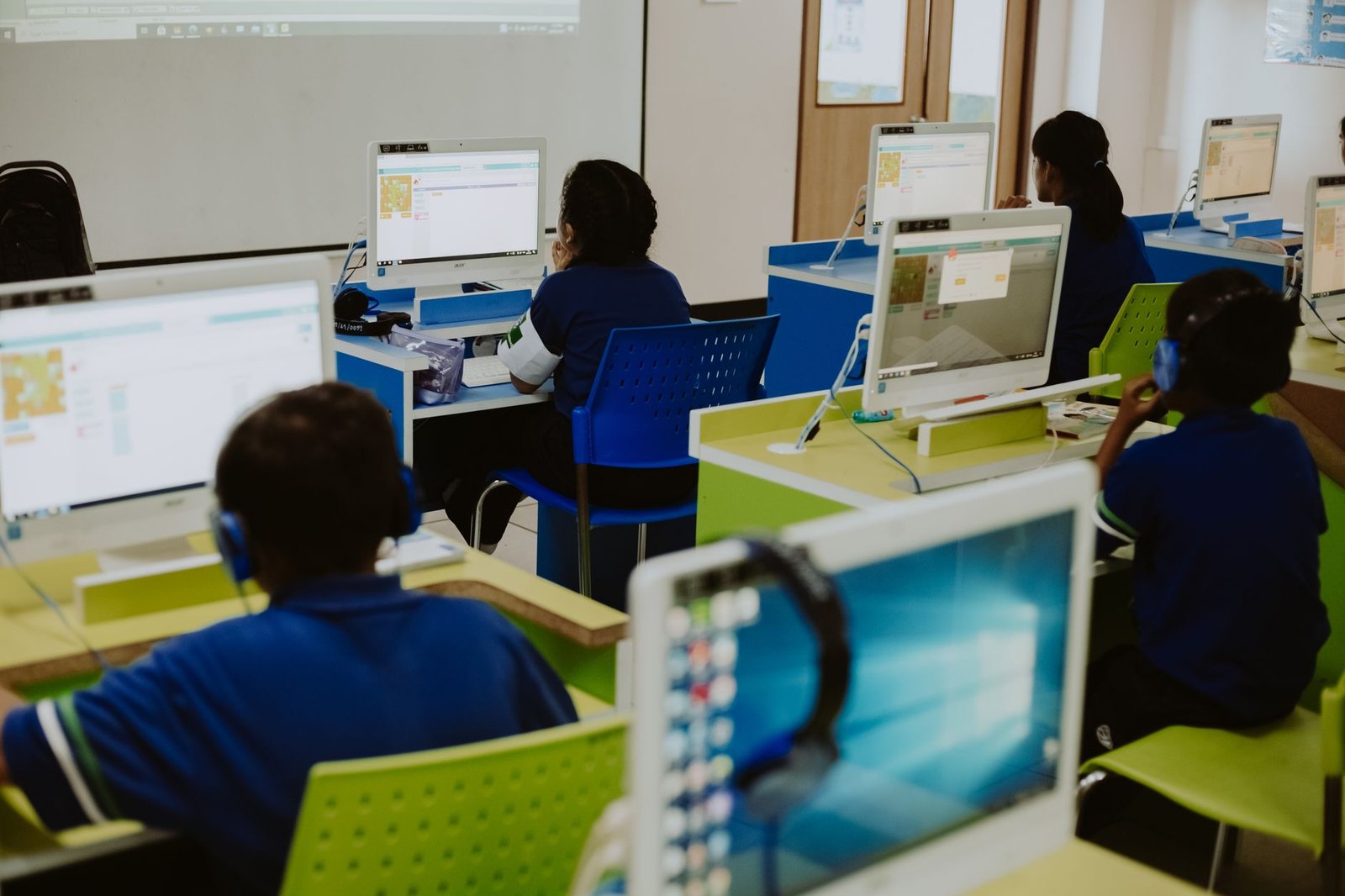
Digital literacy programmes for young people in low-resource African communities need to work with the infrastructure that actually exists. A programme designed around permanent broadband, one device per learner and uninterrupted electricity may fail even when the curriculum itself is excellent.
The stronger approach is to start with local constraints, define the digital capabilities young people genuinely need, and design learning that can continue through low connectivity, shared devices and uneven power access.
The digital divide is still substantial
The International Telecommunication Union’s 2025 report on the Africa region found that 38% of the population used the Internet in 2024, compared with a global average of 68%. The urban-rural gap was particularly large: 57% of urban residents were online compared with 23% of rural residents.
Source: ITU, State of Digital Development and Trends in the Africa Region, 2025
Those figures describe the ITU Africa region as defined in the report. They do not mean every country has the same level of access. National and local conditions vary widely.
Digital literacy is more than learning to code
A useful digital-literacy programme should help young people use technology safely, critically and productively.
Core capability areas can include:
- using devices and basic software;
- finding and evaluating information;
- communicating and collaborating online;
- creating digital content;
- protecting accounts and personal data;
- recognising scams and misinformation;
- solving basic technical problems;
- using digital tools for education, work and entrepreneurship;
- understanding responsible use of AI where relevant.
Coding can be valuable for some learners, but it should not replace the broader skills required to participate safely and effectively in a digital environment.
Begin with a local access audit
Before choosing devices or a learning platform, assess the actual delivery environment.
Questions should include:
- Is electricity available and reliable?
- What type of internet connection is available?
- What does data cost for learners?
- Which devices do participants already use?
- How many learners will share each device?
- Can content work offline?
- Which languages are used locally?
- What accessibility needs exist?
- Who will maintain the equipment?
- What digital skills do facilitators already have?
- What safeguarding risks need to be managed?
The answers should determine the programme design, not the other way around.
Design for low connectivity from the beginning
UNICEF’s 2026 Pathways Digital Competency Framework for Educators in Sub-Saharan Africa was explicitly designed for low-resource, offline, low-connectivity, device-limited and infrastructure-constrained settings.
Source: UNICEF, Pathways Digital Competency Framework, 2026
That principle applies beyond teachers. Youth programmes can use:
- downloadable learning packages;
- offline-first applications;
- local servers or cached content;
- small file sizes;
- audio and text alternatives to high-bandwidth video;
- scheduled synchronisation when connectivity is available;
- printed job aids for essential processes.
A programme should not stop simply because the connection drops.
Shared devices can work if access is managed well
One device per learner may be unrealistic in some communities. Shared-device models can still support useful learning when the programme designs for them intentionally.
Options include:
- pair or small-group activities;
- community digital hubs;
- school laboratories with scheduled access;
- mobile training units;
- device-lending systems;
- bring-your-own-device models where this does not exclude learners who lack a device.
Shared access requires clear scheduling, maintenance, account security and enough hands-on practice for every learner.
Train facilitators as seriously as learners
Digital learning fails when equipment arrives but educators and facilitators lack the confidence or support to integrate it into teaching.
UNICEF’s Pathways framework focuses on small, achievable competency steps for educators rather than assuming advanced digital capability from the start.
Facilitator development should cover:
- using the available devices;
- supporting learners with different starting levels;
- offline delivery;
- digital safeguarding;
- troubleshooting common problems;
- inclusive teaching;
- using technology only when it adds value.
Implementation matters as much as the platform
UNICEF’s 2025 implementation research in Ghana examined digital learning in low-resource primary-school settings. It highlighted four practical dimensions: appropriateness, adoption, fidelity and feasibility.
Source: UNICEF Innocenti, Digital Learning, Real Classrooms, 2025
These questions are useful for youth programmes too:
- Appropriateness: Does the tool make sense for the learners and local context?
- Adoption: Are facilitators and learners actually using it?
- Fidelity: Is it being used in the way the learning design intended?
- Feasibility: Can the programme sustain the infrastructure, support and cost?
Use local language and relevant tasks
Digital literacy becomes more meaningful when learners practise tasks connected to their lives.
Examples can include:
- searching for reliable agricultural or health information;
- creating a CV;
- writing a professional email;
- using a spreadsheet for a small business;
- comparing online information sources;
- creating a simple presentation;
- using digital payment tools safely;
- protecting a social-media account;
- applying for education or work opportunities;
- creating local-language digital content.
Where possible, instructions and examples should use languages learners understand well.
Build a progression from basic access to productive use
A programme can use staged development:
- Access: turn on, navigate and use the available device.
- Foundations: files, typing, connectivity, accounts and common applications.
- Information: search, evaluate and organise information.
- Communication: email, messaging, collaboration and digital etiquette.
- Creation: documents, spreadsheets, media or simple code where relevant.
- Safety: privacy, passwords, scams, misinformation and responsible AI use.
- Application: use digital tools for education, work, enterprise or community problems.
Learners do not all need to end at the same technical level. The pathway should reflect the programme’s objective.
Include digital safety from the first lesson
Giving young people access without teaching safe use can expose them to new risks.
Programmes should address:
- strong passwords and multi-factor authentication;
- phishing and scams;
- privacy settings;
- online harassment;
- misinformation;
- sharing personal information;
- financial fraud;
- appropriate use of generative AI;
- reporting harmful content or behaviour.
Safeguarding procedures should be adapted to participant age and local law.
Design explicitly for inclusion
A programme can unintentionally reproduce existing inequalities if it assumes every learner has the same time, device access, mobility and family support.
Consider:
- gender differences in device access;
- disability and assistive technology;
- travel distance;
- safe participation times;
- language;
- care responsibilities;
- school attendance and employment schedules;
- the cost of data or transport.
Track participation and outcomes by relevant groups so exclusion becomes visible.
Plan maintenance and replacement before buying equipment
The purchase price is only part of the cost of a digital-learning programme.
Budget for:
- repairs;
- replacement devices;
- batteries and charging;
- software and licences;
- connectivity;
- technical support;
- security;
- storage;
- facilitator training;
- content updates.
A smaller programme that can maintain its equipment may create more lasting value than a large rollout that stops when devices break.
Partnerships should have clear responsibilities
Governments, schools, telecom providers, technology companies, development organisations and community groups can all contribute, but the partnership needs clear ownership.
Define who is responsible for:
- connectivity;
- devices;
- facilitator training;
- content;
- safeguarding;
- maintenance;
- data protection;
- monitoring;
- long-term funding.
A partnership is not sustainable simply because many organisations are involved.
Country examples should stay country-specific
In Uganda, an Airtel Uganda and UNICEF partnership reported that by March 2025 it had connected 130 schools and reached 45,200 students and 1,820 teachers, with plans to expand further.
This is useful as an implementation example. It should not be used to claim that the same delivery model or outcome will automatically work in another country.
Measure capability, not only attendance
Useful programme measures include:
- baseline and follow-up digital skills;
- ability to complete practical tasks independently;
- safe-use knowledge;
- facilitator competency;
- device uptime;
- regular access to learning;
- completion by gender, location and other relevant groups;
- continued use of skills in school, work or enterprise;
- progression into further learning where that is the objective.
Attendance, devices distributed and certificates issued are activity measures. They do not show whether participants became more digitally capable.
A practical programme design sequence
- Define the learner group and intended outcome.
- Audit power, connectivity, devices, language and facilitator capability.
- Choose a realistic competency pathway.
- Design for offline and shared-device use where required.
- Train facilitators.
- Integrate safety and safeguarding.
- Pilot with a small cohort.
- Measure practical capability and implementation problems.
- Adapt before scaling.
- Budget for maintenance and long-term support.
Youth digital-skills development with MATSH
MATSH provides youth development and professional training across digital, communication, entrepreneurship and workplace capabilities. A digital-literacy programme should be tailored to the learner population, available infrastructure and the real educational or employment pathway it is intended to support.
Browse MATSH youth development courses.
Frequently asked questions
What is digital literacy for young people?
It is the ability to use digital tools safely, critically and productively. It includes information skills, communication, content creation, problem solving, privacy and security, not only coding.
Can digital-skills programmes work without reliable broadband?
Yes, if they are designed for the context. Offline content, local caching, shared devices and low-bandwidth materials can support learning where connectivity is limited.
What is the biggest barrier to digital learning in rural Africa?
There is no single barrier. Connectivity, electricity, device access, affordability, facilitator capability, language and maintenance can all constrain a programme, and the combination differs by location.
How should success be measured?
Measure whether learners can perform useful digital tasks safely and independently. Attendance and device distribution alone are not sufficient evidence of learning.
Sources
Need In-House Training?
We run all our courses as private programmes for organisations across the GCC and Africa.
Request In-House →