
VR Training and Skill Gaps: What the Evidence Actually Shows
August 2, 2026 · Education · 6 min read
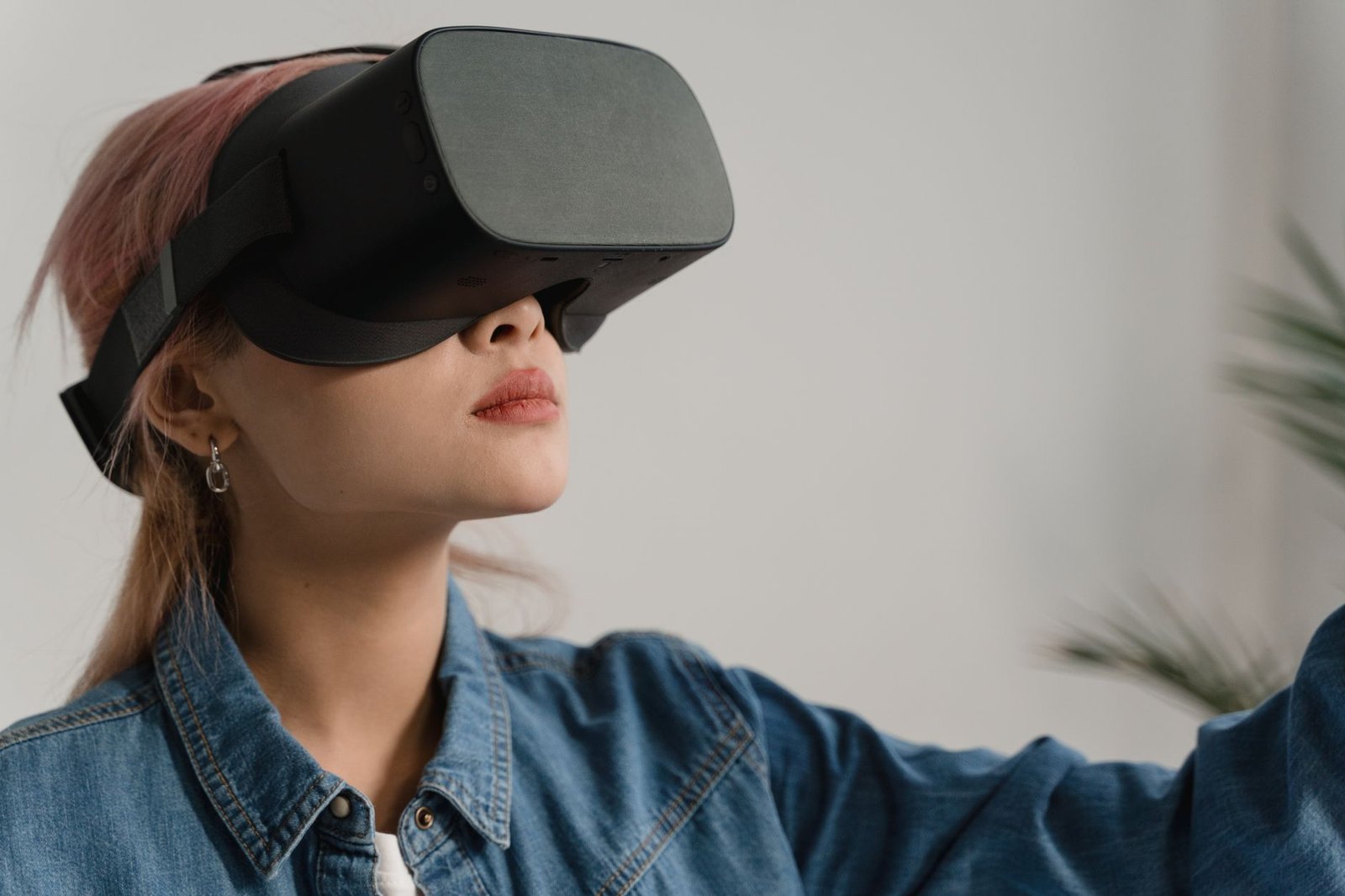
Virtual reality can be a useful training tool, but it is not automatically better than classroom learning, e-learning or supervised practice. Its value depends on the skill being taught, the quality of the simulation, opportunities for feedback and debriefing, and whether learners can transfer what they practise into real work.
The strongest evidence supports a narrower conclusion than many VR marketing claims: immersive simulations can be particularly useful when learners need realistic practice, repetition or exposure to situations that would be expensive, difficult or risky to recreate in the real world.
What the evidence says about VR training
A broad meta-analysis of virtual, augmented and mixed-reality training found that extended-reality methods can support learning and training transfer, but outcomes vary by task and implementation. That makes it inappropriate to claim one universal retention or performance uplift for every type of VR training.
Source: Kaplan et al., meta-analysis of VR, AR and MR as training methods.
VR can improve some learning outcomes
Recent controlled evidence in nursing education illustrates both the promise and the limits of immersive training.
A 2024 systematic review and meta-analysis of eight randomized controlled trials reported significant positive effects on knowledge, clinical skill, self-confidence and learning satisfaction among nursing students.
Source: Lin et al., 2024 systematic review and meta-analysis.
A separate 2024 meta-analysis of 11 randomized controlled trials found a medium-to-large improvement in clinical skill performance for VR training, while also showing that results differed according to the topic and training method.
Source: Kim and Park, 2024 systematic review and meta-analysis.
Newer evidence also shows limits
A 2026 meta-analysis of 20 randomized controlled trials involving 2,063 nursing students found that immersive VR improved knowledge acquisition and self-efficacy, but did not significantly improve psychomotor skill performance, satisfaction or confidence overall. The authors also found that knowledge benefits weakened at follow-up and highlighted the value of debriefing and reinforcement.
Source: Li et al., 2026 systematic review and meta-analysis.
This is exactly why VR should be treated as an instructional method, not as a guarantee of better outcomes.
What the well-known PwC soft-skills study actually found
PwC’s 2020 enterprise study is often cited in discussions of VR training. In that specific soft-skills programme, VR learners completed training faster than classroom learners and reported stronger confidence and emotional connection to the content.
PwC reported that VR learners were up to 275% more confident to act on what they learned after training. That figure relates to the study’s diversity-and-inclusion soft-skills scenario and should not be presented as a universal 275% improvement in competence.
Source: PwC VR Soft Skills Training Efficacy Study.
When VR is most useful
VR tends to make the strongest instructional case when at least one of these conditions applies:
- The real situation is risky. Learners can practise without endangering people, equipment or operations.
- The real situation is expensive or difficult to reproduce. Simulation can increase practice opportunities.
- Spatial or procedural practice matters. The learner benefits from acting inside a realistic environment rather than only reading about it.
- Interpersonal scenarios benefit from rehearsal. Well-designed simulations can allow repeated practice of conversations, decisions and behavioural responses.
- Consistency matters across locations. The same scenario can be delivered to distributed teams.
Where VR can disappoint
Immersion alone does not make training effective. Common failure points include:
- using VR for content that could be learned more simply another way;
- weak instructional design hidden behind impressive graphics;
- no debrief or feedback after the simulation;
- insufficient connection between the simulation and the learner’s actual role;
- poor accessibility or simulator discomfort;
- assuming completion equals skill transfer.
How to decide whether VR is worth using
Before buying hardware or developing a simulation, define the performance problem first.
- Identify the task or behaviour that needs to improve.
- Decide whether realistic simulation adds something that ordinary practice cannot.
- Define measurable learning and performance outcomes.
- Build feedback and debriefing into the experience.
- Compare results with a simpler alternative where possible.
- Measure transfer into real work, not only satisfaction with the technology.
Use a decision matrix before investing in VR
| Question | VR case is stronger when… | VR case is weaker when… |
|---|---|---|
| Practice value | Learners need realistic repeated practice | The objective is mainly reading or simple knowledge recall |
| Risk | Real-world practice could be unsafe or disruptive | Safe practice is already easy to provide |
| Environment | Spatial awareness or realistic context affects performance | The environment adds little to the target skill |
| Scale | The same scenario must be delivered consistently to many locations | The learner population is very small and local coaching is readily available |
| Feedback | The simulation can capture decisions and support useful debriefing | Learners simply complete the experience without feedback |
| Accessibility | Alternative formats and accommodations are planned | The design assumes every learner can comfortably use the headset |
Run a pilot before building a large VR programme
A small pilot can test whether immersion adds value before an organisation commits to hardware, licences or custom development.
- Choose one narrowly defined skill or scenario.
- Define the existing training alternative.
- Measure knowledge or skill before and after both approaches where practical.
- Include delayed assessment rather than immediate satisfaction only.
- Observe whether the skill transfers into work.
- Record discomfort, accessibility barriers, technical failures and facilitator time.
- Decide whether the additional benefit justifies the additional cost and complexity.
Include the full operating cost
The cost of VR is not just the headset. A realistic business case can include content development, licences, device management, cleaning and storage, facilitator time, technical support, updates, replacement equipment, learner time and accessibility alternatives.
For a broader guide to evaluating learning transfer, see Why Most Workplace Learning Efforts Fall Short.
Write the simulation objective before the scenario
A strong VR project begins with an observable task or decision, not a desire to use immersive technology. Define what the learner should notice, decide or perform inside the simulation and what evidence would show improvement.
Then decide which parts of the real environment matter for performance. If spatial awareness, pressure, sequence or realistic interpersonal cues affect the skill, immersion may add value. If the learner only needs to recall a rule or read information, a simpler method may be easier to maintain and evaluate.
Design the debrief as part of the simulation
Experience alone does not guarantee learning. After a scenario, learners need feedback on what they noticed, which decision they made, why it mattered and how the same pattern appears in real work. The debrief should connect simulation performance to workplace standards rather than focusing mainly on whether the experience felt realistic.
Where possible, allow a second attempt after feedback. Repeating the same or a varied scenario gives learners an opportunity to apply the correction, which makes the simulation a practice system rather than a demonstration.
Plan for accessibility and operational support
Before scaling, identify who may need an alternative format, how devices will be managed, how technical issues will be handled and how facilitators will support learners. These operating requirements belong in the business case because they affect participation, cost and consistency.
VR is one tool inside a wider learning system
Virtual reality can help close some skill gaps when it creates useful practice that would otherwise be difficult to provide. It should not be sold as a universal replacement for instructors, coaching, real-world experience or reinforcement.
For organisations building internal learning capability, MATSH’s Train the Trainer Course focuses on training design, facilitation, practice, reinforcement and evaluation across delivery methods.
Need In-House Training?
We run all our courses as private programmes for organisations across the GCC and Africa.
Request In-House →