

Welcome to our article on the top process improvement techniques that can help businesses boost efficiency and productivity in their operations. At [Our Company Name], we understand the importance of continuous improvement in today’s competitive business landscape. By implementing effective process improvement methodologies, organizations can optimize their workflows, reduce waste, and enhance customer satisfaction.
In this article, we will explore various methodologies and strategies that businesses can adopt to achieve continuous improvement. From lean six sigma tools to kaizen process improvement and quality management techniques, we will provide insights into how these approaches can drive operational excellence.
By incorporating these process improvement techniques into your organization’s practices, you can streamline operations, eliminate bottlenecks, and improve the overall efficiency of your processes. This, in turn, allows you to deliver high-quality products and services to your customers while maximizing profitability.
Join us as we delve into the world of process improvement and discover actionable strategies that can transform your business.
Key Takeaways:
- Implementing process improvement techniques can boost efficiency and productivity in business operations.
- Lean six sigma, kaizen, and quality management techniques are effective methodologies for achieving continuous improvement.
- Streamlining operations, reducing waste, and enhancing customer satisfaction are key goals of process improvement.
- Incorporating these techniques allows businesses to deliver high-quality products and services while maximizing profitability.
- Stay tuned for the following sections, where we will dive deeper into each process improvement technique.
Understanding Process Improvement in Modern Business
In this section, we will provide an overview of process improvement in the context of modern business. Understanding the principles and strategies behind process improvement is crucial for organizations looking to enhance their operational efficiency and meet customer demands. By adapting to the evolving needs and expectations of customers, businesses can stay competitive and achieve long-term success.
The Importance of Adapting to Customer Demands
Customer demands play a pivotal role in shaping the direction of business operations. In the fast-paced and consumer-centric modern business landscape, customer expectations are constantly evolving. To stay ahead of the competition, businesses must proactively identify and adapt to these evolving demands. By understanding the needs of their target audience and aligning their processes accordingly, organizations can improve customer satisfaction, build brand loyalty, and ultimately drive business growth.
Defining Business Process Improvement
Business process improvement refers to the systematic approach of analyzing, optimizing, and implementing changes to existing processes to enhance overall efficiency and effectiveness. It involves identifying areas of improvement, eliminating waste, and streamlining workflows to achieve operational excellence. By optimizing processes, organizations can reduce costs, improve quality, increase productivity, and deliver better value to customers.
The journey towards business process improvement requires a deep understanding of both customer demands and the internal workings of an organization. By leveraging data-driven insights and adopting continuous improvement methodologies, businesses can create a culture of excellence and drive success in today’s competitive business landscape.
Lean Six Sigma: Minimizing Variance for Maximizing Quality
In the realm of process improvement, Lean Six Sigma stands out as a proven methodology for enhancing quality and driving efficiency. Lean Six Sigma is a powerful approach that combines the principles of Lean Manufacturing and Six Sigma, with the ultimate goal of minimizing variance and maximizing quality in business processes.
At its core, Lean Six Sigma focuses on identifying and eliminating waste, defects, and variations that can impact the overall performance and customer satisfaction. By applying Lean Six Sigma techniques, organizations can reduce defects, improve efficiency, and enhance customer satisfaction. This comprehensive methodology provides a systematic framework for achieving process improvement and driving operational excellence.
The Lean Six Sigma process typically consists of five stages, known as DMAIC: Define, Measure, Analyze, Improve, and Control. Each stage plays a crucial role in ensuring the success of process improvement initiatives. Let’s take a closer look at each stage:
- Define: This initial stage involves defining the problem statement, project objectives, and deliverables. By clearly defining the scope of the improvement project, organizations can better focus their efforts and resources.
- Measure: In this stage, organizations collect and analyze relevant data to gain insights into the current state of the process. Variance is measured and analyzed to identify areas of improvement.
- Analyze: Once the data is collected, organizations analyze it to identify the root causes of variations and defects. This stage helps pinpoint specific areas that require improvement and guides decision-making for implementing effective solutions.
- Improve: The improvement stage focuses on implementing sustainable solutions to address the identified issues. It involves designing and implementing process changes to eliminate waste, streamline workflows, and optimize efficiency.
- Control: In the final stage, organizations establish controls and quality management systems to sustain the achieved improvements. Regular monitoring and measurement ensure ongoing compliance with standards and the continuous enhancement of process performance.
By adhering to the principles and tools of Lean Six Sigma, organizations can achieve significant improvements in quality, efficiency, and customer satisfaction. Minimizing variance through Lean Six Sigma techniques leads to streamlined processes, increased productivity, and reduced costs.
Implementing Lean Six Sigma requires a systematic approach and engagement from all levels of the organization. Teams must be equipped with the necessary skills and training to effectively utilize Lean Six Sigma tools. Continuous learning, collaboration, and a commitment to ongoing improvement are essential for unlocking the full potential of Lean Six Sigma.
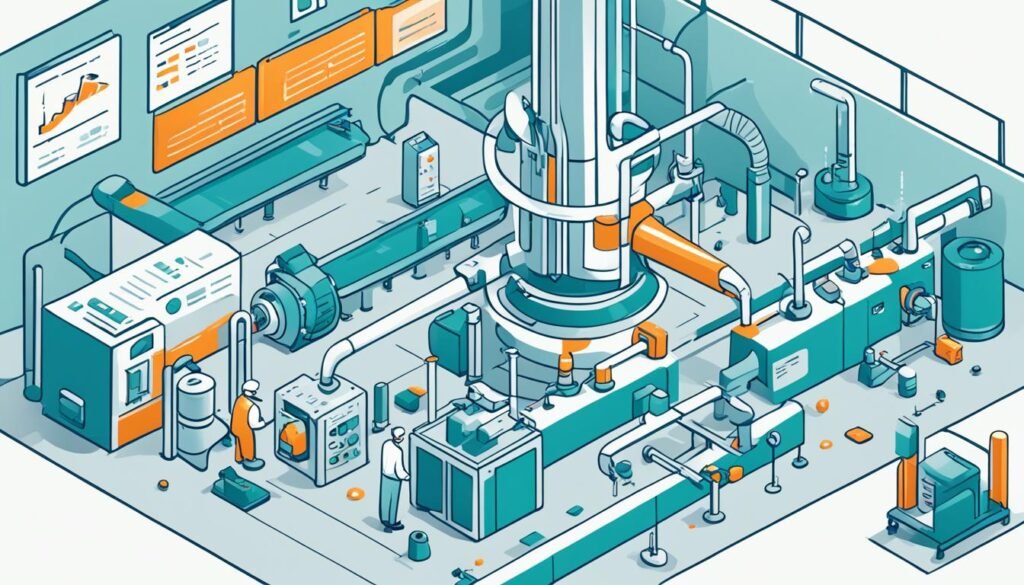
Process Improvement Techniques for Operational Excellence
To achieve operational excellence, organizations must implement effective process improvement techniques. These techniques not only streamline operations but also enhance efficiency and effectiveness. In this section, we will explore two key elements: the DMAIC process and continuous improvement tools. These components play a crucial role in driving process improvement and achieving operational excellence.
DMAIC Process: An In-Depth Look
The DMAIC process is a fundamental methodology used in lean six sigma. It stands for Define, Measure, Analyze, Improve, and Control. Each stage of the DMAIC process serves a specific purpose in identifying areas for improvement and implementing necessary changes.
Define: In the Define stage, the project scope and objectives are defined. This involves understanding the current process, identifying customer requirements, and setting clear goals for improvement.
Measure: The Measure stage involves collecting relevant data to assess the current performance of the process. This includes gathering baseline data, defining metrics, and determining process capability.
Analyze: During the Analyze stage, root causes of problems or inefficiencies are identified. This is done through data analysis, process mapping, and other analytical tools. The goal is to understand why the process is underperforming and uncover opportunities for improvement.
Improve: In the Improve stage, potential solutions are developed and implemented. This may involve making changes to the process, eliminating waste, or introducing new techniques or technologies. The focus is on optimizing the process and maximizing efficiency.
Control: The Control stage involves establishing processes and systems to sustain the improvements. This includes developing control plans, implementing standard operating procedures, and monitoring performance to ensure that the gains achieved are maintained over time.
By following the DMAIC process, organizations can systematically identify and address process issues, leading to enhanced operational performance and improved customer satisfaction.
The Role of Continuous Improvement Tools
Continuous improvement tools play a vital role in the process improvement journey. They provide organizations with the means to analyze data, identify process bottlenecks, and implement effective solutions. Let’s explore two essential continuous improvement tools: process mapping and root cause analysis.
Process Mapping: Process mapping visualizes the flow of work within a process, highlighting the sequence of activities and the interactions between different stakeholders or departments. It helps identify inefficiencies, redundancies, and potential areas for improvement. By creating a clear visual representation of the process, organizations can pinpoint bottlenecks and eliminate waste, leading to streamlined operations and increased productivity.
Root Cause Analysis: Root cause analysis is a problem-solving technique used to identify the underlying causes of process issues or errors. It involves systematically analyzing data, asking “why” repeatedly to uncover the root cause, and implementing corrective actions to prevent the problem from recurring. By addressing the root cause, organizations can eliminate the source of the problem and improve process performance.
By leveraging these continuous improvement tools, organizations empower their teams to identify process inefficiencies and drive meaningful change. The combination of the DMAIC process and continuous improvement tools creates a robust framework for achieving operational excellence.

Strategies for Enhancing Productivity and Profitability
When it comes to achieving success in business, enhancing productivity and profitability are key objectives. By implementing effective process improvement strategies, organizations can optimize their operations and generate sustainable growth. In this section, we will explore a range of techniques that can help businesses streamline their workflows and increase their bottom line.
One of the most impactful strategies for enhancing productivity and profitability is automation. By leveraging technology to automate manual tasks and repetitive processes, businesses can free up valuable time and resources, allowing employees to focus on more strategic and value-added activities. Automation not only improves efficiency but also reduces the risk of errors and ensures consistency in output.
Another strategy is standardization, which involves establishing standardized processes and procedures across the organization. By defining clear guidelines and best practices, businesses can minimize variations and improve overall efficiency. Standardization helps create a consistent and predictable outcome, reducing waste and enhancing productivity.
Measurement and analysis play a critical role in productivity optimization. Implementing performance metrics enables businesses to track key indicators and identify areas for improvement. By regularly analyzing data and metrics, organizations gain valuable insights into their operations, allowing them to make informed decisions and drive continuous improvement.
Furthermore, effective communication and collaboration are essential for boosting productivity and profitability. By fostering a culture of open communication, employees can share ideas, knowledge, and feedback, leading to innovation and process enhancement. Collaboration encourages cross-functional teamwork and allows for the leveraging of diverse perspectives and expertise.
“Automation and standardization are the pillars of efficiency enhancement. By leveraging technology and establishing standardized processes, organizations can optimize their operations and unlock their full potential.”
By incorporating these strategies into their operations, businesses can achieve significant improvements in productivity and profitability. Automation, standardization, performance metrics, and effective communication all contribute to optimizing workflows and reducing costs. The result is improved efficiency, enhanced customer satisfaction, and increased profitability.
| Strategy | Benefits |
|---|---|
| Automation | Streamlines processes, reduces errors, improves efficiency |
| Standardization | Reduces variations, enhances productivity, ensures consistency |
| Performance Metrics | Tracks key indicators, identifies areas for improvement, supports data-driven decision-making |
| Effective Communication | Fosters collaboration, promotes innovation, leverages diverse perspectives |
Total Quality Management: A Customer-Centric Approach
In order to achieve process improvement and optimize business operations, organizations need to adopt a customer-centric approach. This is where Total Quality Management (TQM) comes into play. TQM is a comprehensive management philosophy that focuses on meeting customer requirements and enhancing overall product and service quality.

The Pillars of TQM: Culture, Communication, and Continuous Improvement
Implementing TQM requires a strong foundation built on three essential pillars: culture, communication, and continuous improvement.
- Culture: Cultivating a culture that values quality and customer satisfaction is crucial for the success of TQM initiatives. It involves creating an environment where every employee understands and embraces their role in providing exceptional products and services to customers.
- Communication: Effective communication is essential in TQM to ensure that all employees are aligned with the organization’s quality objectives and customer expectations. Open lines of communication promote transparency, collaboration, and innovation among teams.
- Continuous Improvement: TQM emphasizes the importance of continuous improvement in all aspects of the organization. Through a structured approach, such as the Plan-Do-Check-Act (PDCA) cycle, organizations can identify areas for improvement, implement changes, and monitor outcomes to drive ongoing quality enhancement.
Performance Metrics: Gauging Success through Data
Measuring and tracking performance is critical to assess the effectiveness of TQM initiatives. By utilizing performance metrics, organizations can evaluate the impact of process improvements and make data-driven decisions to further enhance quality and customer satisfaction.
“What gets measured gets managed.” – Peter Drucker
Some common performance metrics used in TQM include:
| Metric | Description |
|---|---|
| Customer Satisfaction Score (CSAT) | Quantifies customer satisfaction levels and measures their perception of product or service quality. |
| Defects per Unit (DPU) | Measures the number of defects or errors per unit produced, indicating the overall quality of the output. |
| First-Time Fix Rate (FTFR) | Tracks the percentage of issues resolved on the first attempt, demonstrating efficiency and reliability in problem-solving. |
| Employee Satisfaction Index (ESI) | Assesses employee morale, job satisfaction, and engagement levels, as happy employees are more likely to deliver higher-quality work. |
These performance metrics provide valuable insights into the effectiveness of TQM implementation and enable organizations to refine their processes continuously.
Kaizen Methodology: The Philosophy of Continuous Enhancement
In this section, we will delve into the kaizen methodology as a philosophy of continuous enhancement. Kaizen, which means “change for the better” in Japanese, is a powerful approach to process improvement and operational excellence. It involves making small, incremental changes to improve efficiency, quality, and overall performance.
At its core, the kaizen methodology promotes a culture of continuous improvement where every individual in the organization is encouraged to identify areas for enhancement and implement small, manageable changes on a regular basis. This approach recognizes that even the smallest improvements can have a significant impact on overall productivity and operational efficiency.
The principles of kaizen focus on empowering employees, fostering teamwork, and cultivating a mindset of continuous learning and growth. It encourages individuals to question existing processes, challenge the status quo, and find innovative solutions to optimize performance. By embracing the kaizen philosophy, organizations can create a dynamic and adaptive work environment that thrives on continuous enhancement.
Central to the kaizen methodology is the concept of Gemba, which refers to the actual place where work is done. By engaging employees at the Gemba, organizations can gain valuable insights into existing processes, identify bottlenecks, and implement targeted improvements. This bottom-up approach ensures that process enhancements are driven by those who are closest to the work, resulting in more effective and sustainable solutions.
The kaizen methodology also emphasizes the importance of data-driven decision-making. By collecting and analyzing relevant data, organizations can identify areas for improvement, measure the impact of implemented changes, and make informed decisions to drive operational excellence.
By adopting the kaizen methodology, organizations can achieve a wide range of benefits, including:
- Improved operational efficiency and productivity
- Enhanced quality and customer satisfaction
- Reduced waste and costs
- Increased employee engagement and morale
- Streamlined workflows and processes
- Greater agility and adaptability to market changes
The kaizen methodology provides organizations with a systematic and structured approach to continuous improvement. It fosters a culture of innovation, collaboration, and accountability, where everyone is empowered to contribute to the ongoing enhancement of processes and operational excellence.
“Kaizen is not a destination; it is a journey. It requires commitment, persistence, and a dedication to never settle for the status quo. By embracing the kaizen philosophy, organizations can unlock their full potential and achieve sustainable growth.”
Utilizing Lean Methodologies for Streamlining Workflows
In order to achieve process improvement, businesses can turn to lean methodologies as an effective approach to streamline their workflows. Lean methodologies focus on eliminating waste, optimizing efficiency, and delivering enhanced value to customers. By implementing lean principles and practices, organizations can achieve operational excellence and drive sustainable growth.
Identifying Value through Value Stream Mapping
One of the key components of lean methodologies is value stream mapping, which helps businesses identify value and eliminate waste in their processes. Value stream mapping is a visual tool that provides insight into the flow of materials and information through a business process. By mapping out the current state and future state of the process, organizations can identify areas of improvement and implement changes to streamline workflows and reduce non-value-added activities.
Value stream mapping helps businesses understand the end-to-end process flow, including inputs, outputs, and the interaction between various activities and departments. This enables organizations to identify bottlenecks, inefficiencies, and areas where value is being lost. By leveraging this knowledge, businesses can optimize their workflows, improve cycle times, and enhance overall operational efficiency.
Creating and Maintaining Flow in Operations
In addition to value stream mapping, creating and maintaining flow within operations is crucial for achieving efficient and effective processes. Flow refers to the smooth and uninterrupted movement of work through the system, without delays, bottlenecks, or unnecessary handoffs. By eliminating disruptions and optimizing the sequence of activities, businesses can achieve a continuous flow that maximizes productivity and minimizes waste.
Creating flow requires businesses to analyze their processes and identify areas where work can be streamlined and standardized. This may involve reorganizing workstations, eliminating unnecessary steps, and implementing standardized work instructions. By ensuring that work moves seamlessly from one step to another, organizations can reduce lead times, improve responsiveness, and meet customer demands more efficiently.
| Benefits of Lean Methodologies for Streamlining Workflows |
|---|
| 1. Reduced waste and increased efficiency |
| 2. Improved cycle times and responsiveness |
| 3. Enhanced operational productivity |
| 4. Streamlined workflows and reduced lead times |
| 5. Delivered enhanced value to customers |
By applying lean methodologies, organizations can optimize their workflows, reduce lead times, and deliver enhanced value to their customers. Through value stream mapping, businesses can identify opportunities for improvement and eliminate waste, while creating and maintaining flow ensures seamless and efficient operations. By embracing lean principles, organizations can achieve process improvement and gain a competitive edge in today’s rapidly changing business landscape.
Conclusion
In conclusion, the implementation of process improvement techniques is crucial for businesses looking to enhance their operational efficiency and achieve continuous improvement. Throughout this article, we have explored various methodologies and strategies such as lean six sigma, kaizen, and total quality management, that can help organizations streamline their operations, reduce waste, and increase profitability.
By minimizing variances, optimizing workflows, and enhancing customer satisfaction, businesses can build a solid foundation for success in the dynamic and competitive modern business landscape. Adopting a customer-centric approach, embracing a culture of continuous improvement, and utilizing performance metrics are essential in achieving operational excellence.
Key takeaways from this article include the importance of adapting to customer demands, the role of process improvement in optimizing business operations, and the benefits of strategies such as automation, standardization, and performance metrics for enhancing productivity and profitability. By implementing these process improvement techniques, organizations can optimize their resources, reduce costs, and improve overall efficiency.
Therefore, it is imperative for businesses to prioritize process improvement and continuously seek ways to optimize their workflows. By doing so, they can stay ahead of the competition, meet customer expectations, and drive sustained growth and success in today’s fast-paced business environment.


