Agile Project Management: When Agile, Predictive or Hybrid Approaches Fit
August 2, 2026 · Professional Development · 8 min read
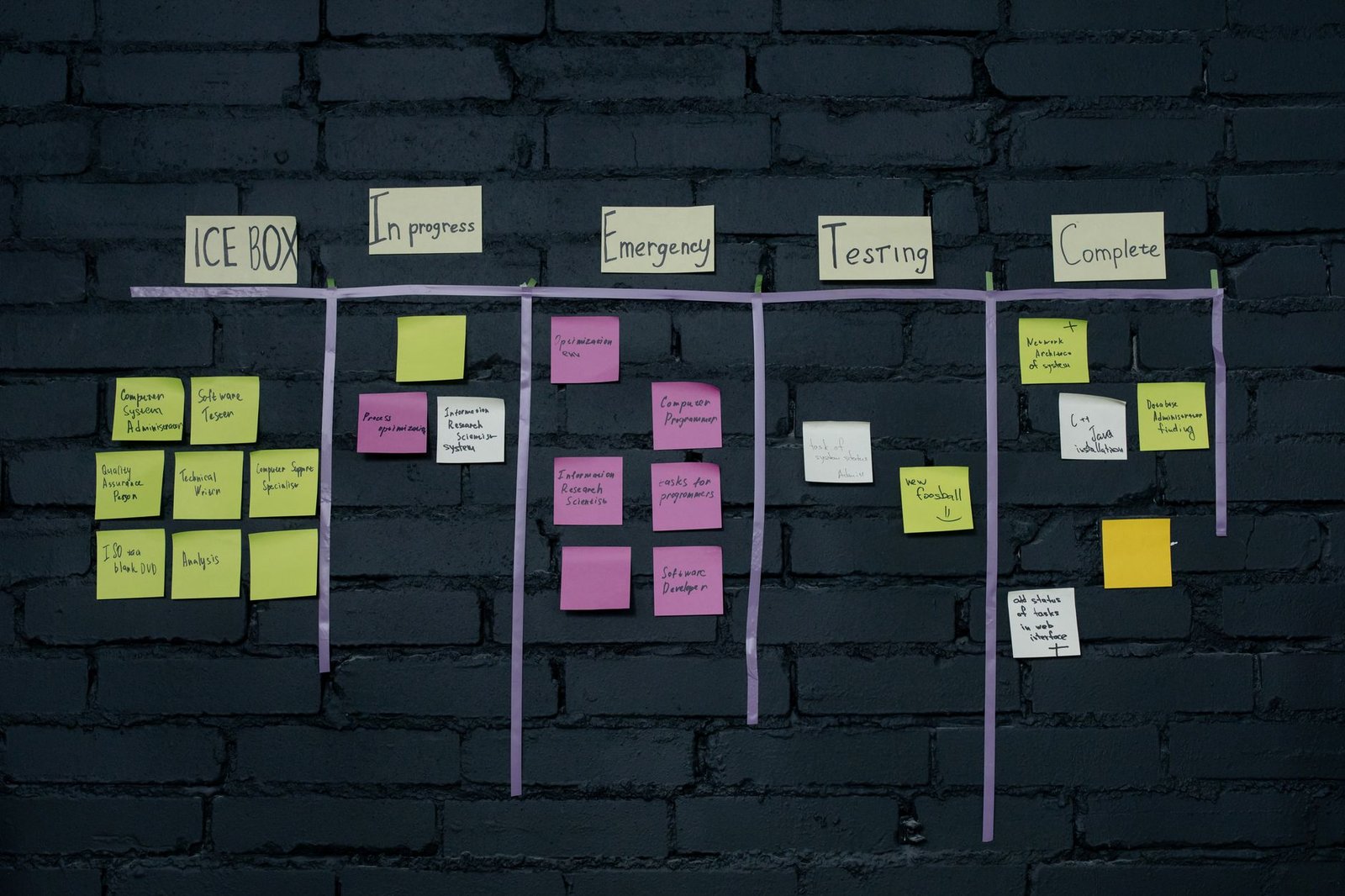
Agile project management is useful when teams need short feedback cycles, iterative delivery and the ability to adapt as they learn. It is not automatically superior to predictive project management, and it does not mean working without plans, documentation or governance.
Project Management Institute research published in 2024 found that project teams can perform similarly using predictive, hybrid and agile approaches. The more useful question is therefore not “Which methodology wins?” but “Which way of working best fits this project’s uncertainty, constraints, stakeholders and delivery environment?”
Source: PMI Pulse of the Profession 2024
Agile is an approach, not a synonym for Scrum
Agile emerged from software development but its underlying ideas have influenced many forms of product and project delivery. Agile approaches generally favour short feedback loops, incremental delivery, close stakeholder collaboration and adaptation as new information becomes available.
Scrum is one specific framework for complex work. Kanban and other approaches use different structures. An organisation can also combine predictive and agile practices in a hybrid model.
What Scrum actually says
The current official Scrum Guide was released in November 2020. It defines Scrum as a lightweight framework founded on empiricism and lean thinking.
Its three empirical pillars are:
- Transparency – important work and progress must be visible enough for informed decisions.
- Inspection – progress and outcomes are checked frequently enough to detect problems.
- Adaptation – when inspection shows that something is not working, the team adjusts.
Scrum uses an iterative and incremental approach to improve predictability and control risk. The Scrum Team is cross-functional and self-managing, with one Product Owner, one Scrum Master and Developers. The current guide describes the team as typically ten or fewer people.
Scrum’s key commitments
The 2020 Scrum Guide strengthened the connection between each artefact and a commitment:
- Product Backlog – Product Goal. The longer-term objective the Scrum Team works toward.
- Sprint Backlog – Sprint Goal. The purpose of the current Sprint.
- Increment – Definition of Done. The shared understanding of the quality required for completed work.
These commitments matter because Agile without clear goals and quality standards can become a stream of activity rather than disciplined delivery.
Agile does not mean no planning
Agile teams plan continuously. The difference is that they avoid pretending that every detail can be known accurately at the start of complex work.
Planning can occur at several levels:
- product or programme objectives;
- roadmaps and major milestones;
- release or delivery forecasts;
- Sprint or iteration planning;
- daily coordination.
As evidence changes, the plan changes. That is adaptation, not absence of discipline.
When predictive approaches can be the better fit
Predictive approaches can work well when requirements and delivery steps are relatively stable, dependencies are understood and a detailed sequence can be planned with reasonable confidence.
Examples may include work with:
- highly defined physical deliverables;
- contractual milestones that are difficult to change;
- stable requirements;
- strong regulatory or documentation requirements;
- repeatable work where uncertainty is mainly execution risk rather than discovery.
This does not mean predictive projects cannot adapt. It means more of the delivery logic is established upfront.
When agile approaches are useful
Agile approaches are often useful when:
- requirements are expected to evolve;
- users can provide frequent feedback;
- partial increments can deliver value or learning;
- technical or market uncertainty is high;
- teams need to test assumptions before committing to a large solution;
- the cost of discovering a wrong assumption late would be high.
Hybrid approaches are increasingly normal
PMI’s 2024 research found increased use of hybrid approaches, which combine elements of predictive and agile delivery. It also found significant differences by industry.
Construction respondents reported much greater use of predictive approaches than agile ones, while financial services and information technology showed higher use of agile and hybrid approaches. That supports a fit-for-purpose view rather than a universal methodology rule.
Hybrid delivery can be appropriate when, for example, a programme has fixed governance, procurement or infrastructure milestones but contains digital components that benefit from iterative development and user feedback.
Common failure mode: adopting ceremonies without the operating model
A team can hold daily stand-ups and two-week Sprints without being meaningfully agile.
Warning signs include:
- all decisions still require slow approval outside the team;
- the backlog has no clear connection to an outcome or Product Goal;
- work is regularly carried from Sprint to Sprint without addressing the cause;
- the review is treated as a presentation rather than a feedback opportunity;
- retrospectives happen but no improvements are implemented;
- the organisation fixes scope, cost, time and solution while still demanding “agility”;
- velocity is used to compare teams rather than support local forecasting.
Product Owner authority matters
In Scrum, the Product Owner is accountable for maximising product value and for effective Product Backlog management. If the person called “Product Owner” has no authority to order priorities or clarify the Product Goal, the organisation has created a title without the corresponding accountability.
The solution is not unlimited authority. Governance still matters. The organisation needs to define which decisions belong to the team, which belong to the Product Owner and which require higher-level approval.
Self-managing does not mean unmanaged
Scrum Teams decide internally who does what, when and how. That does not remove organisational objectives, budgets, regulatory obligations, risk controls or leadership accountability.
Good governance defines boundaries and outcomes while allowing the team enough autonomy to solve the work inside those boundaries.
Definition of Done protects quality
A Sprint is not successful merely because many backlog items moved across a board. Work should meet an agreed Definition of Done before it is treated as a completed Increment.
The Definition of Done can include relevant quality, testing, documentation, security or compliance expectations. This is particularly important in regulated or high-risk environments where “move fast” cannot mean bypassing required controls.
Agile is not anti-documentation
The Agile Manifesto values working outcomes over comprehensive documentation, but explicitly recognises value in documentation. The practical question is how much documentation is needed to support delivery, maintenance, compliance, knowledge transfer and decision-making.
Highly regulated sectors may need substantial documentation. Agile delivery changes when and how that documentation is created; it does not make legal or regulatory obligations disappear.
Measure outcomes, not ceremony compliance
Useful project and product measures depend on the work, but can include:
- lead time;
- cycle time;
- throughput;
- escaped defects or rework;
- forecast reliability;
- customer or user outcomes;
- time from idea to usable value;
- progress toward the Product Goal or programme outcome.
Velocity can help one team forecast its own future work. It should not be used as a productivity league table across teams because estimation practices differ.
Agile transformation is an organisational change problem
Adopting agile delivery changes decision rights, planning rhythms, management behaviour, team boundaries, funding and stakeholder involvement. Treating it as a software-tool rollout is therefore unlikely to be enough.
Leaders may need to change how they:
- set outcomes;
- delegate decisions;
- review progress;
- fund work;
- respond to uncertainty;
- measure performance.
GCC and African organisations should adapt to organisational context, not stereotypes
Project environments across the GCC and Africa vary enormously. A Dubai fintech, Saudi government programme, Kenyan technology company and Nigerian infrastructure project should not be expected to use the same delivery model merely because they are grouped into broad regions.
Relevant contextual questions include:
- How centralised are decision rights?
- What procurement and contracting constraints exist?
- How frequently can users or customers provide feedback?
- Are teams distributed?
- Which regulatory approvals are required?
- How reliable is the technical infrastructure?
- Which parts of the work are uncertain and which are predictable?
The methodology should follow the work rather than a regional stereotype.
A simple method-selection checklist
Before choosing predictive, agile or hybrid delivery, ask:
- How stable are the requirements?
- How expensive is late change?
- Can users provide frequent feedback?
- Can value be delivered incrementally?
- Which milestones are contractually or legally fixed?
- How much uncertainty exists in the solution?
- How much autonomy can the delivery team realistically have?
- What governance and documentation are mandatory?
The answers may point to a single approach or to a deliberate hybrid.
Develop project capability with MATSH
MATSH’s Agile Project Management Foundation Training can help professionals understand iterative delivery and Agile ways of working. Organisations should still choose methods based on project characteristics rather than adopting Agile as a universal policy.
Frequently asked questions
Is Agile better than Waterfall or predictive project management?
Not universally. PMI’s 2024 research found similar overall project performance across predictive, hybrid and agile approaches. Fit between the approach and the project environment matters more than methodology branding.
Is Scrum the same as Agile?
No. Agile is a broader family of values and approaches. Scrum is a specific framework for complex work with defined accountabilities, events, artefacts and commitments.
How large should a Scrum Team be?
The official 2020 Scrum Guide says a Scrum Team is typically ten or fewer people. It should be small enough to remain nimble but large enough to create useful value within a Sprint.
Does Agile mean no documentation?
No. Agile encourages teams to avoid unnecessary documentation, not to ignore useful, contractual, operational or regulatory documentation.
When is hybrid project management useful?
Hybrid delivery is useful when different parts of a project have different levels of uncertainty or governance. For example, fixed contractual milestones may coexist with iterative product development inside the same programme.
Sources
Need In-House Training?
We run all our courses as private programmes for organisations across the GCC and Africa.
Request In-House →