
Supply Chain Resilience in Africa: How to Prepare for Logistics Disruptions
August 2, 2026 · Education · 8 min read
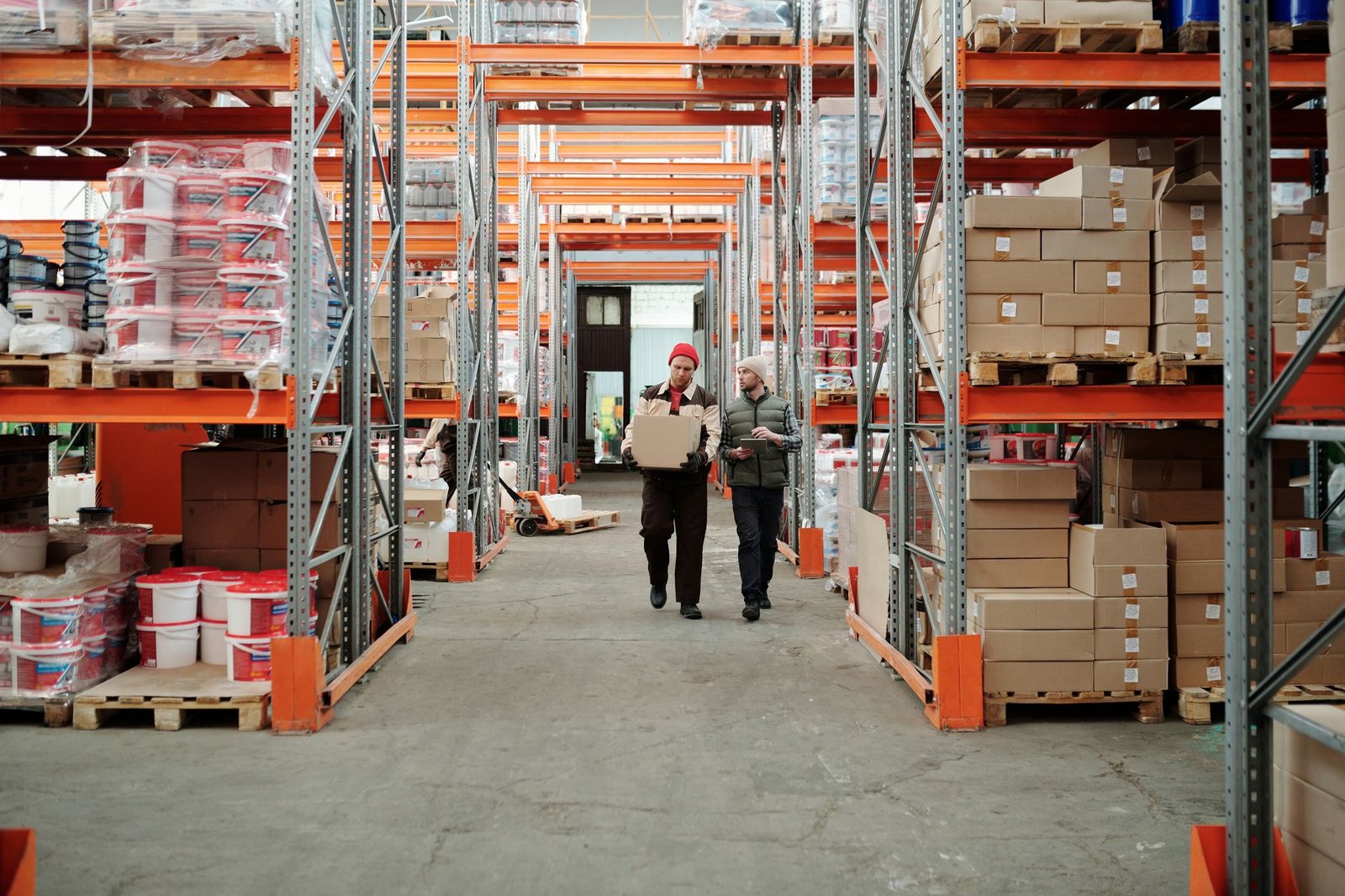
Supply chain resilience in Africa is not a single problem with a single solution. A manufacturer importing components through Durban, a food distributor using East African road corridors and a mining business moving exports through Southern African ports face very different risks.
What they share is exposure to disruptions that can occur outside the organisation’s direct control: maritime chokepoints, port congestion, border delays, infrastructure failures, extreme weather, geopolitical events, supplier failure and sudden changes in transport cost or availability.
A stronger resilience strategy does not try to predict every disruption. It identifies critical dependencies, prepares practical alternatives and creates enough visibility to make decisions before a delay becomes a crisis.
Why supply chain resilience remains a priority
UN Trade and Development’s Review of Maritime Transport 2025 describes a global shipping system under continued pressure from geopolitical tensions, route changes, high and volatile freight costs and chronic port disruption.
The impact is directly relevant to African trade. Red Sea disruption has diverted vessels around the Cape of Good Hope, lengthening routes and changing demand at African ports. UNCTAD reported that rerouting from the Suez route added roughly 12 days to an Asia-Europe journey during the acute 2024 disruption and increased pressure on ports in Southern Africa.
Source: UNCTAD, Red Sea Crisis and Implications for Trade Facilitation in Africa
By 2025, UNCTAD was still reporting major route distortion and elevated uncertainty. The lesson for companies is not to build plans around one specific crisis. It is to expect that routes, lead times and costs can change quickly.
Africa’s logistics risk is highly local
“African supply chains” should not be treated as one network. The continent contains different ports, customs systems, road and rail corridors, currencies, security environments and infrastructure constraints.
The African Development Bank continues to emphasise regional transport corridors as a foundation for trade integration. Projects around corridors such as Lobito, Nacala and other regional links illustrate why route choice and cross-border coordination matter alongside individual company decisions.
Source: African Development Bank, Regional Corridors as Drivers of Continental Integration, 2025
For a business, resilience planning should therefore be corridor-specific and product-specific rather than based on continent-wide assumptions.
Start with a dependency map
Before choosing solutions, map what would stop the business from serving customers or operating safely.
For each critical product, material or service, identify:
- the supplier and supplier location;
- origin port or dispatch point;
- primary transport route;
- border crossings and customs dependencies;
- destination port or warehouse;
- required lead time;
- available inventory;
- alternative suppliers or routes;
- contractual commitments;
- systems and data required to move the shipment.
This makes concentration risk visible. A company may believe it has three suppliers but discover that all three depend on the same port, shipping line, raw material or border crossing.
Prioritise by business impact, not by number of risks
Not every disruption deserves the same investment.
A practical assessment considers:
| Question | Why it matters |
|---|---|
| How critical is the item or route? | Some shortages stop operations; others are inconvenient. |
| How long can the business operate without it? | This defines the time available to respond. |
| How quickly can supply be replaced? | Long qualification or import cycles increase exposure. |
| What alternatives already exist? | An untested backup is not the same as a usable alternative. |
| What would disruption cost operationally? | This helps justify proportionate resilience investment. |
Supplier diversification should be targeted
“Use more suppliers” is too simple. Multiple suppliers can reduce concentration risk, but they can also increase cost, quality variation, administrative workload and complexity.
Diversification is most valuable where:
- one supplier represents a critical single point of failure;
- qualification lead times are long;
- the supplier operates in a highly exposed geography;
- transport routes are concentrated;
- there is no substitute inventory or design alternative.
Where dual sourcing is impractical, alternatives can include pre-qualified emergency suppliers, substitute materials, flexible specifications, additional inventory or contractual priority arrangements.
Inventory buffers should reflect risk and economics
Safety stock is not free. It ties up cash, uses storage space and may create obsolescence or expiry risk.
Set inventory policy using factors such as:
- demand variability;
- supplier reliability;
- lead-time variability;
- criticality;
- replacement time;
- storage constraints;
- expiry or obsolescence;
- cost of a stockout.
A critical spare part with a six-month replacement lead time should not automatically have the same policy as a widely available office consumable.
Build alternate route plans before they are needed
The Red Sea disruptions show why route alternatives matter. During severe disruption, companies that begin searching for alternatives only after the main route fails compete for the same limited capacity as everyone else.
For critical lanes, document:
- alternative ports;
- alternative road or rail corridors;
- available freight forwarders;
- customs and documentation requirements;
- estimated transfer and handling constraints;
- security considerations;
- who has authority to activate the alternative.
Plans should be tested periodically because a route that exists on paper may not be operationally viable.
Improve visibility before buying advanced analytics
Technology can support resilience, but poor data fed into sophisticated software still produces poor decisions.
Start by making sure the organisation can answer basic questions:
- Where is the shipment?
- When is it expected to arrive?
- Which orders depend on it?
- How much usable inventory remains?
- Which suppliers are late?
- Which lanes are deteriorating?
- What is the current customer impact?
Depending on scale, this may require ERP integration, a transport management system, supplier portals, tracking feeds or a simpler control-tower dashboard. The technology should solve a defined visibility problem rather than become a project in search of one.
Use early-warning indicators
Useful indicators depend on the business, but can include:
- port dwell time;
- border waiting time;
- supplier on-time delivery;
- lead-time variance;
- inventory days of cover;
- freight-rate movement;
- weather and security alerts;
- supplier financial distress;
- quality failures;
- customs holds;
- critical equipment downtime.
The objective is not to collect every possible signal. It is to identify changes early enough for someone to act.
Define escalation thresholds in advance
A resilience plan is weak if nobody knows when to activate it.
Examples of decision triggers include:
- lead time exceeds an agreed threshold;
- inventory cover falls below a critical level;
- a port or border closure is confirmed;
- a supplier misses consecutive commitments;
- a transport lane becomes commercially or physically unavailable;
- a safety or security threshold is crossed.
Each trigger should have an owner and a defined response.
Run realistic disruption scenarios
Scenario exercises help expose assumptions before a real crisis.
Useful scenarios might include:
- primary port unavailable for two weeks;
- critical supplier stops production;
- major road corridor closes;
- currency movement makes a sourcing route temporarily uneconomic;
- customs system outage;
- cyberattack prevents access to logistics systems;
- extreme weather interrupts a transport corridor.
Ask who decides, what data is required, which alternatives are available and how customers will be prioritised.
Supplier collaboration matters more than generic communication
Resilience improves when critical suppliers share information early enough for action.
For strategic suppliers, agree:
- forecast-sharing expectations;
- capacity constraints;
- lead-time definitions;
- quality escalation routes;
- business-continuity contacts;
- disruption notification requirements;
- recovery priorities.
Do not confuse frequent meetings with useful collaboration. The goal is timely, decision-relevant information.
Include customs and trade facilitation in the resilience plan
Physical transport is only one part of cross-border movement. Documentation, classification, permits, rules of origin and customs processes can create delay even when trucks, ships and inventory are available.
UNCTAD’s work on African trade facilitation during the Red Sea disruption highlights the importance of port operations, cargo-handling capacity, border-agency coordination, digital trade facilitation and human capability.
This means resilience teams should include customs and trade specialists where cross-border flows are critical.
Measure resilience without pretending disruption can be eliminated
Useful measures include:
- supplier on-time delivery;
- lead-time variability;
- stockout frequency;
- days of inventory cover for critical items;
- time to detect a disruption;
- time to make a response decision;
- time to recover normal service;
- percentage of critical dependencies with tested alternatives;
- expedited freight cost;
- customer orders affected by disruption.
The goal is not zero disruption. It is earlier detection, better choices and faster recovery at a cost the business can justify.
A practical resilience sequence
- Identify critical products, suppliers and routes.
- Map single points of failure.
- Assess impact and recovery time.
- Create proportionate supplier, route and inventory alternatives.
- Improve shipment and inventory visibility.
- Define decision triggers and owners.
- Test scenarios.
- Review supplier and corridor performance.
- Update plans when the network changes.
Build supply chain capability with MATSH
MATSH provides training in supply chain, procurement, project management, risk and professional management skills. Training is most valuable when learners apply it to the actual suppliers, routes, inventory policies and decisions in their organisation.
View MATSH Project Management training or browse all courses.
Frequently asked questions
What is supply chain resilience?
Supply chain resilience is the ability to prepare for disruption, continue critical activity where possible, adapt decisions and recover acceptable service. It does not mean eliminating every risk.
Should companies always use multiple suppliers?
No. Dual or multiple sourcing can reduce concentration risk, but it also adds cost and complexity. Use it where the impact of a single point of failure justifies the trade-off.
How much safety stock should a company hold?
There is no universal number. Stock policy should reflect demand variability, lead time, supplier reliability, criticality, storage constraints and the cost of a stockout.
Which supply chain risks matter most in Africa?
They vary by country, corridor and sector. Common exposures can include port and border delays, transport infrastructure, global maritime disruption, extreme weather, supplier concentration, customs processes, currency volatility, security and digital-system failure.
Sources
Need In-House Training?
We run all our courses as private programmes for organisations across the GCC and Africa.
Request In-House →