
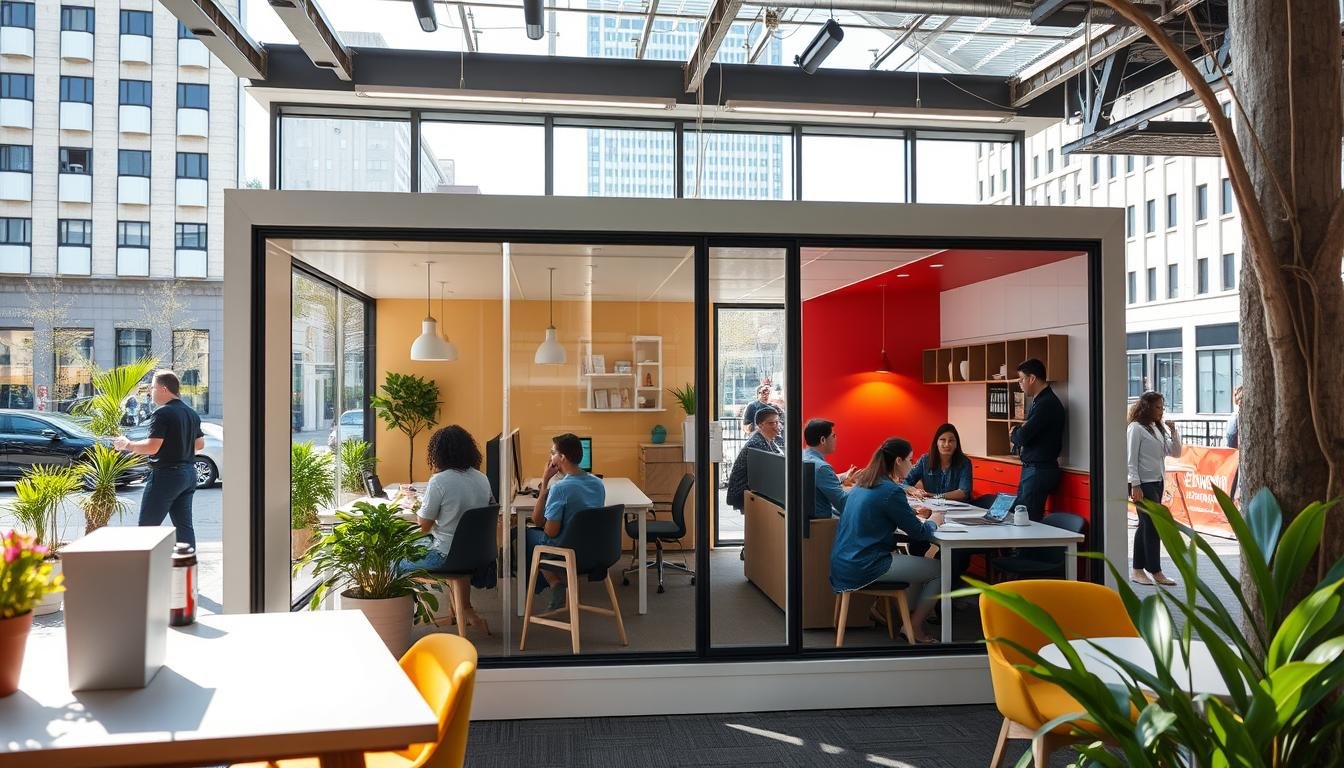
The COVID-19 pandemic has changed work places a lot. In the U.S., remote workers have grown by 244% since 20141. By 2023, 22,486,510 people worked from home, making up 13.8% of all workers. This is down from 17.9% in 20211.
Now, more companies like the idea of pop-up offices. They offer flexibility and can move around. In 2024, 81% of companies will let workers mix home and office work. This is a big jump from 42% in 20211.
Pop-up and flexible workspaces are changing how we work. They focus on being green and using new tech. They also change what we think an office should be. Learn how portable offices are changing the game.
Key Takeaways
- The pandemic has driven a 244% increase in remote workers in the U.S. since 2014.
- 81% of companies will allow hybrid work schedules by 2024, up from 42% in 2021.
- Pop-up and flexible workspaces are embracing sustainability and advanced technology.
- The modern office is evolving into a community hub, offering perks and flexible scheduling.
- Companies are opening satellite offices closer to where employees live to support hybrid work models.
The Evolution of Workplace Dynamics Since 2020
The global lockdowns of 2020 changed how we work. Now, more people work from home2. Companies want people to come to the office more, leading to hybrid work models.
Most executives think people should be in the office at least three days a week2. They see office time as key for productivity and teamwork2.
Impact of Global Lockdowns on Office Culture
The pandemic changed work forever, making remote work common3. Companies had to keep teams together and keep work flowing from afar4.
Transition from Remote to Hybrid Work Models
Now, many companies mix remote and in-office work2. This shift needs leaders who can adapt and care for their team’s mental health4.
Current Workplace Preferences and Trends
Even with more in-office work, people still want flexible hours2. Companies must keep up with digital changes and diversity to attract the best workers4.
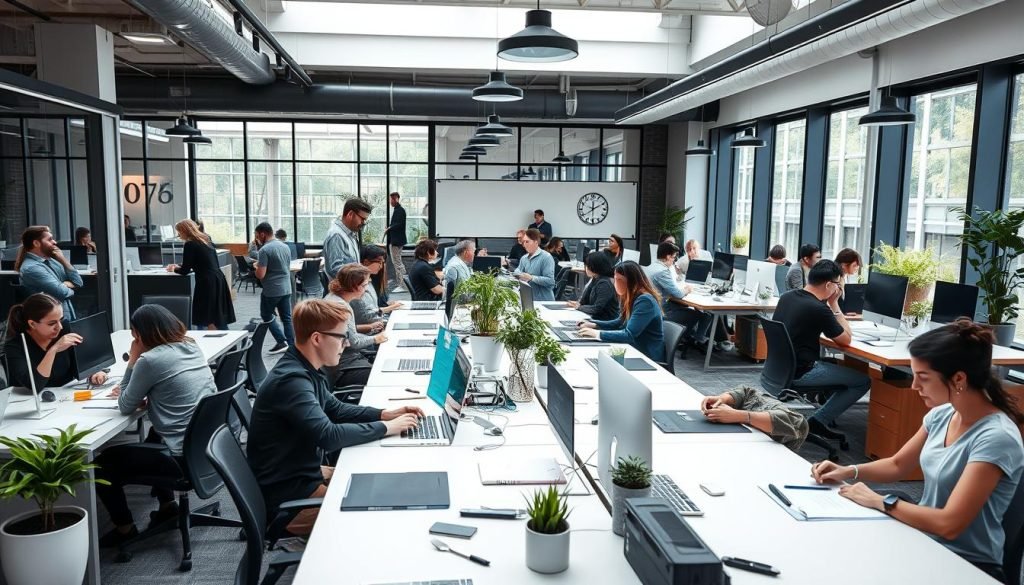
The pandemic sped up changes in work, focusing on flexible spaces and digital skills234. Success in today’s work world means being flexible, caring for employees, and embracing digital growth234.
Understanding Modern Workplace Statistics
Businesses are changing how they work. Now, many people want to work from home. This is because they want a better balance between work and life5.
Working from home has opened up new chances for businesses. They can talk to customers and partners online. This has helped them make more money5.
Tools like those in the Modern Workplace suite help businesses work better. They make it easier for teams to work together. This can save money and make more money5.
The Microsoft Modern Workplace can be changed to fit what a business needs. It helps solve today’s work problems5. Businesses need to be careful about online threats. The Modern Workplace has tools to keep data safe5.
Being digital is key to staying competitive. The Microsoft Modern Workplace has tools for this. It helps businesses work better together, stay safe, and save money5.
Coworking spaces are popular for people who need flexible workspaces. WeWork helped make these spaces well-known. It even got a $47 billion value6.
Mobile apps help employees work together better. They can also book workspaces. New tech like AR and AI make work better and more efficient7.
There are three main ideas for designing workplaces. They are Destination, Acceleration, and Habituation7. Gensler’s Digital Experience Design Labs are places for testing new tech7.
Statistics on Pop-Up Offices and Work Environments
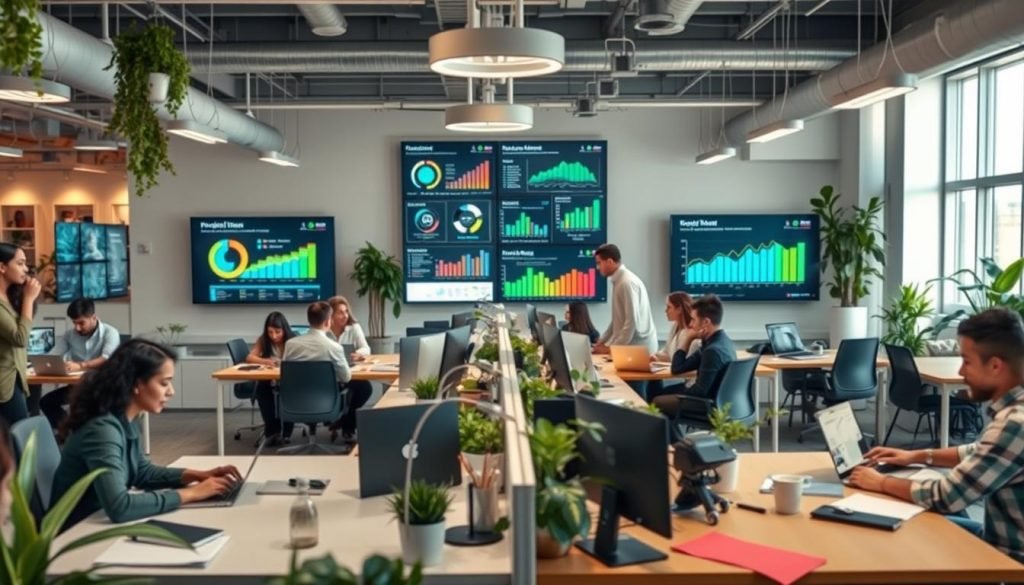
The flexible workspace market is growing fast. Pop-up offices are becoming more popular8. In the US, Pop-Up Shops’ revenue fell by 0.7% each year for five years. But, it’s expected to reach $15.6 billion in 20248.
Economic conditions are looking up. Inflation is stabilizing, which will help people spend more8.
Key Growth Indicators in Flexible Workspace Market
The US Pop-Up Shops market is set to grow. There are 42,553 businesses in this industry now8. These businesses sell food, clothes, art, and more8.
Regional Distribution of Pop-Up Offices
Eight US metro areas have a big remote work population9. Office use is still down by 39% from before the pandemic9. Austin, Texas, leads with 25% of its workforce working remotely9.
Raleigh, N.C., and Denver, Colo., follow closely9. This shows a big move towards flexible workspaces and its economic effects.
Cost Analysis and Economic Impact
8 Household goods make up most of the revenue in Pop-Up Shops. This includes furniture and books8. The industry has seen a 0.7% decline in the last five years8.
But, it’s expected to grow soon8. This change to flexible workspaces is big for the economy. Companies are now using pop-up offices and coworking spaces more.
Remote Work Revolution: By the Numbers
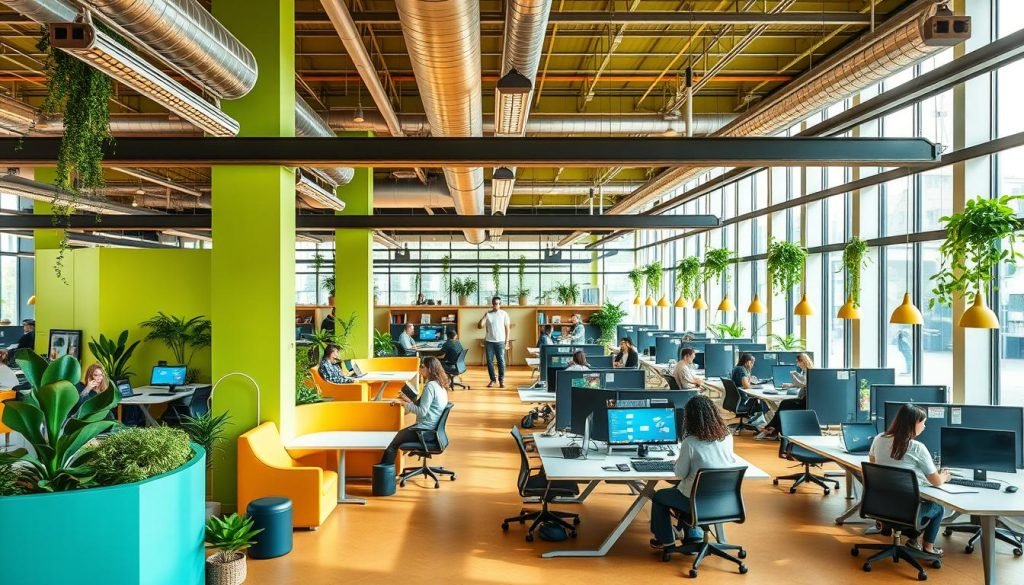
The remote work revolution has changed the global workforce. More people now work from home. In the U.S., the number of remote workers grew by 244% from 2014 to 2023. This means over 22 million people now work from home10.
In some cities, like Omaha, Nebraska, the rise in remote work was huge. It went up by 366%. Akron, Ohio, and Harrisburg, Pennsylvania, also saw big increases10.
Even though more people work from home, the number of remote workers in the U.S. has leveled off. In 2023, it was 13.8%, down from 17.9% in 202110. This shows how work is changing as we move past the pandemic. Now, people are trying out new ways of working that mix home and office11.
Not everyone has equal access to remote work. Those with college degrees are more likely to work from home than those without11. Also, white and Asian workers are more likely to work from home than Hispanic and Black workers11.
Remote work has its upsides, like being more productive and saving money. But, it also has downsides. Many remote workers feel lonely or disconnected from their team. They also find it hard to work together effectively12. Plus, 70% of remote workers have felt burned out, showing we need better ways to keep teams happy and engaged12.
The future of work will likely include more remote work. By understanding the trends and statistics, companies can make smart choices. They can create better work environments for everyone, no matter where they work from.

The Financial Impact of Flexible Workspaces
The move to flexible workspaces has changed how businesses spend money. Studies show 72% of companies make more money when people come back to the office13. This is because working together face-to-face boosts teamwork and new ideas13.
Revenue Changes in Traditional vs. Flexible Offices
Going back to the office has helped some businesses grow their income. But, working from home has saved money for both companies and workers13. Now, many companies give perks to get people to come to the office. For example, 72% offer travel help, 57% help with childcare, and 64% provide food13.
The rise of flexible workspaces has changed the real estate market a lot. The global Coworking market was worth USD 29.7 billion in 2023. It’s expected to hit USD 73.5 billion by 2032, growing 10.6% each year14. This growth is because more people want flexible, affordable office spaces that fit their work style14.
Cost Savings for Businesses and Employees
Flexible workspaces also help businesses save money. Industrious, a big player in this field, has grown a lot. It now has over 200 locations in 11 countries and saw its revenue triple since the pandemic13. This shows companies see value in saving money and being more efficient with their space13.
Remote and hybrid work setups have made the workforce more spread out. This benefits the flex industry by letting people work from different places13. It helps businesses cut down on space and give workers more freedom, saving everyone money13.
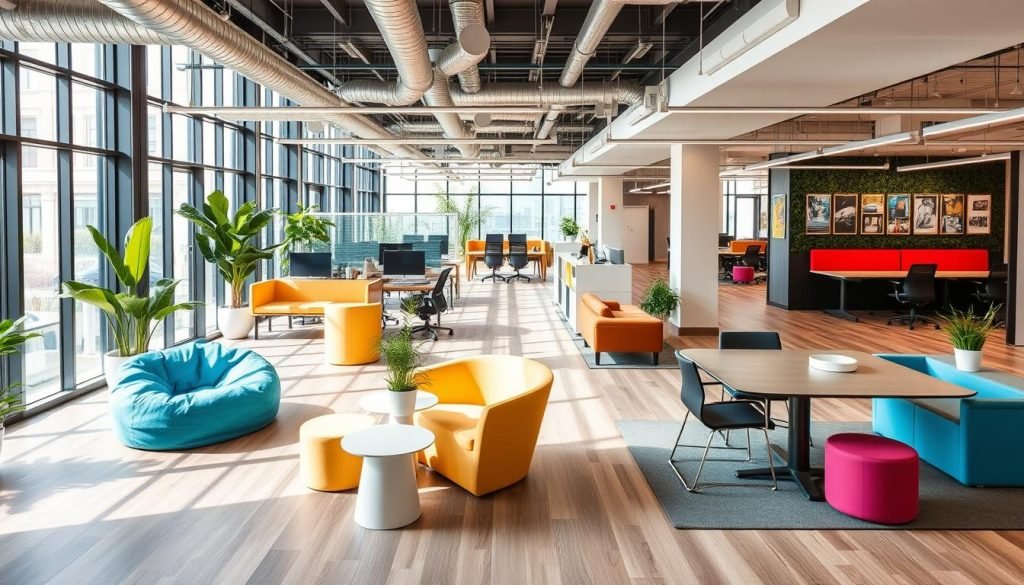
As more people want flexible workspaces, companies see the financial benefits. The demand for these spaces is expected to keep growing. This shows the shift to flexible offices is here to stay13.
Metropolitan Areas Leading the Flexible Office Trend
Many cities are leading the way in flexible offices. Austin, Texas is at the top, with 25% of workers using remote or hybrid models15. Raleigh, North Carolina is close behind at 24.5%, and Denver, Colorado has 22.3% of its workforce working from home15.
Washington, D.C. and Charlotte, North Carolina are also big players. Some smaller cities are growing their remote work rates too. For example, Lancaster, Pennsylvania saw a 17% jump in 2022-202315. Cape Coral, Florida and Lakeland, Florida also saw big increases15.
The growth of coworking spaces, temporary office solutions, and mobile office setups is key. These changes meet the needs of today’s workers. Cities like these are shaping the future of work16.
| Metropolitan Area | Remote/Hybrid Work Percentage |
|---|---|
| Austin, TX | 25.0% |
| Raleigh, NC | 24.5% |
| Denver, CO | 22.3% |
| Washington, D.C. | N/A |
| Charlotte, NC | N/A |
| Lancaster, PA | 17.0% |
| Cape Coral, FL | 13.0% |
| Lakeland, FL | 12.0% |
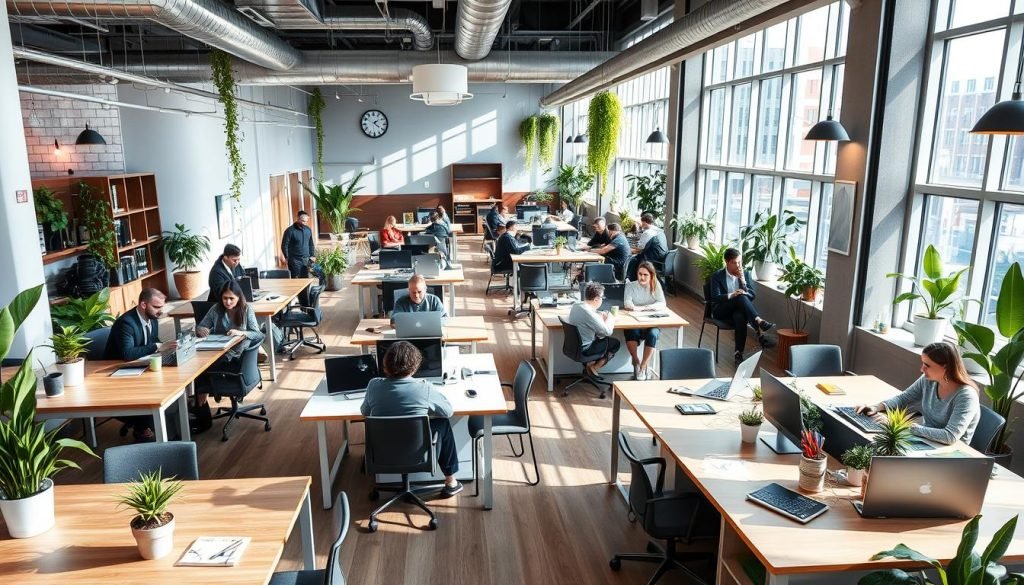
Employee Productivity in Various Work Settings
Workplace productivity changes a lot depending on where you work. Some bosses think being in the office makes people work better17. But, working from home can really boost how well you do and think creatively17. A mix of both, called hybrid work, tries to get the best of both worlds17.
Comparing Traditional, Remote, and Pop-Up Office Performance
Studies show that many people don’t feel very productive at work17. The workday has gotten 15% shorter from 2021 to 202317. People finish their tasks faster now.
Interestingly, people were 8 minutes more productive in the first half of 2023 than the second half17. This shows that how well you work can depend on the job and what you like.
Collaboration and Innovation Metrics
Being together can make coming up with ideas and solving problems faster17. But, open-plan offices can make people feel stressed and unhappy by 25% and 34%17. Also, 42% of people admit to doing other things during meetings17.
On the other hand, 87% of people who work in a mix of places say they’re productive every day17. But, 85% of bosses find it hard to see how well people are doing in this setup17. This shows that while offices can help people work together, working from home or in flexible places can also make people productive and creative.
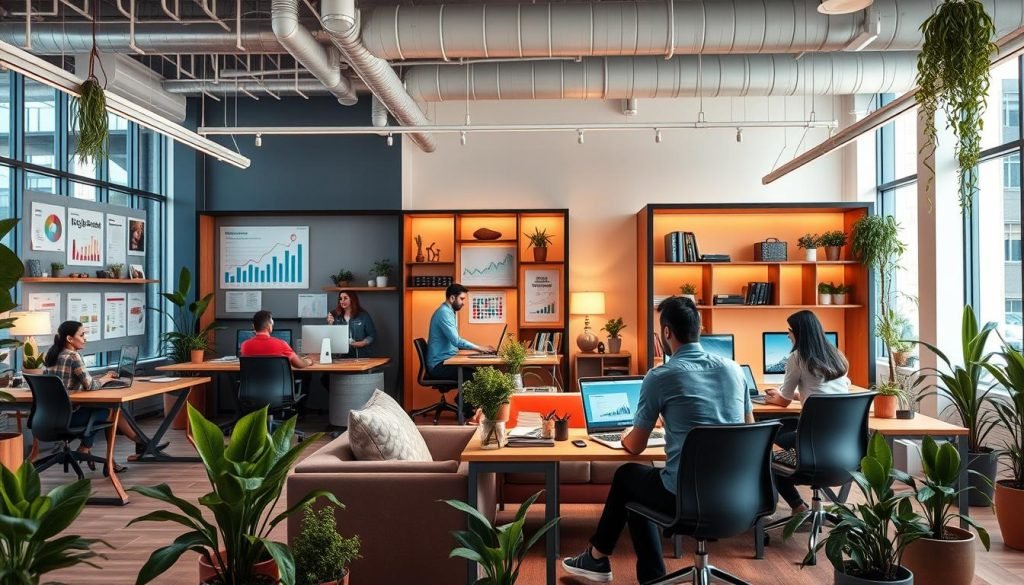
| Metric | Traditional Office | Remote Work | Hybrid/Pop-Up Office |
|---|---|---|---|
| Productivity | Lower productivity due to distractions and time spent in unproductive meetings17 | Higher productivity with fewer distractions and more focused work time17 | Balanced productivity, allowing for both collaborative and focused work17 |
| Collaboration | Improved collaboration and idea generation through in-person interactions17 | Reduced face-to-face collaboration, but potential for increased virtual interaction17 | Blend of in-person and virtual collaboration, leveraging the benefits of both17 |
| Innovation | Promotes innovation through serendipitous interactions and shared physical spaces17 | Potential for innovation through increased asynchronous communication and diverse perspectives17 | Fosters innovation by combining the strengths of in-person and remote work17 |
Understanding how productivity works in different places helps companies create better work spaces. This way, they can meet the needs of their employees and help the business grow17.
The Role of Technology in Modern Office Spaces
Technology is key in modern offices, making work flexible and more productive. It uses artificial intelligence (AI) to make routine tasks easier. This lets workers focus on important tasks18.
Tools for talking and cloud systems help teams work together, no matter where they are. This makes work more agile19. As work changes, tech helps make offices better for everyone19.
| Technology Trends | Impact on Workplace |
|---|---|
| Automation and AI | Streamlining tasks, enhancing productivity |
| Cloud-based Collaboration Tools | Enabling remote and hybrid work models |
| Flexible Communication Platforms | Facilitating seamless team coordination |
| Internet of Things (IoT) | Optimizing office space and resource utilization |
As work changes, using tech wisely is vital. It helps make offices better for everyone, leading to success19.
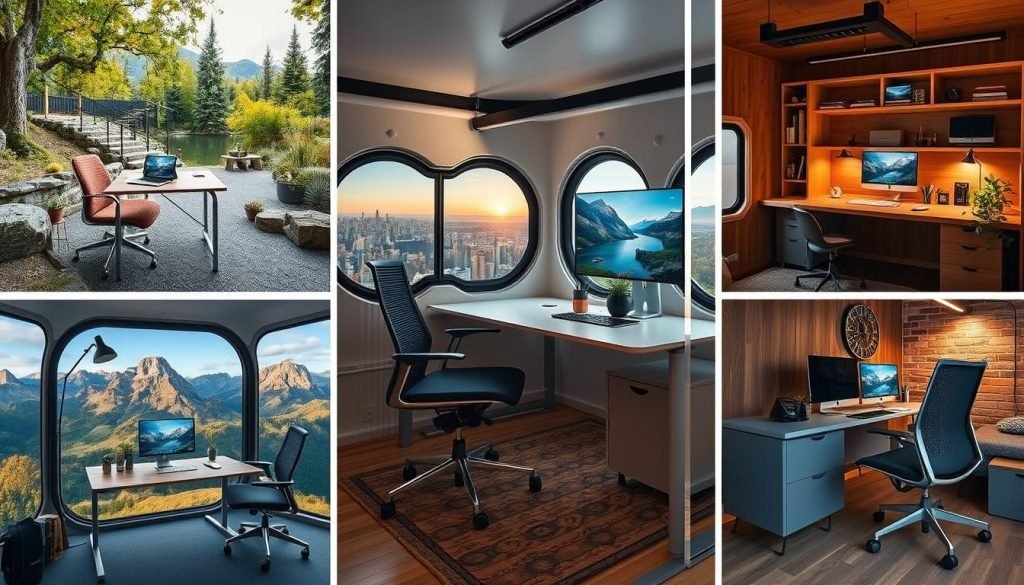
By using new tech, companies can meet today’s work needs. This leads to better, more mobile offices. It supports agile work and meets current trends1819.
Corporate Culture in Flexible Work Environments
The workplace is changing fast. Keeping a strong company culture in flexible work settings is now a big challenge. Even though 68% of leaders think being in the office is key for culture20, remote and hybrid work is becoming more common. This means companies must find ways to keep things flexible while still having face-to-face time.
Building Team Cohesion in Hybrid Settings
It’s hard to keep a team together in a hybrid setting. But, employers are using tech to help. They’re doing virtual team-building, regular meetings, and even random chats to connect remote and in-office workers21.
Maintaining Company Values Across Distributed Teams
Keeping a strong culture in teams spread out is also a big deal. Companies are using online spaces and tools to make sure their values stay the same, no matter where people are21.
By finding the right mix of flexibility and face-to-face time, businesses can keep a lively culture. This culture will connect with employees, no matter where they are2021.
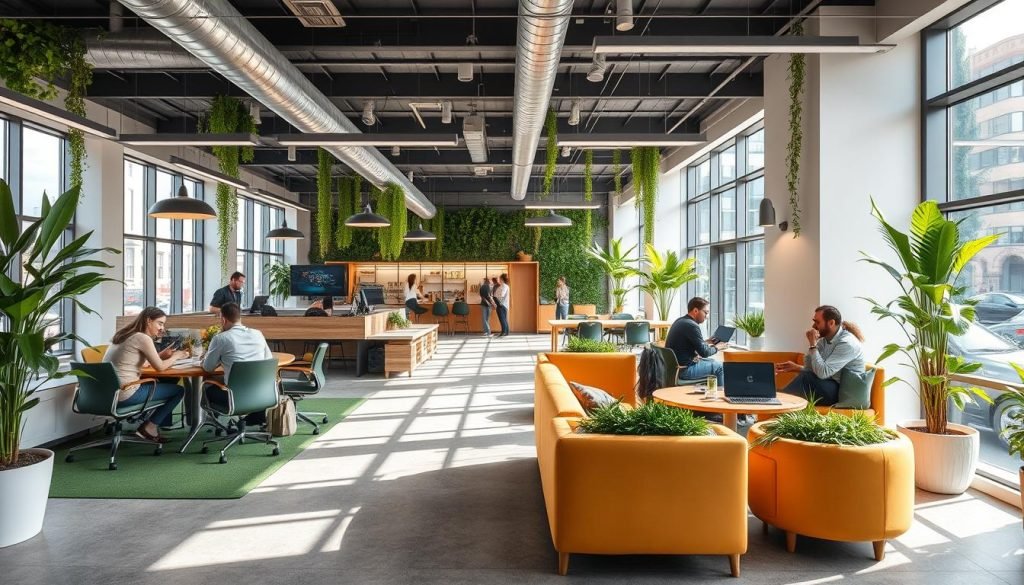
| Productivity Statistics | In-office Workers | Remote Workers |
|---|---|---|
| Increase in Productivity | 25% | 35% |
| Decrease in Absenteeism | 12% | 20% |
| Time Spent on Breaks | 15% | 10% |
| Job Satisfaction | 60% | 75% |
With tech and community-building, companies can keep a strong culture in flexible work settings. This helps teams do well, even as the workplace changes2021.
Real Estate Market Response to Changing Office Demands
The real estate market is quickly changing. Businesses want flexible work models and new coworking spaces and temporary office solutions22. This has greatly affected the commercial real estate sector. Office vacancies are at record highs in cities like New York and San Francisco. Property values have dropped by up to 75%22.
People are moving to newer, greener office buildings. This is called the “flight to quality.”22 Older office spaces are being turned into homes. Cities like Philadelphia and San Diego are seeing more homes built in downtown areas22.
Office hoteling and flexible workspaces are becoming more popular. Businesses want to use their space better23. In places like the UK and France, 48% of companies plan to use less office space soon23. This could lead to too many old office spaces, making developers change their plans23.
The real estate market is coming up with new ideas to meet the needs of today’s workers. We’re seeing more coworking spaces and old office buildings turned into homes2223.
Environmental Impact of Flexible Workspaces
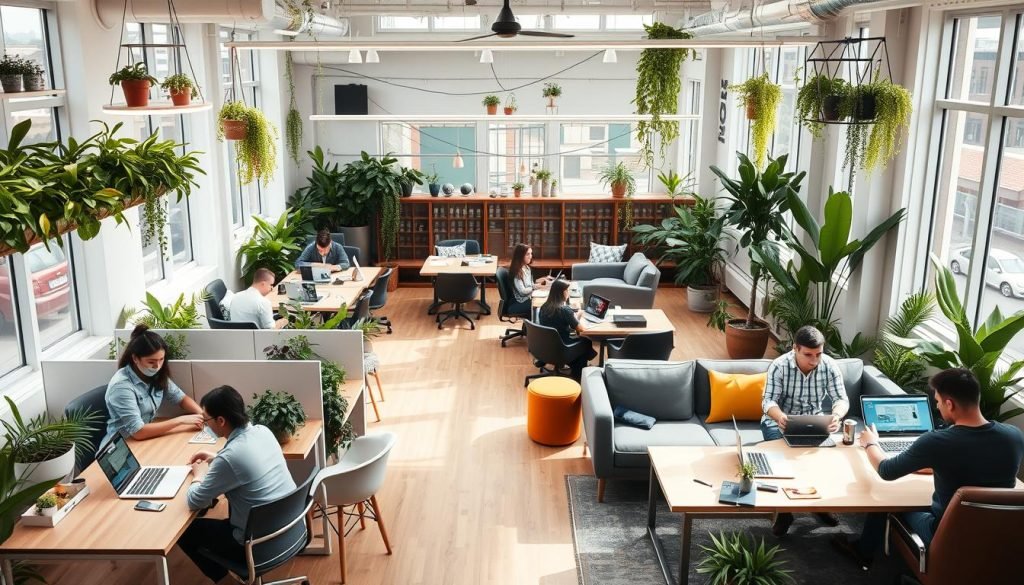
The move to agile work environments and mobile offices is growing. This change raises questions about their environmental impact. While remote and hybrid work can cut down on emissions from commuting, the full effect is complex.
Carbon Footprint Reduction
Flexible workspaces can help lower carbon footprint. For example, remote work cuts down on daily commutes. This means fewer miles driven and less pollution24.
But, this only covers a third of all miles driven. People still travel for meetings or events24.
Also, the impact of remote work depends on where people live and the energy use of homes versus offices24. New offices with green features also help reduce carbon emissions24.
Sustainability Metrics
To understand the environmental impact of flexible work, we need to look at many factors. These include energy use, waste, and how they affect cities24. While remote work can cut emissions, other changes might balance it out24.
As work changes, businesses and governments must watch these metrics closely. They should aim to make workspaces more sustainable24. This way, flexible work can help the planet without harming it24.
Future Projections for Office Space Utilization
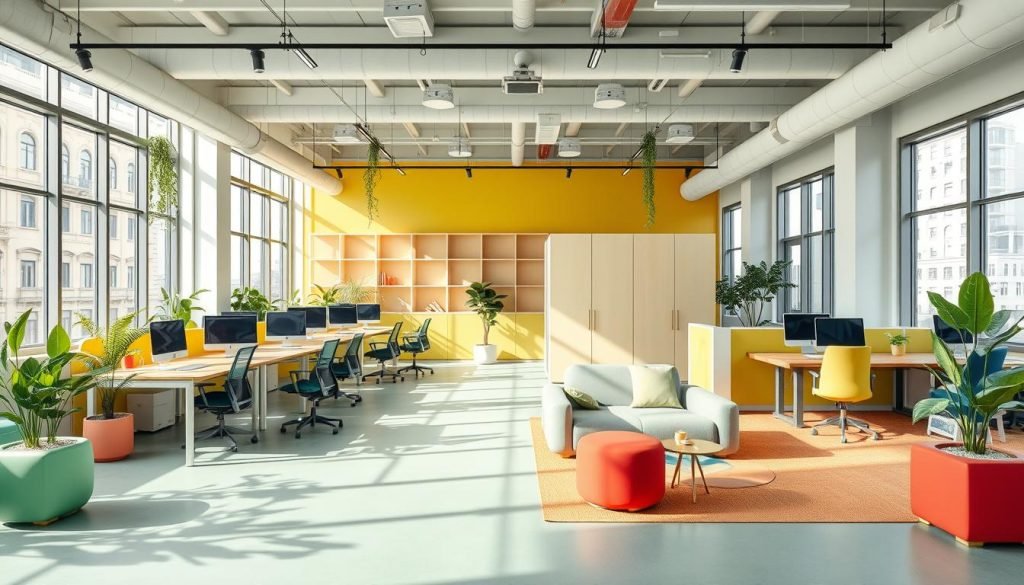
Looking ahead, office space use will likely shift towards more flexible work setups. By the end of 2024, 90% of companies aim to have return-to-office plans25. They want to make on-site experiences meaningful for today’s workers25. Also, expect more empty offices to turn into homes, especially in cities that rely on public transport25.
The future will mix remote work, flexible offices, and new urban designs25. Smart tech like thermostats and lights can cut down on carbon emissions, helping meet green goals26. Cloud-based systems will make offices run smoother and more efficient26.
Real-time seating plans and digital signs will boost teamwork and make rooms easier to find26. As we move forward, offices will need to be flexible and adaptable27. Companies can test new layouts in small areas with easy-to-change furniture27.
By embracing new trends, we can build offices that fit today’s workforce needs27.
Source Links
- Return to Office Statistics | What the Latest Numbers Reveal – https://www.deskbird.com/blog/return-to-office-statistics
- The remote revolution: assessing the impact of working from home on finance professionals – Future Business Journal – https://fbj.springeropen.com/articles/10.1186/s43093-024-00345-1
- Trajectories of work ability and associated work unit characteristics from pre-COVID to post-COVID pandemic period – https://oem.bmj.com/content/early/2024/11/17/oemed-2024-109475
- Top 5 Workforce Priorities For Leaders That Matter Most in 2025 – StellaPop – https://stellapop.com/top-5-workforce-priorities-for-leaders-that-matter-most-in-2025/
- What is the Microsoft Modern Workplace? – Infinity – https://www.infinitygroup.co.uk/blog/what-is-the-microsoft-modern-workplace/
- The Office as a Product — The Consumerization of Workplace Experience and How to Measure It – https://medium.com/@Pete_Bacevice/the-office-as-a-product-the-consumerization-of-workplace-experience-and-how-to-measure-it-8966c1d0b76b
- Redefining the Workplace for a New Era of Productivity and Engagement – https://www.gensler.com/blog/redefining-the-workplace-new-era-of-productivity-engagement
- Pop-Up Shops in the US – Market Research Report (2014-2029) – https://www.ibisworld.com/united-states/market-research-reports/pop-up-shops-industry/
- ‘Create A Magnet, Not A Mandate’: Companies Look To New Amenities To Drive Office Workers Back – https://www.bisnow.com/dallas-ft-worth/news/office/developers-look-to-innovative-amenities-to-help-drive-workers-back-to-the-office-experts-say-126457
- Can Cities Bounce Back After Years of Empty Offices and Remote Work? – Georgetown University – https://www.georgetown.edu/news/ask-a-professor-remote-work-and-cities/
- Who Still Works From Home? – https://www.nytimes.com/interactive/2024/03/08/business/economy/remote-work-home.html
- The Rise of Work-Life Balance: Impact on Company Culture & Productivity – https://firstreport.news/business/the-rise-of-remote-work/
- You Might Think: Why flex workspace is thriving despite the headlines – https://www.cbre.com/insights/podcasts/2024-ep4-you-might-think
- Coworking Market Size and Trends Research [2024-2032] – https://www.businessresearchinsights.com/market-reports/coworking-market-117634
- The Rise & Reign of Remote Work: A Decadelong Breakdown of America’s WFH Evolution – https://www.governing.com/workforce/the-rise-reign-of-remote-work-a-decadelong-breakdown-of-americas-wfh-evolution
- Coworking Industry Report Q3 2024: Total U.S. Inventory Surpasses 7,500 Mark as Almost All Leading MSAs Add Spaces – https://www.coworkingcafe.com/blog/national-coworking-report/
- The Latest Employee Productivity Statistics (Updated 2024) – SSR – https://www.selectsoftwarereviews.com/blog/employee-productivity-statistics
- Office Space Trends To Watch In the Second Half of 2024 – Preferred Office Network – https://preferredofficenetwork.com/office-space-trends-to-watch-in-the-second-half-of-2024/
- Top Modern Office Trends & Tech for 2024 | Add-On Products – https://www.add-on.com/the-modern-office-trends-to-look-out-for-in-2024/
- Decide Wisely: Remote Work vs. Office Work Statistics – https://www.sorenkaplan.com/remote-work-vs-office-work-statistics/
- Rethinking the Corporate HQ: How Flex Spaces Cultivate Company Culture – Preferred Office Network – https://preferredofficenetwork.com/rethinking-the-corporate-hq-how-flex-spaces-cultivate-company-culture/
- RealAccess issue no. 9 | The remote work revolution has changed office space – https://www.nuveen.com/gcreit/the-remote-work-revolution-has-changed-office-space
- Corporate real estate is on a ‘cliff edge’ as firms race to rethink communal spaces – https://www.bbc.com/worklife/article/20240509-corporate-real-estate-on-cliff-edge-to-rethink-communal-spaces
- Flexible Office Market Size & Share | Forecast Analysis [2030] – https://www.fortunebusinessinsights.com/flexible-office-market-108702
- Office Market Mid-Year Outlook: Cushman & Wakefield | AFIRE – https://www.afire.org/summit/officeoutlook2024/
- The Future of Workspace Management: Trends and Innovations – Add-On Products – https://www.add-on.com/future-of-workspace-management/
- Office makeovers: giving employees what they want – https://www.us.jll.com/en/trends-and-insights/workplace/office-makeovers-giving-employees-what-they-want


