
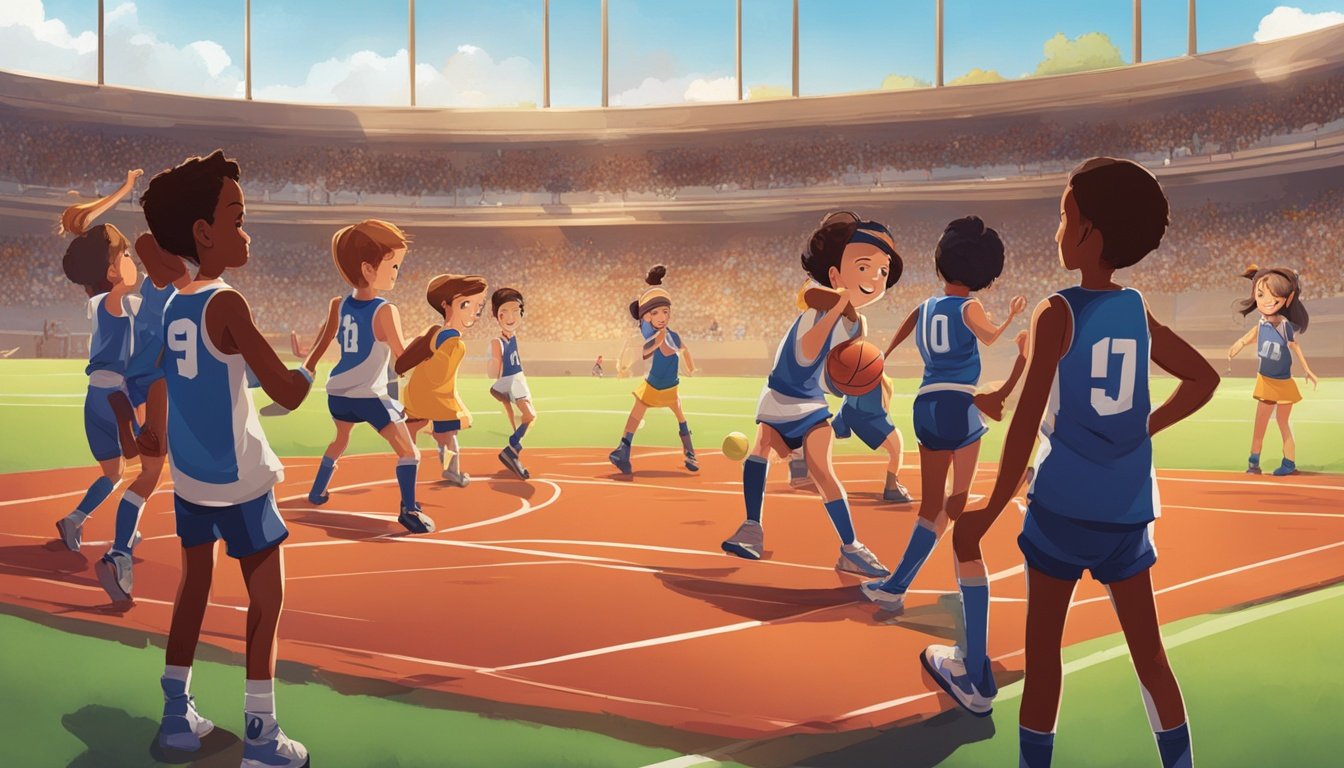
In today’s world, many kids spend a lot of time on screens and video games. It makes you think, how do sports help in growing up and making friends? It’s not just about winning a game. Sports can change a young person’s life in big, important ways.
Sports teach children and teens important skills through fun competition and working as a team1. A study in Britain showed kids now play inside with video games more than outside1. But sports have lots of good points, like better health and making friends.
Key Takeaways
- Sports teach valuable life skills like teamwork, communication, and leadership.
- Participation in youth sports correlates with lower rates of anxiety, depression, and stress.
- Sports can boost self-confidence, self-esteem, and overall mental well-being.
- Children who play sports are more likely to be physically active as adults.
- Youth sports can contribute to better academic performance and higher test scores.
This article dives into how sports can really make a change in young people’s lives. We’ll look at the physical and mental benefits, and the ways it helps kids grow into good people. The power of sports goes far beyond the game, building character and important life skills.
Benefits of Sports for Physical Health
Joining in youth sports brings many perks that reach beyond just the body. Studies find that playing sports helps avoid obesity. They also boost key motor skills2. Plus, being in sports improves fitness and builds good habits for later3.
Preventing Obesity and Developing Motor Skills
Sedentary activities like video games have made childhood obesity a big issue, affecting almost 20% in the U.S2.. Getting kids moving is now very important. Youth sports not only cut down on health risks but also improve hand-eye coordination and more3. Kids who play sports are more likely to keep active as they grow up3.
Sports help in many ways, not just by keeping obesity at bay. They make bones, muscles, and joints strong, boosting overall health3. Also, sports help with sleep and reduce chronic muscle pain2.
“Exercise can prevent chronic diseases as effectively as medication.”4
Making kids active through sports is crucial. It stops obesity and starts a lifelong journey of good health3. Loving sports and healthy habits early helps kids live vibrant lives423.
Psychological Benefits of Youth Sports
There’s a “kids’ mental health crisis” happening now. Strong evidence shows sports help kids’ mental health and well-being5. The CDC found 42% of high jump students felt really sad or hopeless a lot in 2021. This made them stop doing their usual things5. More girls than boys felt this way, with 57% of girls and 29% of boys saying they often felt this sadness5. Also, 30% of girls and 14% of boys thought about suicide in the last year5.
Sports help fight these feelings. But during the pandemic, fewer kids played sports. For twelfth grade girls, the number dropped by 17 points from 2019 to 20215.
The psychological benefits of youth sports include lower stress levels, lower rates of anxiety and depression, greater self-confidence and higher self-esteem, improved cognitive performance, and more creativity.6 Sports lower stress by reducing the stress hormone cortisol6. Kids in sports handle stress and criticism better as adults6. It also teaches them to work hard and commit to their goals6.
Studies link youth sports to feeling better about yourself. For girls, this means feeling happier and liking their bodies more5. The Women’s Sports Foundation found that kids who play sports are more confident and feel supported. They are not as lonely or sad as those who don’t play5. Physical activity, like playing sports, can also help kids and teens feeling down to feel better5.
- 6 Sports teams help children make friends and socialize.
- 6 Sports, school, and hobbies teach important life skills.
- 6 In competitive sports, effort and a good attitude are key.
7 Being in sports teaches important social and emotional skills. These are key to doing well in school, work, and life7. Kids with these skills are more likely to be happy and successful as adults7. They also earn more money and are less likely to turn to crime or drugs7.
“Above all, it is crucial to remember that sports are meant to be enjoyable and should bring joy to children.”
7 Physical activity is good for brain and body. It helps kids do well in school and solve problems7. Being active boosts confidence and skills, making it easier to keep being active7.

7 Learning social and emotional skills is vital. It helps in school, work, and relationships7.
Youth sports have big psychological benefits. They help kids’ and teens’ mental health and well-being a lot567.
Academic and Career Advantages
Playing sports in school can really boost your studies and later career. Studies show that students who play sports are less likely to drop out. They also perform better in school and on tests. Plus, they have higher chances of going to college8.
These benefits don’t stop at graduation. People who played sports in school usually do better at work. They can even make 7-8% more money each year than others. This proves how important sports are for long-term success8.
Lower Dropout Rates and Higher Test Scores
Being part of a sports team makes students more dedicated to their studies. It teaches them to be disciplined and resilient, which are key for doing well in school9.
Many parents think that team sports can help their children in both their studies and future jobs9. They also believe that sports teach important life lessons like working together, leading, and good social skills. These skills are very useful in life9.
These benefits last a long time. Most adults who still play sports started when they were young9. And half of these adults say that sports today help them feel less stressed and mentally healthier9.
People who played sports as kids are more likely to stay active later in life. Being active and taking part in sports supports both mental and physical health. This makes a stronger and more effective workforce in the end9810.
how do sports influence youth development and social skills
Sports play a big role in a child’s growth, especially when it comes to making friends and social skills. Studies show that sports bring positive changes for kids and teenagers11. Team sports can teach kids how to deal with different life situations. They learn to work with others and grow emotionally11. Physical activities also make them feel happier by releasing good chemicals in their brain11.
Being part of a sport can boost a child’s confidence, partly because of the team and coach11. Teamwork hones vital social skills like getting along, listening, and empathizing, skills they need throughout life11. It also lets them make friends beyond school, helping them feel like they belong11.
Sports introduce kids to discipline. They must follow rules and listen to authority figures, such as coaches and referees11. This discipline can show up in school and community activities too. Research on sports’ influence has been, with many studies and citations showing its positive effect12.
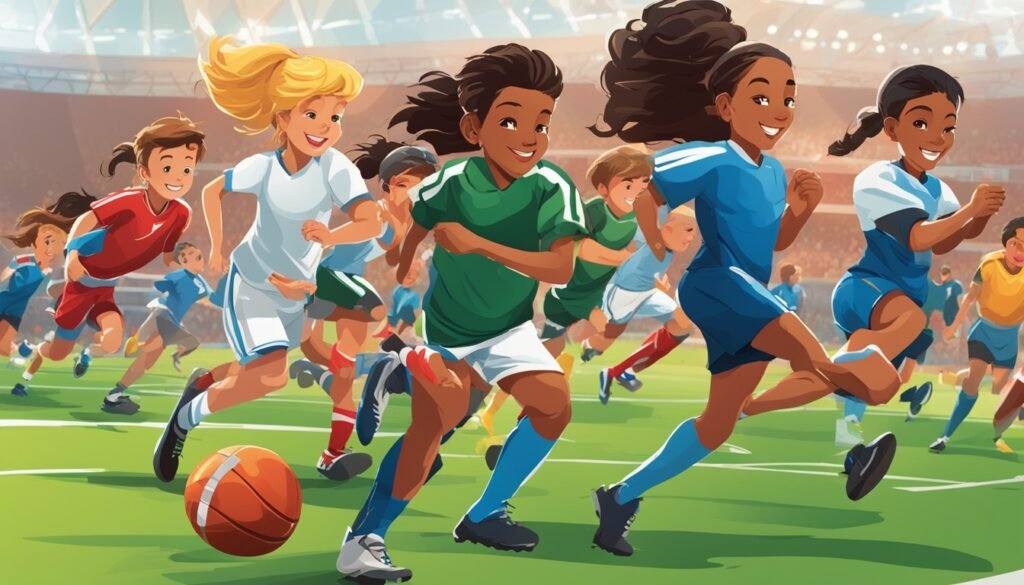
Team sports in youth are linked to lower stress and better mental health13. They also help in learning important life skills like setting goals, managing time, and leading others13.
“Learning resilience and perseverance through dealing with losses or poor performances is a result of sports participation.”
Summing up, the impact of sports on kids is huge and covers many areas. It helps with emotional growth, boosts self-esteem, improves social skills, and encourages community involvement111213.
Fostering Prosocial Behavior
K-12 sports can change students’ lives in a big way. Coaches are key in this effect. They teach sports skills but also serve as models. They show how to live and work in a team, making all feel included14.
Playing sports helps kids deal with their feelings. They learn through practice and patience that they can get better at what they do. Athletes also become familiar with discipline, sticking to rules and learning the results of their actions. These sports skills are very useful, not only in sports but also in school or hobbies14.
Character Building and Role Models
Sports aren’t just about physical skills. They help with being social and learning good character, like how to work in a team and showing efforts. Studies prove that sports can make kids better at controlling themselves, understand others, and use these skills in other parts of life15.
Research shows that how skilled your friends are and how many you have affect how well you do in the future. It’s been found that playing sports helps develop lots of life skills, especially in kids that might need more help. These skills are crucial for facing challenges in life15.
Coaches are essential in building character and life skills. There are models that show coaches the best ways to do this. The Life Skills Transfer Model helps coaches understand each player’s strengths. This knowledge helps the young athletes grow and use their skills in many areas of life15.
Being helpful, generous, and caring is very important for kids’ mental health and how they get along with others. This kind of behavior starts when children are around 2 years old. They begin to think about how others feel and what they need16.
There are things we can do at each stage of a child’s growth to help them be more caring. For younger kids, cheer and talk about helping others. For those in school, talk about playing fair and being understanding in different times. And for older kids, getting them involved in the community and talking about choices and their outcomes can really help16.
“Sports not only teach discipline and teamwork, but also foster empathy, cooperation, and a sense of responsibility towards others. Coaches who model these values can have a transformative impact on young athletes’ personal growth and social development.”
Parental Involvement in Youth Sports
It’s key for parents to be involved for children to have a great time in sports17. Being active in sports as a kid leads to being active as an adult17. Organized sports for young ones predict how active they’ll be later on17. Making sports fun and positive is essential for kids’ interest.
Parents build a good sports mindset by cheering for efforts, not just wins, and by showing how trying matters18. Kids find joy in sports when their parents are positive and avoid harsh words18. It’s critical to keep the comments during games upbeat and not criticize mistakes.
Proper parental involvement and a supportive setup are crucial for reaping the rewards of youth sports.17 How a family interacts greatly affects a child’s sport feel, especially with gender in mind17. What parents do can really change how physically active their kids are17. More parent help means kids move more. This shows how key family is in sports.
But, parents can make sports stressful by focusing too much on winning, which affects young players negatively18. Some coaches point out that parents might boost their kids’ egos too much, give bad advice, or rely on their kids for their own success18. How much pressure parents put in sports comes from many things17. Letting kids choose and feel good while playing makes them want to play more, key for their mental and physical health.
To make the most of youth sports, parents need to be there, encouraging and helping kids have fun and grow17. This support and positive influence mean a lot for a child’s sports life and for staying active long-term.
Comprehensive Youth Development
Taking part in K-12 sports can really help students. It not only boosts their health and fitness but also teaches them vital life skills. These skills include teamwork, discipline, and setting goals. Kids in team sports learn to communicate better and solve problems easier. Plus, they tend to be less sad and feel better about themselves. Studies show sports can even make your brain work better, helping with memory and solving puzzles19.
The support and guidance from a great coach can make or break a child’s sports experience. Good coaches go beyond teaching the game. They become role models, showing leadership and life lessons. The skills learned in sports can help kids grow into amazing people ready to face the world.
| Benefit | Impact |
|---|---|
| Holistic Development | Physical, mental, and social skills development help young people be successful in life. |
| Life Skills | Sports help kids learn teamwork, how to communicate, set goals, and be tough. |
| Community Involvement | Playing sports gets young people more involved and helps them make friends. |
But, playing sports can sometimes lead to getting hurt. And, not everyone can join in because it might cost too much time and money. Even with these issues, the well-rounded benefits of playing sports, like learning life skills and becoming a part of the community, are clear. It also helps lower stress and makes you feel emotionally20. Joining these activities helps you make friends and get better at socializing20.
“Sports-based youth development programs have a significant impact on helping young people, especially boys and young men of color, develop crucial social-emotional learning skills that set them up for success in school, work, and life.” – Laureus USA study21
Research proves that being in sports gives kids skills that help them everywhere in life. It makes them strong, smart, and aware individuals ready to succeed forever192021.
Conclusion
Youth sports have a deep impact that goes beyond just physical health. They help in the overall growth of young people. Through playing sports, kids learn skills that are useful throughout their lives. These include better health, doing well in school, getting along with others, and feeling good about themselves. As we’ve seen, being part of sports has many good points.
By 2021, only a little over half of kids had played sports or taken lessons22. Yet, we still see how important sports are. Studies show that joining team sports is better for your health and learning new skills than just playing on your own. For example, being strong and having healthy bones makes kids feel better about themselves22.
Not to mention, team sports teach life skills. These include talking to others, working together, and managing time. These skills help kids do well in their adult lives. They make a big difference for future success.
Everyone involved in youth sports – coaches, parents, and communities – plays a big part. They help young athletes grow in more ways than one. The value of what kids learn through sports goes far beyond the playing field. It helps them in their journey of learning and growing for years ahead. The skills from sports are key for a good future. They offer kids a chance to shine and succeed, making the time spent in sports very important.
References:
- The Benefits of Youth Sports in Child Development – https://pce.sandiego.edu/child-development-through-sports/
- Developing life skills through sports – https://www.healthdirect.gov.au/developing-life-skills-through-sports
- 9 Benefits of Youth Sports Participation for Kids | Jersey Watch – https://www.jerseywatch.com/blog/benefits-of-youth-sports-participation
- Youth Sports Facts: Benefits – Project Play – https://projectplay.org/youth-sports/facts/benefits
- Youth Sports Are More Important Than Ever for Kids’ Mental Health – https://globalsportmatters.com/health/2023/04/12/youth-sports-programs-more-important-than-ever-kids-mental-health/
- 5 Mental Health Benefits of Youth Sports – Raising Arizona Kids Magazine – https://www.raisingarizonakids.com/2022/09/5-mental-health-benefits-of-youth-sports/
- PowerPoint Presentation – https://www.aspeninstitute.org/wp-content/uploads/2019/02/coaching-social-emotional-skills-youth-sports-feb-2019.pdf
- Benefits of Youth Sports – https://health.gov/sites/default/files/2020-09/YSS_Report_OnePager_2020-08-31_web.pdf
- 10 Compelling Reasons Why Kids Should Play Sports – https://www.shredderski.com/10-reasons-why-kids-should-play-sports/
- 16 Benefits of Youth Sports in 2024 – https://eventpipe.com/blog/benefits-of-youth-sports
- Psychological and Social Benefits of Sports for Children | Demosphere – https://demosphere.com/psychological-and-social-benefits-of-sports-for-children/
- A systematic review of the psychological and social benefits of participation in sport for children and adolescents: informing development of a conceptual model of health through sport – International Journal of Behavioral Nutrition and Physical Activity – https://ijbnpa.biomedcentral.com/articles/10.1186/1479-5868-10-98
- Why Are Youth Sports Programs Important? – https://www.scripps.org/news_items/7580-what-are-the-surprising-benefits-of-youth-sports-programs
- Links between Adolescent Athletes’ Prosocial Behavior and Relationship with Parents: A Mixed Methods Study – https://www.ncbi.nlm.nih.gov/pmc/articles/PMC5969199/
- The influence of peers on life skill development and transfer in a sport-based positive youth development program – https://jsfd.org/2021/11/01/the-influence-of-peers-on-life-skill-development-and-transfer-in-a-sport-based-positive-youth-development-program/
- Prosocial behaviour: children and teenagers being helpful and valuing others – https://raisingchildren.net.au/toddlers/behaviour/encouraging-good-behaviour/prosocial-behaviour-kindness-children-teens
- The Role of Parental Involvement in Youth Sport Experience: Perceived and Desired Behavior by Male Soccer Players – https://www.ncbi.nlm.nih.gov/pmc/articles/PMC8391271/
- The influence of parents in youth sport – BelievePerform – The UK’s leading Sports Psychology Website – https://members.believeperform.com/the-influence-of-parents-in-youth-sport/
- A Comprehensive Analysis of How Sports Affect Youth Development and Social Skills – https://www.ijraset.com/research-paper/a-comprehensive-analysis-of-how-sports-affect-youth-development-and-social-skills
- Examining the relationship between sports participation and youth developmental outcomes for socially vulnerable youth – BMC Public Health – https://bmcpublichealth.biomedcentral.com/articles/10.1186/s12889-018-5955-y
- New Study: Youth Sports Promote Social & Emotional Learning, Especially Among Young Men Of Color – https://www.prnewswire.com/news-releases/new-study-youth-sports-promote-social–emotional-learning-especially-among-young-men-of-color-301220284.html
- The Pros and Cons of Youth Sports Participation: A Review (2024) | Jersey Watch – https://www.jerseywatch.com/blog/pros-and-cons-of-youth-sports


