Project Management Fundamentals: Key Concepts Every Professional Should Know
August 2, 2026 · Professional Development · 6 min read
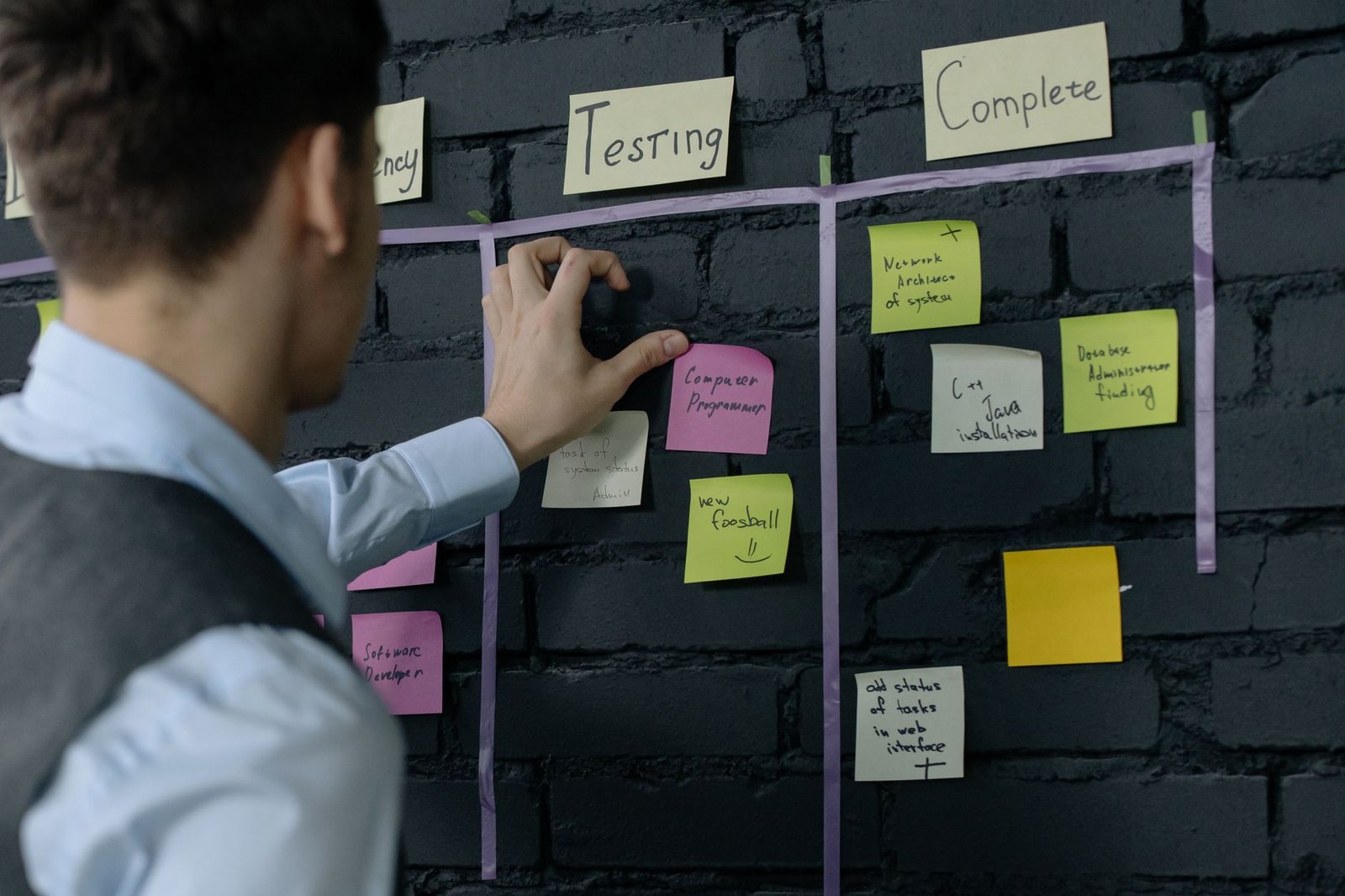
Project management is the structured work of turning an idea or objective into a defined result. It brings together scope, people, resources, risk, communication, time and decision-making so that work can move from intention to delivery.
Those fundamentals matter far beyond people with “Project Manager” in their job title. Managers, analysts, engineers, programme staff, operations teams and specialists all work through projects when they launch something new, improve a process, implement technology, deliver an event or coordinate a time-limited change.
What project management means
The Project Management Institute defines project management as the application of knowledge, skills, tools and techniques to project activities to meet project requirements.
In practice, that means creating enough structure to answer five recurring questions:
- What are we trying to achieve?
- What work is required?
- Who needs to be involved?
- What could prevent success?
- How will we know whether the project delivered value?
Source: Project Management Institute, What Is Project Management?.
Why project-management capability matters now
PMI’s 2025 Global Project Management Talent Gap report estimates that there are about 39.6 million project professionals worldwide. By 2035, demand could reach as high as 65.4 million, leaving a potential talent gap of up to 29.8 million project professionals.
The regional projections are especially relevant to MATSH’s markets. PMI projects demand growth by 2035 of 56% to 75% in Sub-Saharan Africa and 32% to 42% in the Middle East and North Africa.
Source: PMI, Global Project Management Talent Gap, 2025.
The core project-management lifecycle
1. Initiation
Initiation clarifies why the project exists, what problem it addresses, who sponsors it and what success should look like. Weak initiation creates ambiguity that becomes expensive later.
Typical outputs include a project charter or equivalent mandate, initial objectives, high-level scope and stakeholder identification.
2. Planning
Planning turns intent into a workable delivery model. Depending on the project, that can include:
- scope and deliverables;
- schedule and milestones;
- budget and resources;
- roles and responsibilities;
- risk and issue management;
- quality expectations;
- communications;
- procurement;
- change-control arrangements.
The purpose of planning is not to predict everything perfectly. It is to create enough shared understanding to make decisions, coordinate work and respond when reality changes.
3. Delivery
This is where the planned work is carried out. Project leaders coordinate people, remove blockers, manage suppliers and stakeholders, communicate progress and keep attention on the intended outcomes.
4. Monitoring and adaptation
Monitoring compares actual progress with the plan and asks whether the project is still likely to deliver the intended value.
Useful questions include:
- Are milestones being met?
- Is spending tracking against budget?
- Have risks changed?
- Are stakeholders still aligned?
- Has scope changed?
- Are the expected benefits still realistic?
5. Closure and learning
Closure confirms that the work is complete, captures acceptance, hands over deliverables, releases resources and records lessons for future projects.
A project that ends operationally but is never formally closed can leave unresolved ownership, documentation and benefit-tracking problems.
Scope, schedule, cost and value
Project managers have traditionally used the “triple constraint” of scope, time and cost to understand trade-offs. The idea is still useful, but modern project success is broader than simply finishing on time and on budget.
PMI’s recent project-success research emphasises value that justifies the effort and expense, alongside stakeholder perception and accountability. A project can meet its schedule and budget and still fail if it does not solve the problem it was created to address.
Source: PMI, new research on project success.
Risk management
Risk management is not a one-time workshop at the beginning of a project. It is an ongoing discipline for identifying uncertainty, deciding what matters and taking proportionate action.
A practical risk process includes:
- identify threats and opportunities;
- assess likelihood and impact;
- assign an owner;
- choose a response;
- monitor whether the risk or response changes.
The risk register is useful only if it informs decisions. A beautifully formatted register that no one reviews provides little protection.
Stakeholder management and communication
Projects often fail socially before they fail technically. Stakeholders may disagree about priorities, teams may work from different assumptions, or decisions may be delayed because ownership is unclear.
Good project communication therefore answers:
- who needs which information;
- when they need it;
- who can make which decisions;
- how changes are approved;
- how issues are escalated.
Choosing a delivery approach
There is no single method that fits every project. Predictive, agile and hybrid approaches can all work when they are matched to the project’s level of uncertainty, governance needs and delivery environment.
PMI’s Pulse of the Profession 2024 highlights the move toward flexible, fit-for-purpose delivery practices rather than assuming one methodology is universally superior.
Source: PMI Pulse of the Profession 2024.
Project management in the GCC and Africa
Demand for project capability is being driven by infrastructure, digital transformation, construction, manufacturing, energy, healthcare and public-sector programmes across both regions.
PMI’s 2025 talent-gap projections estimate current project-professional populations of about 2.6 million in Sub-Saharan Africa and 1.3 million in the Middle East and North Africa, with substantial growth expected through 2035.
That creates demand not only for certified project managers but also for professionals who understand the fundamentals: scope, planning, risk, stakeholders, delivery and value.
What beginners should learn first
If you are building project-management capability, start with the disciplines that transfer across methodologies:
- writing clear objectives and deliverables;
- breaking work into manageable components;
- estimating time and resources;
- identifying stakeholders and decision rights;
- maintaining a useful risk and issue log;
- tracking milestones and changes;
- communicating status clearly;
- closing projects and capturing lessons.
The minimum project-control system
Project management does not require a large library of templates to begin. In practice, a small control system used consistently is more valuable than dozens of documents no one maintains. At minimum, a project should have a clear mandate, a deliverable-based plan, named owners, a decision log, a risk and issue view, change control and a regular status rhythm.
The project plan should answer what must be delivered and by when. The risk and issue log should identify uncertainty and current problems separately. The decision log should record material choices so the team does not repeatedly reopen settled questions. Change control should make it visible when scope, time, cost or expected value moves away from the original agreement.
Use milestone reviews as decision points
A milestone is more useful when it represents a decision or readiness condition rather than merely a date. For example, “design complete” should mean agreed acceptance criteria have been met and downstream work can begin. “Ready for launch” should mean operational, technical, people and support conditions have been checked, not simply that the calendar reached the planned launch date.
At each milestone, ask four questions: What was expected? What is actually true? What has changed? What decision is required now? This creates a practical bridge between monitoring and management action.
Separate risks, issues, assumptions and dependencies
When these categories are mixed together, ownership can become unclear. A risk is an uncertain future event. An issue is already happening. An assumption is something the plan currently treats as true. A dependency is something outside a work package that must happen for it to succeed. Each needs a different response.
Teaching this distinction early improves planning quality because teams stop treating every concern as a generic “risk”. It also makes escalation more useful: leaders can see whether they are being asked to accept uncertainty, resolve a current blocker, validate an assumption or intervene with another team on a dependency.
Build practical project capability
Project management is not a collection of templates. The templates become useful when professionals understand the decisions they are meant to support.
MATSH’s Project Management Course develops practical skills in project initiation, planning, execution, monitoring, risk, communication and closure.
Need In-House Training?
We run all our courses as private programmes for organisations across the GCC and Africa.
Request In-House →