

Africa is emerging as a key player in the global economy, with several nations showcasing remarkable growth potential. According to the IMF World Economic Outlook, nine African countries are among the top twenty globally in terms of economic expansion for 2024. This highlights the continent’s increasing relevance in the world of trade and business.
Niger leads the way with an impressive GDP growth rate of 11.1%, driven by strategic policy reforms and resource management. Senegal follows closely, with its hydrocarbon industry fueling an anticipated 8.8% growth. These figures underscore the transformative potential of the region.
As we analyze the future outlook, it’s clear that Africa’s development is not just a local phenomenon but a global opportunity. With robust growth projections and increasing investment potential, the continent is poised to play a pivotal part in shaping the world’s economic landscape.
Key Takeaways
- Nine African nations rank among the top twenty globally for economic growth in 2024.
- Niger leads with an 11.1% GDP growth rate, driven by strategic reforms.
- Senegal’s hydrocarbon industry fuels an 8.8% growth projection.
- Africa’s economic expansion presents significant global investment opportunities.
- The continent’s development is shaping the future of global trade and business.
Understanding Africa’s Economic Surge
Africa’s economic landscape is evolving rapidly, with global trends playing a pivotal role in its growth trajectory. The continent is experiencing a surge driven by strategic reforms, infrastructure investments, and expanding trade opportunities. This transformation is not only reshaping local economies but also positioning Africa as a key player in the global market.

Global Growth Trends and Regional Comparisons
According to the April 2024 IMF World Economic Outlook, Africa’s projected growth rates outpace many regions globally. While the world average growth is expected to hover around 3%, several African nations are set to achieve rates above 5%. This contrasts sharply with regions like East and South Asia, where growth is stabilizing at lower levels.
External factors such as fluctuations in energy and food prices have influenced this trend. For instance, the rise in global oil prices has benefited oil-exporting countries like Nigeria and Angola. Meanwhile, infrastructure investments in East Africa have fueled economic activity, making it one of the fastest-growing regions on the continent.
Insights from the IMF World Economic Outlook
The IMF’s latest report highlights the significance of exports and market reforms in driving Africa’s economic surge. Countries like Egypt and Morocco have leveraged their strategic locations to boost trade, while others have focused on diversifying their economies to reduce dependency on single sectors.
However, challenges remain. High debt burdens and political instability in some regions threaten to slow progress. Despite these hurdles, the overall outlook remains positive, with the continent poised for sustained growth. For more detailed insights, refer to the economic rebound in Sub-Saharan Africa as outlined by the World Bank.
fastest growing economies in africa: A Detailed List and Analysis
The economic transformation across Africa is reshaping its role on the global stage. Several nations are leading this charge, with Niger and Senegal standing out as prime examples. Their remarkable progress is driven by strategic reforms, resource management, and sector-specific advancements.
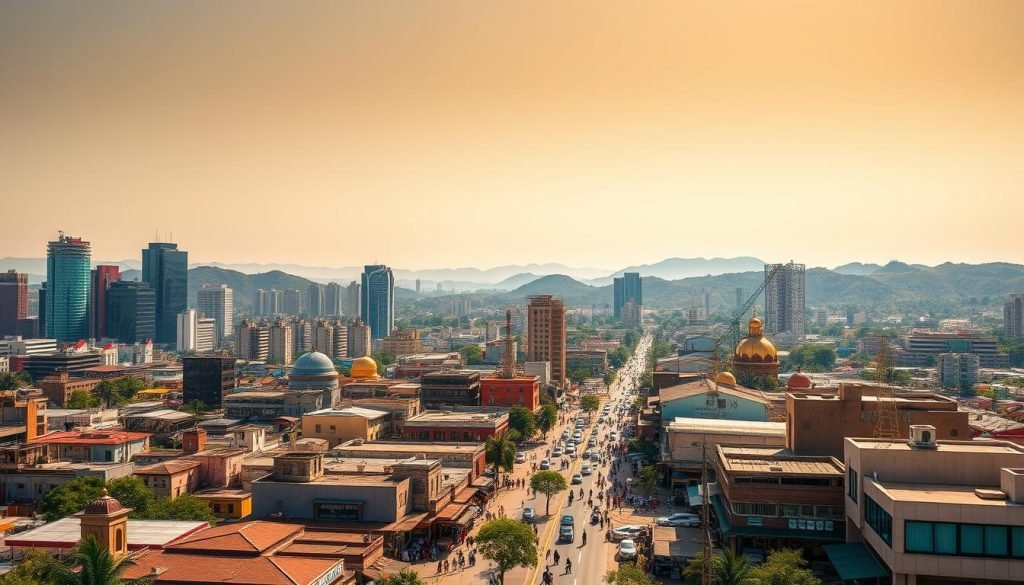
Spotlight on Niger, Senegal, and Emerging Leaders
Niger’s GDP growth rate of 11.1% is a testament to its strategic focus on oil and agriculture. The country’s pipeline project with Benin is set to boost oil production, contributing significantly to its revenue. This, combined with a revival in agricultural output, positions Niger as a key player in the region.
Senegal, on the other hand, is experiencing a surge in its hydrocarbon sector. Recent natural gas discoveries, totaling over 40 trillion cubic feet, have fueled its economic expansion. These developments are expected to drive long-term growth and attract global investment.
Other nations like Ivory Coast, the Democratic Republic of Congo (DRC), and Rwanda are also making strides. Their focus on infrastructure, policy reforms, and diversification is creating a robust foundation for sustained development.
Key Growth Sectors and Contributing Factors
The extractive industries, particularly oil and natural gas, are pivotal to Africa’s economic narrative. Niger’s oil deposits and Senegal’s hydrocarbon discoveries are prime examples of how these sectors are driving growth.
Agriculture remains a cornerstone for many nations. Niger’s revival in this sector highlights its potential to support both local economies and global trade. Similarly, Rwanda’s focus on technology and services is setting a new benchmark for innovation.
Policy reforms and infrastructural investments are also critical. Countries like the DRC are leveraging these strategies to enhance their economic profiles. The continent’s ability to adapt and innovate is reshaping its role in the global economy.
As we look ahead, Africa’s economic trajectory is not just a regional phenomenon but a global opportunity. The continent’s progress is a testament to its resilience and potential.
Policy, Trade, and Investment: Driving the Growth
Strategic policies and trade agreements are shaping Africa’s economic future. The continent’s progress is fueled by hydrocarbons, critical minerals, and innovative reforms. These elements are not only boosting local economies but also attracting global attention.
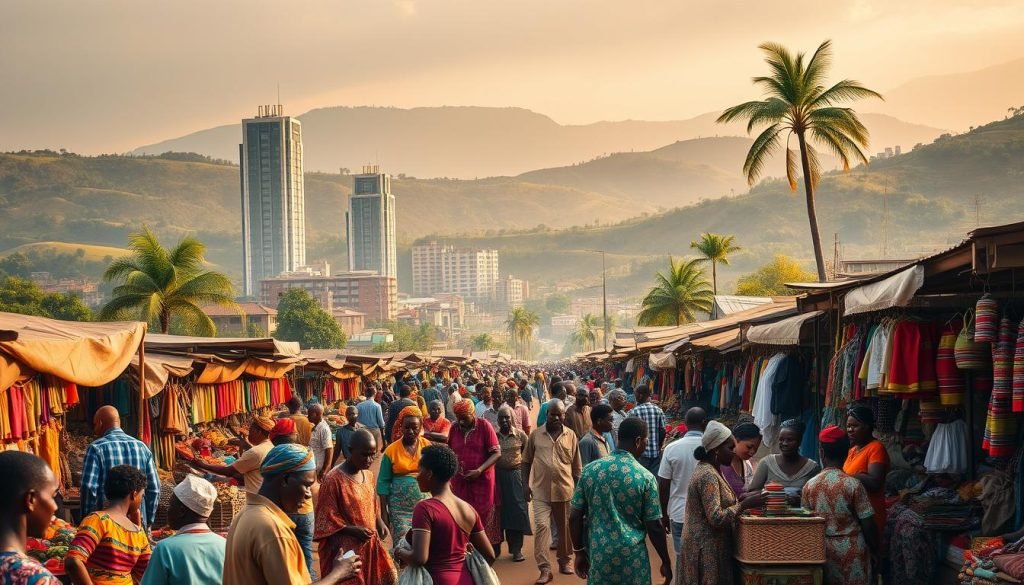
Impact of Hydrocarbons and Critical Minerals
Hydrocarbons and critical minerals are central to Africa’s sustained growth. Countries like Niger and Senegal are leveraging their natural resources to drive production and export. Niger’s oil pipeline project and Senegal’s natural gas discoveries are prime examples of this trend.
These resources are not just local assets but global necessities. The demand for critical minerals, such as cobalt and lithium, is rising due to their role in renewable energy technologies. Africa’s ability to harness these resources is positioning it as a key player in the global industry.
Role of U.S. Trade Policies and AGOA
U.S. trade policies, including the African Growth and Opportunity Act (AGOA), are facilitating economic development. AGOA provides duty-free access to the U.S. market, encouraging trade and investment in African countries. Recent discussions on AGOA reauthorization highlight its importance in fostering long-term partnerships.
Additionally, exemptions in the Inflation Reduction Act for African minerals are enhancing supply chains. These policies are not only boosting business but also supporting diversification efforts across the continent.
Infrastructure Development and Economic Reforms
Infrastructure investments are unlocking Africa’s potential. Projects in transport, energy, and ICT are reducing trade costs and improving connectivity. The Economic Commission for Africa (ECA) emphasizes the need for renewed investment in these areas to sustain growth.
Policy reforms are equally critical. Countries like Ivory Coast and Rwanda are implementing pro-competitive market reforms to attract investment. These strategies are creating a favorable environment for business and development.
By focusing on infrastructure and reform, Africa is building a robust foundation for its future. These efforts are not just transforming local economies but also reshaping the continent’s role in the global economy.
Conclusion
Africa’s economic outlook remains promising, driven by strategic reforms and increased investment. The continent’s focus on infrastructure and resource management is unlocking significant potential. Countries like Niger and Senegal are leading the way, showcasing the benefits of targeted policies and sector-specific advancements.
Despite challenges such as political instability and high debt levels, the overall trajectory is positive. The IMF and ECA reports highlight the importance of sustained trade initiatives and reform efforts. These measures are critical for long-term growth and regional development.
Africa’s progress is not just a local phenomenon but a global opportunity. By leveraging its natural resources and youthful population, the continent is poised to play a pivotal role in the world economy. For deeper insights, explore how Africa is realizing its full economic potential.
We remain committed to monitoring these developments and providing forward-looking analysis. Stay tuned for updates on emerging trends and policy shifts shaping Africa’s future.
Source Links
- The fastest-growing economies in 2025 – https://www.fdiintelligence.com/content/d15d559e-9938-5cfa-8acb-adede5d0b221
- Reimagining economic growth in Africa: Turning diversity into opportunity – https://www.mckinsey.com/mgi/our-research/reimagining-economic-growth-in-africa-turning-diversity-into-opportunity
- fastest-growing economies in 2024 | Africa | The Exchange – https://theexchange.africa/countries/fastest-growing-economies-in-2024/
- African Economies Projected to Grow by 3.4 % in 2024, But Faster and More Equitable Growth Needed to Reduce Poverty – https://www.worldbank.org/en/news/press-release/2024/04/08/african-afe-afw-economies-projected-to-grow-in-2024-but-faster-and-more-equitable-growth-needed-to-reduce-poverty
- Figures of the week: Regional heterogeneity in Africa’s economic growth predicted to subside – https://www.brookings.edu/articles/figures-of-the-week-regional-heterogeneity-in-africas-economic-growth-predicted-to-subside/
- 9 of the 20 Fastest-Growing Economies Worldwide in 2024 Will Be in Africa – https://carnegieendowment.org/carnegie-africa-program-newsletter/9-of-the-20-fastest-growing-economies-worldwide-in-2024-will-be-in-africa
- Overview – https://www.worldbank.org/en/region/afr/overview
- Economic Development in Africa Report 2024 – https://unctad.org/publication/economic-development-africa-report-2024
- African countries to dominate the world’s top 10 growing economies, ECA report – https://www.uneca.org/stories/african-countries-to-dominate-the-world’s-top-10-growing-economies,-eca-report
- Economic Development in Africa Report 2023 – https://unctad.org/publication/economic-development-africa-report-2023
- PDF – https://www.afdb-org.kr/wp-content/uploads/2024/11/african_economic_outlook_aeo_2024_-_highlights_0.pdf


