
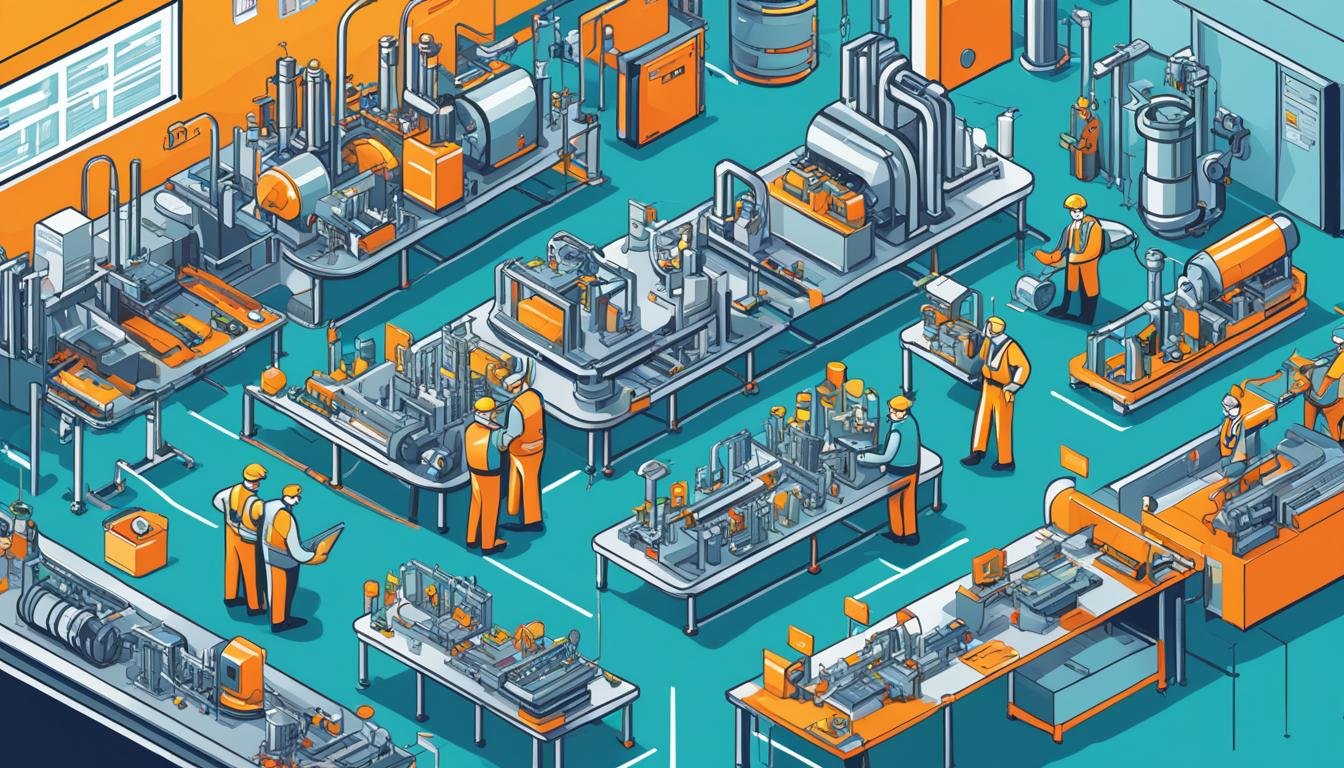
Organizations using Lean Six Sigma processes boost efficiency by 35-50%. This leads to big productivity gains and cost savings.
Lean Six Sigma combines Lean manufacturing and Six Sigma. It’s used to make processes better and increase efficiency. By getting rid of waste and reducing errors, it makes organizations run better. Let’s dive into what Lean and Six Sigma are, where they come from, and how they work together to improve processes.
Key Takeaways:
- Lean Six Sigma can boost efficiency in organizations by 35-50%.
- Lean Six Sigma combines the principles of Lean manufacturing and Six Sigma.
- Eliminating waste and reducing defects are core principles of Lean Six Sigma.
- By streamlining operations, Lean Six Sigma can improve overall performance.
- Lean Six Sigma is a proven methodology for process improvement and organizational transformation.
Unveiling the Power of Lean & Six Sigma
Lean Six Sigma isn’t just a tool; it’s a strong way to make businesses better. It works on cutting waste and fixing mistakes, which helps a company run smoother. This leads to happier customers and higher quality products.
The main goal of Lean Six Sigma is to make everything in a company work better. It helps to get rid of things that don’t add value and makes sure everything is top-notch. By using Lean Six Sigma, a company can stand out and do well for a long time.
Lean Six Sigma shines at finding and fixing things that slow down a business. It uses facts and steps to keep making things better, which saves money and improves work.
Through Lean Six Sigma, your organization can:
- Boost how well processes work
- Make products and services better
- Cut down on waste and problems
- Use resources in the best way
- Make customers even happier
Lean Six Sigma is a well-planned way to solve issues and get better. It makes sure changes stick, and that the business keeps on doing well. Choosing Lean Six Sigma helps a company reach its full potential and be the best it can be.
Now, let’s dig into what makes Lean Six Sigma work. We’ll see how it can make your business a winner.
What is Lean and Six Sigma?
Let’s start by understanding Lean and Six Sigma separately. Lean focuses on lowering waste and improving things continuously. It grew out of the Toyota Production System. In contrast, Six Sigma, developed by Motorola, targets reducing errors.
Combining Lean’s waste-cutting tactics with Six Sigma’s error-fighting methods forms Lean Six Sigma. This blend helps organizations better their processes and get big win results.
The Genesis of Lean Manufacturing
Lean, or Lean manufacturing, comes from the Toyota Production System (TPS). This system was a game-changer, focusing on cutting waste and improving non-stop. Lean’s goal is simple: find and remove things that slow down work. Things like waiting, too much stuff in stock, or moves that don’t help, make work better and make customers happier.
“The most dangerous kind of waste is the waste we do not recognize.”
– Shigeo Shingo
Lean leans on several key ideas and tools to fight waste. For example, Just-In-Time (JIT) production helps keep stock low and waste none. Kaizen is about improving bit by bit. Value Stream Mapping shows where things can flow better.
The TPS has truly laid the global foundation for using Lean principles in making things. It’s lessons on cutting waste and working better are key for many around the world.
The Origins and Ideals of Six Sigma
Six Sigma started at Motorola in the 1980s. It aims to have processes with super low defect rates, almost perfect quality. The name “six sigma” means aiming for just about no mistakes.
By using hard data and stats, Six Sigma digs deep to find and fix the real reasons behind failings. This data-driven method is powerful in making things better.
The DMAIC cycle guides Six Sigma’s problem-solving. It starts with defining the issue, then measuring it with data. The next step is to analyze the data to find the core problems. After that, solutions are put in place, then checks to make sure things stay good.
Converging Lean and Six Sigma into a Cohesive Methodology
Lean and Six Sigma, although coming from different paths, actually work great together. This match-up creates Lean Six Sigma, a strong process to fix problems, both in waste and in defects.
Lean Six Sigma takes the best from Lean’s everyday improvement focus and Six Sigma’s detailed problem-solving. By using these methods together, organizations can tune up their processes completely, enjoying better efficiency, quality, and pleasing their customers more.
| Lean Manufacturing | Six Sigma | Lean Six Sigma | |
|---|---|---|---|
| Focus | Waste reduction, continuous improvement | Defect reduction, variation reduction | Process optimization, waste reduction, defect reduction |
| Origins | Toyota Production System | Motorola | Integration of Lean and Six Sigma |
| Key Principles | Kaizen, Just-In-Time, Value Stream Mapping | DMAIC (Define, Measure, Analyze, Improve, Control) | Waste elimination, Continuous improvement, DMAIC methodology |
| Benefit | Improved productivity, reduced lead time | Higher quality, reduced defects | Optimized processes, improved efficiency, quality, and customer satisfaction |
By merging Lean and Six Sigma, organizations get a full method of improving work. This partnership tackles both waste and errors. When Lean and Six Sigma join forces, companies work better, spend less, and make their customers happier with their products and services.
The Cultural Transformation with Lean Six Sigma
Starting Lean Six Sigma means changing how you think, not just using new tools. This change *transforms* the way everyone works, making them always look to be better. It’s key for Lean Six Sigma to last and time and work well.
When everyone is part of making Lean Six Sigma work, it’s more likely to succeed. They care more because they’re making the changes happen. This makes every person feel important and leads to better ideas and ways of working.
Lean Six Sigma is all about getting better all the time. It gets companies to always try new and better ways of working. This matches well with having everyone involved and supported as they work together.
“Lean Six Sigma isn’t just about new steps; it needs everyone to improve non-stop. This starts by making sure all employees feel a key part of this change.”
Companies that get their staff and Lean Six Sigma to work well together see great results. They work smarter, make more, and keep their customers happier. This change is what makes a business ready for a future that always changes.
Lean Six Sigma Principles and Practices
Lean Six Sigma combines Lean thinking and Six Sigma to improve how things work. It helps organizations get rid of waste, lower mistakes, and make their processes better all the time.
The Five Core Tenets of Lean Thinking
Lean thinking follows five key ideas to enhance processes:
-
- Identify value:
First, lean thinking finds out what customers see as valuable. This way, organizations can work on meeting those needs directly.
-
- Map the value stream:
Mapping the value stream lets organizations see their processes clearly. They can then cut out anything not adding value and make improvements where needed.
-
- Create flow:
Flow means processes move smoothly without stops. Fixing problems and keeping things moving helps a lot.
-
- Establish pull:
Having a pull system means making things only when customers want them. This reduces waiting and keeps customers happy.
-
- Pursue perfection:
Finally, lean thinking aims for always getting better. By looking for waste and ways to improve, organizations can reach for perfection.
Six Sigma’s DMAIC Cycle Defined
Six Sigma follows the DMAIC cycle to improve processes:
Define: The first step is understanding the problem and setting goals. Knowing what the customer wants is key here.
Measure: Next, data is collected to understand the problem better. This helps in setting a starting point to see progress against.
Analyze: This step digs deep, using data to find the real cause of the issue. By using stats and other tools, the main issues are uncovered.
Improve: After finding the causes, solutions are put into place. The goal is to make processes work better based on the insights found before.
Control: Lastly, setting up checks to maintain the improvements is crucial. This involves watching and adjusting to keep making things better over time.
Integrating Lean Thinking with Six Sigma Analysis
Blending Lean Six Sigma and Six Sigma can lead to great results. Both lean’s focus on waste and Six Sigma’s data-based approach work together well. This synergy creates a strong strategy for success.
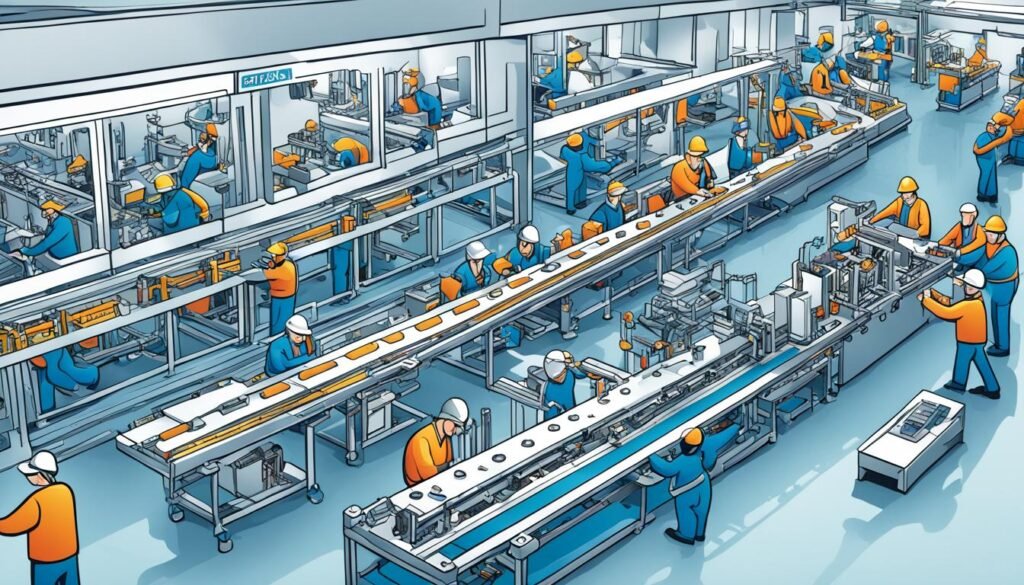
Lean Six Sigma Tools for Efficiency
Lean Six Sigma uses various tools to make processes better. This helps increase how well things work. The tools can be as simple as looking at a process, or as complex as using math to find issues.
Some common tools include Kanban boards and the 5S method. They are all about making work easier and tidier. By using these tools, businesses can cut down on mistakes and use resources better.
- Kanban Boards: A visual tool that helps teams manage and track workflow.
- 5S Methodology: A systematic approach to organizing and maintaining a clean and efficient workspace.
- Value Stream Mapping: Visualizing the flow of materials and information to identify areas for improvement.
Data Collection and Analysis Tools:
- Pareto Chart: A graphical representation of data that helps prioritize improvement efforts based on the most significant sources of waste or defects.
- Control Charts: Statistical tools that monitor process performance and detect variations.
- Histograms: Graphical representations of data distributions to identify patterns and trends.
Root Cause Analysis Tools:
- Fishbone Diagrams: A visual tool that helps identify potential causes of problems by analyzing categories of factors.
- 5 Whys: A technique that asks iterative “why” questions to identify the underlying root causes of an issue.
- Failure Mode and Effects Analysis (FMEA): A structured approach to identifying and prioritizing potential failures and their impacts.
Process Improvement Tools:
- Standard Work: Establishing clear and consistent processes to reduce variations and eliminate waste.
- DMAIC Methodology: A structured problem-solving approach consisting of Define, Measure, Analyze, Improve, and Control.
- SMED (Single-Minute Exchange of Die): Reducing the time required to change from one process to another, improving efficiency.
Using Lean Six Sigma tools with the right know-how and backup can bring big changes. Businesses can make things better for customers and stand out among competitors. They can lastingly reduce problems and make their services appealing in fast-paced markets.
Successfully Implementing Lean Six Sigma in Your Business
Implementing Lean Six Sigma in your business calls for a detailed plan. We’ll show you how to roll it out, measure success, and share inspiring case studies. These steps will boost your team’s motivation.
Step-by-Step Process for Lean Six Sigma Rollout
- Establish an implementation roadmap: Create a roadmap for your Lean Six Sigma journey. It will highlight goals, your timeline, and important checkpoints. This roadmap acts as a guide for your team.
- Select projects strategically: Pick projects that will help meet your organization’s goals. Look for ones that can boost efficiency and save money. Choose carefully based on what impact they might have.
- Form a dedicated Lean Six Sigma team: Put together a team with different skills to lead the work. They should come from different parts of your business.
- Provide comprehensive training: Make sure your team knows Lean Six Sigma well. Train them in the methodologies and tools. This will help them improve processes effectively.
- Execute pilot projects: Test Lean Six Sigma with some small projects first. Check how well it’s working and adjust as you go.
- Scale up implementation: After successful pilot projects, expand Lean Six Sigma. Use what you learned to help you roll it out further.
- Continuously track progress: Keep an eye on how Lean Six Sigma is doing. Use KPIs to measure the impact it has on your processes.
- Encourage employee participation: Get everyone in your company on board. Encourage them to get involved and share their improvement ideas.
Tracking and Measuring Success with Lean Six Sigma
It’s key to track and measure how your Lean Six Sigma efforts are doing. Use KPIs and other tools to see the effects of your changes. It helps pinpoint where you can do better.

Real-World Lean Six Sigma Success Stories
Case studies shed light on applying Lean Six Sigma and the gains seen. By learning from these stories, you’ll get ideas and insights from successful implementations.
These stories show the efficiency boost, savings, and overall improvements Lean Six Sigma can bring. They prove its significant impact.
Investing in Lean Six Sigma Training & Certification
To really benefit from Lean Six Sigma, organizations should invest in training and certification. This training gives employees the skills to make processes better and get long-lasting results. They learn how to spot and stop waste, lower mistakes, and make operations work better.
Learning never stops in Lean Six Sigma success. It’s key to keep up with new methods and tools to stay ahead. Growing your skills means always being ready to make things more efficient and improve quality.
For those who want to improve their Lean Six Sigma skills, there are many certification choices. These certifications show that someone knows a lot and are respected everywhere. For example, you can aim for a Green Belt, Black Belt, or Master Black Belt.
- Lean Six Sigma Green Belt Certification
- Lean Six Sigma Black Belt Certification
- Lean Six Sigma Master Black Belt Certification
Each certification level means you have more skills and bigger responsibilities. But getting certified is tough. It means lots of training, working on real projects, and passing exams.
Getting trained in Lean Six Sigma helps individuals grow and find more job options. But it also changes how a whole company works. It makes everyone good at finding and fixing what doesn’t work. This leads to lasting success for the business.
By always learning and getting better, companies can make the most of Lean Six Sigma. This leads to big, positive changes in how they work. It makes things work smoother, with better quality and happy customers.
Conclusion
Lean Six Sigma is a powerful way to make processes better. It helps improve how efficient, high-quality, and happy customers are. By using both Lean and Six Sigma, companies can make big and lasting changes.
In this article, we’ve looked at where Lean and Six Sigma come from. We’ve also seen how they work together to improve things. There’s a need to change how a company works to fully use Lean Six Sigma.
We also talked about why training and getting certified in Lean Six Sigma is important. This helps employees know how to make processes work better. Implementing Lean Six Sigma means choosing to always get better and focus on success.
To sum up, Lean Six Sigma is a step-by-step way for companies to run smoother and do better. It helps them play well in a competitive world. Choosing Lean Six Sigma means choosing to be excellent. It’s a big step towards lasting success.


