
Youth Employment in Africa 2026: Jobs, Informality, NEET and Skills
August 2, 2026 · Youth Development · 6 min read
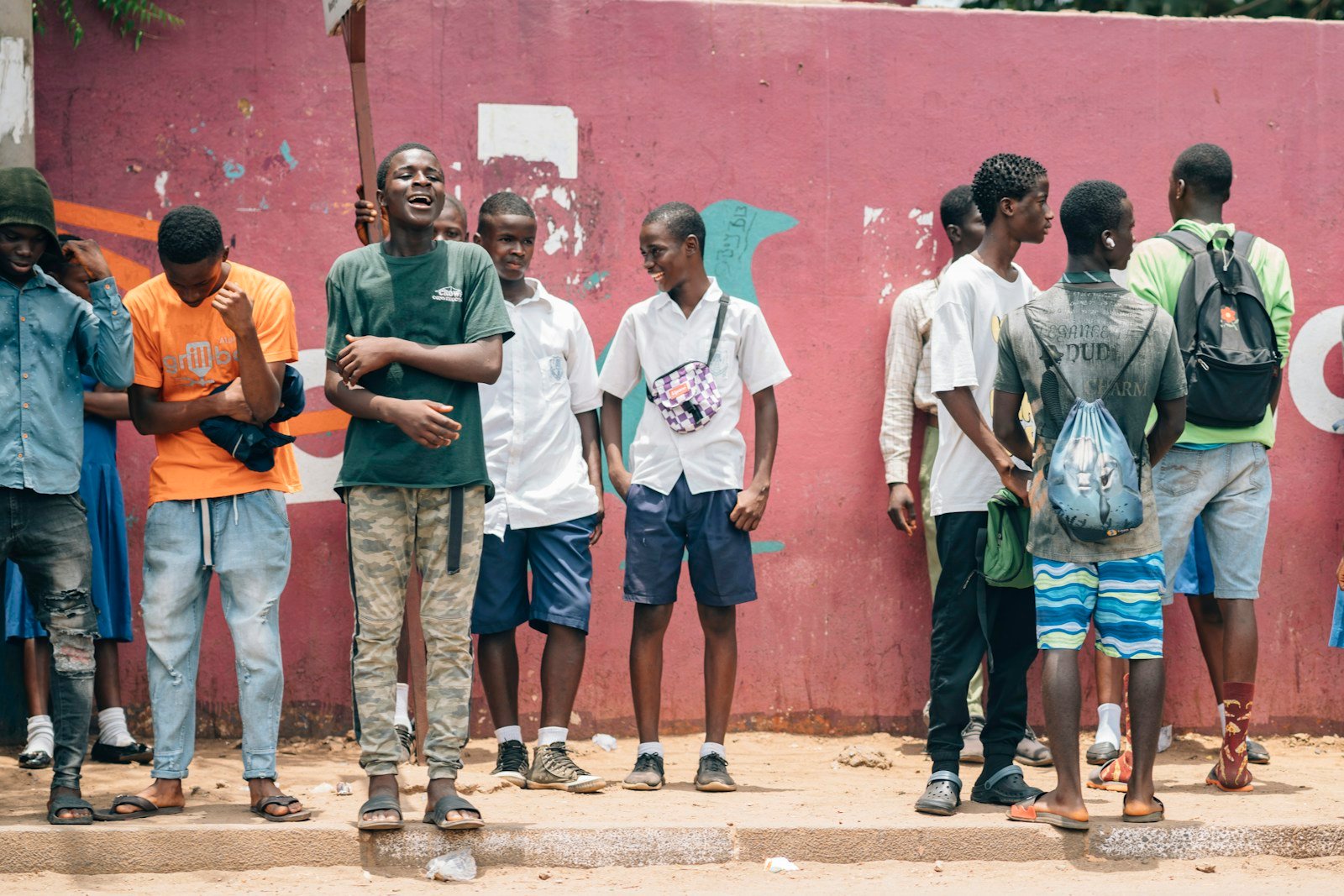
Africa’s youth employment challenge is not captured by one unemployment rate. In many countries, young people work, but the work is informal, low-productivity, seasonal or poorly protected. The more useful picture combines unemployment, NEET status, informality, sector of employment, education and the transition into more productive work.
This page focuses on Africa-specific youth employment and work quality. MATSH’s separate Arab States and Africa youth-unemployment statistics page should remain the cross-regional unemployment comparison asset.
Nearly one million young Africans enter the labour market each month
The World Bank reported in 2025 that around one million young Africans enter the job market every month while formal opportunities remain limited. The same World Bank feature noted that nearly 23% of youth are not in employment, education or training.
Those figures describe a continent-wide structural challenge. They should not be converted into a claim that every African country has the same unemployment or NEET rate.
Unemployment is only part of the problem
The ILO’s Global Employment Trends for Youth 2026 stresses that employment quality matters as much as whether a young person is technically employed. In low- and lower-middle-income countries, nearly nine in ten young workers aged 15 to 29 are in informal employment, limiting access to stable income and social protection.
Source: ILO, Youth unemployment rises as young people face a harder road to decent work, 2026
This is a country-income-group statistic, not an Africa-only rate. It is relevant because many African economies fall within those income groups, but it should not be relabelled as “the African informality rate”.
Agriculture still accounts for a large share of youth employment
The Mastercard Foundation’s Africa Youth Employment Outlook 2026, produced with World Data Lab, estimates that agriculture accounted for 47% of young Africans’ jobs in 2025, around 143 million people.
Source: Mastercard Foundation, Africa Youth Employment Outlook 2026
This does not mean agricultural work is uniformly poor. Agriculture includes subsistence farming, commercial farming, processing, logistics, agri-tech and other activities with very different productivity and income levels.
Young teenagers in work face especially high informality
The same 2026 Outlook reports that among employed Africans aged 15–17, 96% were in informal jobs in 2025 and 40% were below the $2.15-per-day 2017 PPP poverty line.
These percentages apply specifically to employed 15–17-year-olds. They should not be presented as the situation of all employed African youth.
Education-to-work transition remains a major bottleneck
The World Bank’s 2025 Africa skills work highlights weak foundational learning, gaps between training systems and labour-market demand, and the need for closer links between governments, training providers and industry.
Its Skills for Jobs Policy Academy focused on four enabling foundations for skills systems:
- public-private coordinated governance;
- industry-aligned standards;
- results-based financing;
- data and evidence.
This is useful because the employment problem cannot be solved only by adding more short courses. Training needs to connect with actual sectors, employers and jobs.
NEET measures something different from unemployment
NEET means a young person is not in employment, education or training. A person can be unemployed but studying and therefore not NEET. Another person can be outside the labour force and still be NEET.
Use NEET when the question is whether young people are disconnected from both work and learning. Use unemployment when the question concerns people in the labour force who are without work and actively seeking it.
This distinction is particularly important for young women, whose labour-force participation can be affected by unpaid care, marriage, mobility, safety and social norms as well as labour demand.
Country statistics should use comparable definitions
The current international comparison series published by the World Bank uses ILO-modelled youth unemployment estimates for ages 15–24. National labour-force surveys can show different figures because they may use different age ranges, reference periods or methods.
A country table should therefore record:
- the source;
- the observation year;
- the age group;
- whether the figure is modelled or survey-observed;
- the unemployment definition.
Do not combine national 15–34 rates with international 15–24 modelled rates in a ranking table without explaining the difference.
Skills programmes can help, but design matters
The strongest current evidence does not support one universal youth-employment programme. Training, entrepreneurship support, employment services and wage subsidies can all work in some settings, but outcomes depend on the participant group, local labour demand, implementation quality and whether services are combined appropriately.
Useful programme questions include:
- Which jobs or income opportunities are expanding locally?
- Which skills do employers actually require?
- Which barriers prevent the target group from participating?
- Does the programme include work experience or employer contact?
- How will skills be assessed?
- What happens after training?
- How will employment quality be measured?
Informality needs a pathway, not a label
Informal work can provide essential income and experience. The policy question is how young people can move toward more productive, stable and protected work where possible.
Possible pathways include:
- formalisation and business-development support;
- better access to finance and markets;
- certification of occupational skills;
- links to larger value chains;
- digital tools that improve market access;
- apprenticeships and work-based learning;
- social protection suited to non-standard work.
Digital work is an opportunity, not an automatic solution
Remote work, platforms and digital services can expand the market available to some young Africans, but access depends on connectivity, devices, digital skills, payment systems, language and the type of work available.
Training someone to use a freelancing platform does not guarantee paid work. Digital programmes should measure actual tasks, clients, earnings stability and progression rather than registrations alone.
Employment migration also requires protection
Migration can create opportunities for African workers, including in Gulf labour markets, but it also creates recruitment, contract, cost and worker-protection risks. Claims about the number of African workers in the GCC or guaranteed higher earnings should not be published without a reliable current source.
Programmes preparing young people for international work should include:
- verified job requirements;
- contract literacy;
- recruitment-cost awareness;
- country-specific worker protections;
- recognition of qualifications;
- realistic information about living costs and pay.
Measure job quality as well as job placement
| Outcome | Possible measure |
|---|---|
| Employment | Share in work after a defined period |
| Job quality | Contract, earnings, hours, stability and protection |
| Skills use | Whether the job uses the capability developed |
| Progression | Movement into more productive or better-paid work |
| Business outcomes | Survival, revenue, customers or employment created for entrepreneurship programmes |
| Inclusion | Results for young women, rural youth, people with disabilities and other target groups |
A practical Africa youth-employment evidence framework
- Use country-level labour data where the decision is country-specific.
- Keep unemployment, NEET and informality separate.
- Track work quality, not only whether someone is employed.
- Connect skills programmes to real labour demand.
- Design around barriers facing the actual target group.
- Use work experience and employer engagement where appropriate.
- Measure outcomes after training rather than completion alone.
- Avoid continent-wide claims when the evidence is subregional or country-specific.
Africa’s youth-employment challenge is not a shortage of ambition. It is the need to create far more productive work while improving the education, skills, institutions and business environment that allow young people to move into it.
Related MATSH resources
For the education-to-work pipeline, see Youth Education in Africa 2026. For the intervention question, see Skills Training vs Job Creation.
Sources
Need In-House Training?
We run all our courses as private programmes for organisations across the GCC and Africa.
Request In-House →